Why Baked Russet Potatoes Are a Timeless Comfort Food
Few dishes are as simple yet satisfying as a perfectly oven-baked russet potato. With its crispy outer skin and soft, fluffy interior, this classic dish has earned a place in kitchens around the world. Whether served as a side dish, topped with rich ingredients, or enjoyed on its own with butter and salt, the baked potato remains a versatile and budget-friendly option.
Russet potatoes, in particular, are ideal for baking because of their high starch content. This gives them that light, airy texture once cooked. However, many home cooks encounter an unexpected issue when preparing them—dark spots or grey streaks inside the potato after baking. While this can be alarming at first glance, it’s usually not a reason to panic.
This comprehensive guide explains everything you need to know about these discolorations, from their causes to safety, prevention, and best cooking practices. If you’ve ever wondered whether a spotted potato is still edible, you’ll find all the answers here.
What Causes Dark Spots Inside Baked Potatoes?
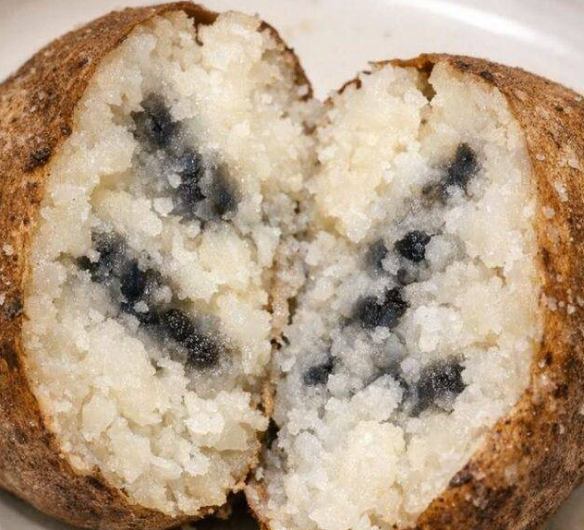
When you slice open a baked russet potato and notice dark patches or streaks, you are most likely seeing what is commonly referred to as internal bruising. These marks can appear grey, black, or slightly brown and are typically found in isolated areas rather than spread throughout the entire potato.
This discoloration is not caused by bacteria or spoilage in most cases. Instead, it’s the result of physical stress the potato experienced before cooking. Potatoes may seem tough on the outside, but internally they are made up of delicate cells filled with water and nutrients. When these cells are damaged, a natural reaction occurs.
The Science Behind Potato Discoloration
The darkening you see inside a potato is due to a process called oxidation. When the internal cells are bruised or broken, they are exposed to oxygen. This triggers an enzymatic reaction that causes the affected area to turn darker over time.
This is similar to how an apple turns brown after being cut and left in the open air. It’s a natural and harmless chemical change, not a sign of contamination.
How Do Potatoes Get Bruised Internally?
Internal bruising can occur at several stages before the potato even reaches your kitchen. Understanding these factors can help you make better purchasing and storage decisions.
1. Harvesting Conditions
Potatoes are often harvested using machinery that digs them out of the ground. During this process, they can be bumped, dropped, or scraped. Even small impacts can damage the internal structure without leaving visible marks on the outside.
2. Shipping and Handling
After harvesting, potatoes are packed and transported over long distances. Movement during transit, combined with stacking pressure, can lead to internal bruising. The longer the journey, the higher the chance of minor damage.
3. Storage Environment
Temperature and humidity play a crucial role in potato quality. Storing potatoes in overly cold environments can make them more susceptible to bruising. On the other hand, excessive moisture can weaken their structure.
4. Grocery Store Handling
Even at the store, potatoes may be handled roughly by staff or customers. Dropping them into bins or bags can create internal damage that becomes visible only after cooking.
5. Home Storage and Use
At home, improper handling—such as dropping potatoes or stacking heavy items on top of them—can also contribute to bruising.
Are Dark Spots in Potatoes Safe to Eat?
In most cases, the answer is yes. Potatoes with small, localized dark spots are generally safe to consume as long as the rest of the potato is fresh and firm.
Safe-to-Eat Indicators:
- The potato feels solid and firm
- There is no unpleasant or sour smell
- The dark spots are small and limited
- No visible mold or slime is present
You can simply cut out the affected portions with a knife and use the remaining part as usual. The taste of the darkened area might be slightly off, but the rest of the potato should be perfectly fine.
When Should You Throw a Potato Away?
While internal bruising is harmless, some signs indicate that a potato is no longer safe to eat. It’s important to distinguish between natural discoloration and spoilage.
Warning Signs of Spoiled Potatoes:
- Soft, mushy, or wrinkled texture
- Sticky or slimy surface
- Strong, unpleasant odor
- Visible mold growth
- Large, widespread dark or black areas
- Green patches on the skin (may indicate solanine buildup)
If any of these signs are present, it’s best to discard the potato to avoid potential health risks.
Internal Bruising vs. Rot: Key Differences
Understanding the difference between harmless bruising and actual rot can help you avoid unnecessary waste.
- Bruising: Small, dark spots; potato remains firm; no odor; safe after trimming
- Rot: Large discolored areas; soft or mushy texture; foul smell; unsafe to eat
Being able to identify these differences ensures you only discard potatoes when truly necessary.
Does Cooking Remove the Dark Spots?
No, cooking does not eliminate the discoloration. Whether you bake, boil, or fry the potato, the dark spots will remain visible. In fact, baking often makes them more noticeable due to the contrast between the fluffy interior and darker areas.
However, heat does not make these spots harmful—they remain safe to eat if the potato is otherwise fresh.
Tips to Prevent Dark Spots in Potatoes
While you can’t control everything that happens before purchase, you can reduce the chances of encountering bruised potatoes by following these simple tips.
1. Select High-Quality Potatoes
Choose potatoes that are:
- Firm and heavy for their size
- Free from visible cuts, dents, or soft spots
- Smooth and evenly shaped
2. Store Them Correctly
Proper storage is essential for maintaining freshness:
- Keep potatoes in a cool, dark place
- Ideal temperature: 7–10°C (45–50°F)
- Avoid refrigeration, as it affects texture and flavor
- Use breathable containers like baskets or paper bags
3. Handle with Care
- Avoid dropping potatoes
- Don’t pile heavy items on top
- Transport gently from store to home
4. Use Within a Reasonable Time
Potatoes stored for long periods are more likely to develop quality issues. For best results, use them within a few weeks.
Do Different Potato Varieties React Differently?
Yes, the type of potato matters. Russet potatoes are more prone to internal bruising due to their high starch content and softer internal structure.
In contrast, waxy potatoes—such as red or new potatoes—have a firmer texture and are less likely to develop these dark spots.
Does Discoloration Affect Nutrition?
The nutritional value of a potato is mostly unaffected by internal bruising. While the discolored portion may lose some quality, the rest of the potato still contains essential nutrients such as:
- Dietary fiber
- Vitamin C
- Potassium
- Complex carbohydrates
Removing the affected areas ensures you still enjoy the full health benefits.
Expert Tips for Perfect Oven-Baked Potatoes
If you want consistently delicious baked potatoes, follow these best practices:
- Wash and scrub thoroughly before cooking
- Dry completely to ensure crispy skin
- Pierce with a fork to release steam
- Coat lightly with oil and salt for flavor and texture
- Bake at a high temperature (around 200°C / 400°F)
- Avoid overcrowding in the oven for even cooking
These steps won’t prevent internal bruising entirely, but they will greatly improve taste and texture.
Final Thoughts
Dark spots inside baked potatoes may look concerning, but they are usually harmless and caused by internal bruising. By understanding the science behind this issue and learning how to identify safe potatoes, you can reduce food waste and cook with confidence.
As long as your potato is firm, fresh-smelling, and only slightly discolored in small areas, it’s perfectly fine to trim and enjoy. With proper selection, storage, and cooking techniques, you can continue to enjoy one of the most comforting and versatile foods in your kitchen.
Part 2: Easy Oven-Baked Russet Potato Recipe
Ingredients
- 1 large russet potato
- 1–2 teaspoons olive oil (or any cooking oil)
- Salt, as needed
- Optional toppings: butter, sour cream, shredded cheese, black pepper, chopped chives
Instructions
- Preheat your oven to 200°C (400°F).
- Rinse the potato under running water and scrub off any dirt.
- Dry it thoroughly using a clean kitchen towel.
- Use a fork to poke 4–5 holes around the potato.
- Rub the potato with oil and coat evenly with salt.
- Place it directly on the oven rack or on a baking tray.
- Bake for 45–60 minutes, depending on size, until soft inside.
- Remove from the oven and carefully slice it open.
- Fluff the inside with a fork and add your favorite toppings.
- Serve hot and enjoy.
Quick Kitchen Tip
If you notice dark spots inside after baking, simply cut them out before serving—the rest of the potato is completely safe and delicious.