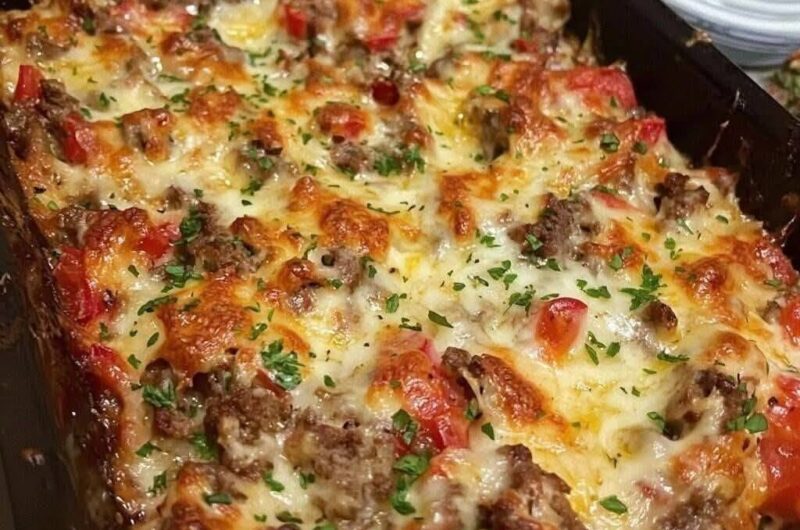
There are certain meals that instantly make you think of comfort food, and a classic Philly cheesesteak is definitely one of them. Tender beef, sweet onions, colorful peppers, and plenty of melted cheese come together to create the kind of combination that is hard to resist.
But sometimes I want all those familiar cheesesteak flavors without making individual sandwiches.
That is where this Philly Cheesesteak Casserole comes in.
It takes the irresistible flavors of a classic cheesesteak and turns them into an easy, hearty casserole that you can prepare in one baking dish. Instead of assembling sandwiches one at a time, everything comes together in a warm, cheesy meal that is perfect for a busy weeknight, family dinner, or casual weekend gathering.
The best part is that you don’t need anything fancy to make a satisfying casserole.
The beef provides that savory, meaty foundation. Onions add sweetness as they soften in the pan, while peppers bring color, texture, and a subtle freshness. Then the cheese melts over everything, creating the rich, gooey finish that makes this recipe feel like true comfort food.
If you love easy ground beef casseroles, Philly cheesesteak recipes, or simple family dinners, this is one you will want to keep in your recipe collection.
Why I Love Making Cheesesteak Casserole at Home
Traditional Philly cheesesteaks are delicious, but they can be a little inconvenient when you’re cooking for several people.
You have to prepare the filling, warm the rolls, assemble each sandwich, and serve everything immediately.
A casserole simplifies the process.
You can cook the filling, combine everything, add your cheese, and let the oven take care of the final stage. Instead of standing at the counter assembling sandwiches, you have a bubbling, cheesy dish ready to serve.
That makes this recipe especially convenient for families.
It is also a great way to turn familiar ingredients into something that feels a little different. If your household enjoys beef, cheese, onions, and peppers, chances are good that this casserole will disappear quickly.
And leftovers can be just as enjoyable.
What Gives This Dish Its Philly Cheesesteak Flavor?
The inspiration comes from the iconic Philadelphia cheesesteak.
A traditional cheesesteak is built around thinly sliced beef cooked on a griddle and combined with ingredients such as onions and melted cheese, usually served inside a long roll.
This casserole takes those familiar flavors and changes the format.
Instead of a sandwich, you get a layered or mixed baked dish with the same savory personality.
The beef is still the star.
The onions provide sweetness and depth.
The peppers add texture and balance.
And the cheese ties the entire dish together.
Depending on the version you’re making, you can also find cheesesteak casseroles that include ingredients such as mushrooms, cream-based sauces, rice, pasta, or other additions. Those variations can be delicious, but the basic idea remains the same: bring the flavors of a Philly cheesesteak into an easy baked meal.
Choosing the Beef for Your Casserole
Beef is obviously one of the most important components of a cheesesteak-inspired recipe.
If you’re using ground beef, choose a variety that gives you plenty of flavor without leaving the finished casserole excessively greasy. A moderate fat percentage can provide good flavor, but excess grease should be drained before assembling the casserole.
If your recipe uses thinly sliced steak instead, the goal is slightly different.
Thin slices cook quickly and mimic the texture of the meat used in a traditional cheesesteak more closely. Ribeye is often associated with classic cheesesteaks because it is flavorful and tender, although other cuts can also work depending on the recipe and budget.
For a casserole, however, convenience matters.
Ground beef is especially easy to prepare, which is one reason ground beef Philly cheesesteak casserole has become such a popular weeknight-style variation.
Whichever beef you use, season it appropriately and cook it thoroughly before the casserole goes into the oven.
Don’t Underestimate the Onions
Onions may seem like a supporting ingredient, but they play a major role in this dish.
When onions cook slowly, they become softer and sweeter. Their sharp raw flavor fades, leaving behind a richer taste that works beautifully with beef and melted cheese.
For the best texture, I like to give the onions enough time to soften rather than rushing them through the pan.
You don’t necessarily need to caramelize them for an extended period. Simply cooking them until they become tender and lightly golden can add plenty of flavor.
The onions also help prevent the casserole from becoming too heavy.
The beef and cheese provide richness, while the vegetables contribute sweetness and freshness.
It is that balance that makes the finished dish so satisfying.
Bell Peppers Add Color and Texture
Bell peppers are another classic combination with cheesesteak flavors.
Green peppers are particularly common in cheesesteak-inspired dishes, but depending on the recipe, you may also see red, yellow, or orange peppers.
Each variety brings a slightly different flavor.
Green peppers have a more savory, earthy character, while red, yellow, and orange peppers tend to be sweeter.
Whichever pepper your recipe calls for, cut it into reasonably even pieces so it cooks consistently.
The peppers should become tender but still retain enough texture to keep the casserole interesting.
One of the reasons I like adding vegetables to a beef casserole is that every bite becomes a little different.
You get savory beef, sweet onion, tender pepper, and melted cheese together instead of simply eating a dish dominated by meat.
The Cheese Is the Finishing Touch
Let’s be honest: one of the main reasons anyone makes a cheesesteak casserole is the cheese.
Cheese transforms the beef and vegetables into something rich, creamy, and incredibly comforting.
Traditional cheesesteaks are commonly associated with cheeses such as provolone, American cheese, or Cheez Whiz. In casserole versions, you may also encounter mozzarella or other melting cheeses.
The right choice depends on the recipe you’re following and the flavor you prefer.
Provolone gives the casserole a distinctly cheesesteak-inspired flavor. Mozzarella provides plenty of stretch and a mild, creamy finish. American cheese melts exceptionally smoothly.
If your recipe specifies a particular cheese, I recommend following it rather than making unnecessary substitutions.
When the casserole comes out of the oven with the cheese melted and bubbling, that is usually the moment everyone starts heading toward the kitchen.
The Importance of Properly Cooking the Vegetables
One of the easiest ways to improve a casserole is to pay attention to the texture of the vegetables before baking.
If onions and peppers are added completely raw, they may not reach the texture you want by the time the cheese is perfectly melted.
Cooking them beforehand allows you to control their tenderness.
It also gives you an opportunity to build flavor.
As the vegetables cook, their natural sweetness develops, and they pick up some of the savory flavors left behind by the beef.
This is a simple technique, but it makes the finished casserole taste much more developed.
A Weeknight Dinner That Doesn’t Feel Boring
Weeknight dinners can become repetitive.
There are only so many ways to prepare the same chicken, pasta, or ground beef before everyone starts asking for something different.
That’s another reason I like cheesesteak casserole.
It uses familiar ingredients but presents them in a completely different way.
If you already have beef, onions, peppers, and cheese in the refrigerator, you may be surprisingly close to having everything you need.
And unlike some elaborate casseroles, you don’t need to spend the entire afternoon preparing it.
This is the kind of recipe that fits naturally into a busy schedule.
Prepare the filling, assemble the dish, bake it, and dinner is ready.
How to Get the Best Flavor From Your Beef
Seasoning matters more than people sometimes realize.
Because the main ingredients are relatively simple, each component has a chance to stand out.
The beef should have enough seasoning to taste savory and flavorful without overpowering the vegetables or cheese.
When cooking ground beef, break it into small pieces as it browns. This helps distribute the meat evenly throughout the casserole.
If you’re using thinly sliced steak, avoid overcrowding the pan when possible. Cooking in a crowded pan can cause the beef to release moisture and steam rather than developing the desirable browned edges that contribute to flavor.
Those browned bits are valuable.
They provide a deeper savory character that makes the finished casserole taste more satisfying.
Don’t Forget to Drain Excess Grease
If you’re making a ground beef version, take a moment to drain excess fat after browning the meat.
You don’t want the casserole swimming in grease.
A small amount of fat contributes flavor and moisture, but too much can make the finished dish heavy and greasy.
After draining, return the beef to the pan and continue with the recipe.
This small step can make a noticeable difference in the final texture.
Building the Casserole
Once the beef and vegetables are cooked, the rest of the recipe should be relatively straightforward.
The exact assembly depends on the version you’re making.
Some Philly cheesesteak casseroles use a creamy sauce. Others are built with a simple beef-and-vegetable mixture topped with cheese. Some versions add a starch such as rice or pasta to create a more substantial one-dish meal.
The important thing is to distribute the ingredients evenly.
You want every serving to contain a good balance of beef, vegetables, and cheese.
Nobody wants to scoop out one portion and discover that all the beef stayed on one side of the dish.
Take a moment to spread everything evenly before adding the final cheese layer.
It is worth the extra few seconds.
Why Baking Brings Everything Together
The stovetop does most of the initial cooking, but the oven is where the casserole becomes a finished dish.
Baking allows the flavors to come together while the cheese melts over the top.
Depending on the recipe, you may be looking for a lightly browned cheese layer or simply a completely melted topping.
If you enjoy a deeper golden finish, keep an eye on the casserole during the final minutes.
Cheese can go from beautifully browned to overly dark surprisingly quickly.
If necessary, you can also use the broiler briefly at the end, but stay close to the oven because broiling requires careful attention.
What to Serve With Philly Cheesesteak Casserole
Because this casserole is already rich and filling, you don’t necessarily need complicated side dishes.
A simple green salad can provide a fresh contrast.
Roasted vegetables are another good option.
If you’re serving a larger family dinner, you could add a light side of steamed broccoli, green beans, or another vegetable your family enjoys.
For a more indulgent meal, crispy potatoes or fries can turn the dinner into a cheesesteak-inspired feast.
And if your casserole already contains a starch, you may prefer to keep the sides light.
The goal is to create balance rather than adding heavy foods simply because you can.
How to Store Leftovers
If you happen to have leftovers, allow the casserole to cool before transferring it to an airtight container or covering the baking dish securely.
Keep it refrigerated and reheat individual portions as needed.
A microwave is convenient for quick reheating, while an oven or toaster oven can help restore some of the baked texture.
If you’re reheating in the oven, cover the casserole if necessary to prevent the cheese from becoming overly dry.
As with any leftover meat dish, refrigerate it promptly and use appropriate food-safety practices.
Can You Make This Casserole Ahead?
One of the benefits of casserole recipes is that many can be prepared ahead of time.
If you want to reduce your workload before dinner, you can often prepare the beef and vegetable mixture in advance and refrigerate it until you’re ready to assemble the dish.
However, whether the complete casserole can be assembled ahead depends on the specific ingredients.
If your recipe contains ingredients that can become watery or lose texture when refrigerated for too long, it may be better to prepare the components separately and assemble shortly before baking.
For entertaining, this can still be extremely useful.
You can get the cooking and chopping finished earlier, leaving only the final assembly and baking for later.
Simple Ways to Make This Family Favorite Your Own
Once you’ve made the basic casserole, there are several ways to personalize it.
Mushrooms are a natural addition for anyone who enjoys them. They pair beautifully with beef, onions, and cheese.
You can also experiment with different bell peppers or adjust the amount of onion to suit your household.
For extra cheesiness, some cooks like to use a combination of cheeses.
For a spicier variation, a little crushed red pepper or sliced jalapeño can add heat.
If you’re looking for a lower-carb dinner, you can choose a casserole version that skips traditional bread and uses vegetables or another low-carb base.
That flexibility is part of what makes Philly cheesesteak casserole recipes so appealing.
The basic flavor combination is strong enough to support plenty of variations.
What I Love Most About This Comfort Food
The thing I enjoy most about this casserole is how familiar it feels.
It tastes like the flavors you already know from a Philly cheesesteak, but the casserole format makes it feel like a completely different meal.
It is warm.
It is cheesy.
It is savory.
And it has enough vegetables to keep every bite interesting.
There is something especially satisfying about serving a bubbling casserole straight from the oven and watching everyone reach for a portion.
It feels like the kind of dinner that belongs in the middle of the table, where everyone helps themselves and goes back for another serving.
Final Thoughts Before You Make It
If you’re looking for an easy Philly cheesesteak casserole, a cheesy ground beef casserole, or a comforting weeknight dinner recipe, this is a great concept to keep in your rotation.
It takes the recognizable flavors of a beloved sandwich and turns them into a simple baked meal.
The combination of beef, onions, peppers, and melted cheese is hard to beat.
And the beauty of this style of recipe is that it doesn’t require complicated culinary techniques.
Cook the beef.
Soften the vegetables.
Combine the ingredients.
Add the cheese.
Bake until everything is hot and delicious.
That’s it.
The result is a cozy casserole that can feed the family without requiring hours of work.
Whether you’re making it for a busy Tuesday night, a relaxed weekend dinner, or a casual gathering with friends, Philly Cheesesteak Casserole is the kind of comfort food that feels satisfying from the first bite to the last.
Part 2: Quick Philly Cheesesteak Casserole Recipe
Ingredients
Because no original ingredient list was provided with the request, I won’t invent quantities and present them as an unchanged recipe. For an accurate recipe card, use the exact ingredient list from your source.
A classic Philly cheesesteak casserole commonly includes:
- Beef or ground beef
- Yellow or white onion
- Bell peppers
- Provolone, mozzarella, or another melting cheese
- Seasonings
- Cooking oil or butter
- Optional casserole base, depending on the original recipe
Easy Cooking Instructions
- Prepare the oven: Preheat your oven according to the temperature specified in your original recipe. Lightly grease the casserole dish.
- Brown the beef: Cook the beef in a large skillet over medium-high heat, breaking it apart as it cooks. Drain excess grease if needed.
- Cook the vegetables: Add the onions and bell peppers and sauté until they become tender and lightly golden.
- Season the filling: Stir in the seasonings called for in your recipe, making sure the beef and vegetables are evenly coated.
- Assemble the casserole: Transfer the prepared mixture to the baking dish and spread it into an even layer.
- Add the cheese: Cover the top generously with the cheese specified in the original recipe.
- Bake until bubbly: Place the casserole in the oven and bake according to the original recipe until the filling is hot and the cheese is completely melted and lightly golden.
- Rest briefly: Remove the casserole from the oven and let it sit for a few minutes before serving. This allows the layers to settle and makes serving easier.
- Serve: Spoon onto plates and enjoy this cheesy, savory Philly cheesesteak-inspired dinner while warm.
Quick Recipe Tip
For the best texture, avoid overcooking the vegetables before the casserole goes into the oven. You want them tender while still retaining a little bite.