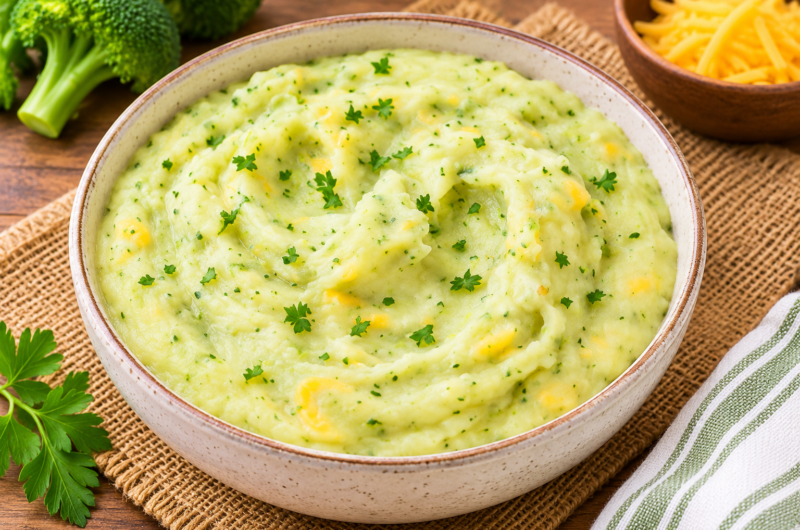
Broccoli and Carrot Mash is a simple homemade vegetable puree prepared by steaming broccoli, carrots, and potatoes until tender, then blending them with boiled water or milk. The result is a soft, creamy mixture with a naturally mild flavor and a texture that can be adjusted according to the developmental stage. Broccoli contributes a slightly earthy vegetable taste, carrots provide natural sweetness, and potatoes help create a thicker, smoother consistency. This combination makes the recipe useful for introducing to different vegetable flavors while keeping the ingredient list short and familiar. The original recipe also includes an optional sprinkling of grated cheese, which can add a slightly richer flavor when appropriate for the child’s age and dietary needs. Unlike commercially prepared food, this homemade broccoli and carrot mash allows caregivers to control the ingredients, texture, and portion size. It is especially suitable for who have already started complementary feeding and are developmentally ready for pureed foods.
Why Broccoli and Carrot Mash Is a Great Homemade Food Recipe
Homemade broccoli and carrot mash is a convenient choice for parents and caregivers who want to prepare simple vegetable-based meals . One of its main advantages is that it uses only a few everyday ingredients without requiring complicated cooking techniques. The vegetables are washed, peeled where necessary, steamed, and blended into a smooth puree. Steaming softens the vegetables without requiring additional cooking fat, making the preparation straightforward. Carrots add natural sweetness, which can help balance broccoli’s stronger vegetable flavor, while potatoes provide a soft and creamy consistency. The recipe also allows the puree to be thinned with boiled water or milk, depending on the desired texture. This flexibility is helpful because develop feeding skills at different rates. Preparing food at home also makes it easier to introduce vegetables in different combinations while keeping track of the ingredients being served. The finished mash can be offered as part of a varied complementary feeding routine alongside other age-appropriate foods.
Nutritional Benefits of Broccoli
Broccoli is a nutrient-rich vegetable that contributes vitamins, minerals, and dietary fiber to homemade food. It contains vitamin C, vitamin K, folate, and several plant compounds that form part of a balanced diet. Vitamin C supports normal immune function and helps the body absorb iron from plant-based foods, while folate plays an important role in normal cell growth and development. Broccoli also provides fiber, which contributes to digestive health as begin eating a wider variety of foods. Its slightly earthy flavor introduces to a taste that differs from sweeter vegetables and fruits. When preparing broccoli for puree, steaming it until very tender makes it easier to blend into a smooth consistency. Removing the stalk, as specified in this recipe, also helps create a more uniform texture. Although broccoli is nutritious, no single vegetable provides all the nutrients needs. It should be offered alongside other foods, including appropriate sources of iron, protein, and healthy fats.
Why Carrots Are Perfect for Homemade Vegetable Puree
Carrots are a popular ingredient in homemade food because they have a naturally sweet flavor and become soft when cooked. Their mild taste complements broccoli, helping create a vegetable puree that is balanced rather than strongly flavored. Carrots are particularly known for containing beta-carotene, a plant pigment that the body can convert into vitamin A. Vitamin A supports normal vision, immune function, and healthy growth. Carrots also provide dietary fiber and small amounts of other vitamins and minerals. In this broccoli and carrot mash recipe, one carrot is peeled, trimmed, and steamed until completely tender before blending. Cooking is important because raw carrots are too firm for who are beginning solid foods and can present a choking hazard. Steaming softens the carrot and makes it easier to combine with the broccoli and potato. The finished puree develops a gentle sweetness without requiring added sugar, making it suitable for introducing the natural flavors of vegetables.
How Potato Creates a Smooth and Creamy Food Texture
Potato plays an important role in this broccoli and carrot mash because it helps create a thicker, smoother texture. The recipe uses half a peeled potato, preferably a Desiree potato or an older potato variety. Potatoes contain starch, which softens during cooking and contributes body to the puree. When combined with steamed broccoli and carrots, the potato helps bind the vegetables into a cohesive mixture that is easier to serve with a spoon. This is particularly useful when preparing a puree who are still learning how to move food around their mouths and swallow safely. Potato also contributes carbohydrates, potassium, and small amounts of other nutrients. The potato should be peeled and cut into manageable pieces before steaming to ensure it becomes fully tender. When blending, avoid processing the mixture longer than necessary because excessive blending can sometimes make cooked potatoes sticky or gluey. A smooth but soft consistency is the goal for this homemade vegetable mash.
Why Steaming Is a Good Cooking Method for Vegetables
Steaming is a practical cooking method for broccoli and carrot puree because it softens vegetables without requiring them to be submerged in large amounts of water. During steaming, hot vapor surrounds the vegetables and gradually cooks them until they become tender. This method helps preserve the vegetables’ natural flavors and can reduce the loss of some water-soluble nutrients compared with prolonged boiling, although nutrient retention varies with cooking time and vegetable type. For this recipe, the broccoli, carrot, and potato should be steamed until they are soft enough to mash easily with a fork. The carrot and potato may take longer than the broccoli, particularly if the pieces are large. Cutting the vegetables into appropriately sized pieces helps them cook more evenly. Once fully cooked, they can be transferred to a blender and combined with boiled water or milk. Steaming also avoids the need for frying or adding cooking oil, keeping the preparation simple.
Choosing Fresh Broccoli for Homemade Food
Fresh broccoli contributes flavor, color, and nutrients to this vegetable mash, so choosing good-quality broccoli is an important part of preparation. Look for a head with firm, compact florets and a fresh green appearance. Avoid broccoli with extensive yellowing, slimy areas, or an unpleasant odor, as these may indicate deterioration. The recipe calls for one head of broccoli with the stalk removed, leaving the florets to be steamed and blended. Before cooking, wash the broccoli thoroughly under running water to remove visible dirt and debris. Separate the florets into smaller pieces if necessary so they cook evenly. Broccoli should be cooked until very tender for a smooth puree. Although fresh broccoli is commonly used in homemade food, the final texture matters more than appearance. The cooked florets should blend easily with the carrot and potato, producing a soft mixture without firm pieces that could be difficult to manage.
Preparing Carrots and Potatoes for a Smooth Vegetable Mash
Proper preparation of carrots and potatoes helps ensure that the finished broccoli and carrot mash has a smooth, consistent texture. Begin by washing both vegetables thoroughly to remove dirt from their surfaces. Peel the carrot and potato, then trim the ends of the carrot as directed in the original recipe. Cut the vegetables into smaller pieces so they cook evenly during steaming. Because carrots and potatoes are firmer than broccoli, they may need slightly longer cooking times. The most reliable way to check doneness is to pierce each piece with a fork. If the fork slides through easily and the vegetable can be mashed without resistance, it is ready for blending. Fully cooked vegetables are especially important for who are beginning complementary feeding because hard pieces can be difficult to manage safely. After steaming, transfer the vegetables to a clean blender and add the specified liquid gradually to achieve the desired consistency.
How to Make Broccoli and Carrot Puree
Making broccoli and carrot puree at home requires only a few straightforward steps. Start by thoroughly washing the broccoli, carrot, and potato. Remove the broccoli stalk, peel the carrot and potato, and trim the ends of the carrot. Cut the vegetables into pieces suitable for steaming, then place them in a steamer basket over simmering water. Cook until all the vegetables are completely tender. Transfer the cooked vegetables to a blender or food processor and add approximately one-quarter cup of boiled water or milk. Blend until the mixture becomes smooth and evenly combined. The amount of liquid needed may vary slightly depending on the size of the vegetables and how much moisture they retain during cooking. For those who need a thinner puree, adjust the texture carefully using the chosen liquid. If desired and appropriate for the feeding stage, finish with the optional sprinkling of grated cheese. Serve at a safe, lukewarm temperature.
How to Adjust the Texture for Different Feeding Stages
The texture of broccoli and carrot mash can be adjusted they develop their eating skills. During the earliest stages of complementary feeding, some manage smooth purees most comfortably. Blending the steamed vegetables with boiled water or milk helps create a soft consistency that can be offered on a spoon. As they become more experienced with eating, the same ingredients can be mashed less thoroughly to introduce a thicker texture. Gradually progressing toward mashed foods with soft, manageable lumps helps them develop oral skills needed for more varied meals. The vegetables must always be cooked until soft, and any lumps should be small and easy to manage. Caregivers should supervise feeding closely and ensure seated upright. If he/she has swallowing difficulties or delayed feeding development, a pediatric healthcare professional can provide individualized guidance about suitable textures.
The Role of Milk or Boiled Water in Puree
The original broccoli and carrot mash recipe uses approximately one-quarter cup of boiled water or milk to help blend the cooked vegetables into a smooth puree. Both options provide moisture, but they have different characteristics. Boiled water, cooled to a safe temperature, helps thin the vegetables without significantly changing their flavor. Milk contributes familiar flavor and additional nutrients, although the amount used in the recipe is relatively small. When using expressed milk, follow safe handling and storage practices, and avoid overheating it. The liquid should be added gradually because the amount needed depends on the moisture content of the steamed vegetables. Adding too much at once may produce a puree that is thinner than desired. Begin with the specified quantity and blend until smooth, adjusting only when necessary. The finished mash should be soft and easy to spoon-feed without becoming excessively watery. Always check the temperature before offering the puree to a .
Can You Add Cheese to Broccoli and Carrot Mash?
The original broccoli and carrot mash includes an optional sprinkling of grated cheese to provide a variation in flavor. Cheese can add a savory taste and contribute protein, calcium, and fat, depending on the variety used. small amounts of pasteurized cheese may be appropriate as part of a varied diet, provided there is no known milk allergy or other medical restriction. Because some cheeses contain considerable amounts of sodium, choosing a lower-sodium variety is sensible when feeding . The cheese should be finely grated so it can blend easily into the warm vegetable mash without leaving large pieces. It is not necessary to add cheese for the recipe to work, since the broccoli, carrot, and potato already create a soft, naturally flavorful puree. The optional cheese is best treated as a variation rather than an essential ingredient. You can enjoy the original vegetable combination without additional seasoning.
Why Homemade Broccoli and Carrot Mash Needs No Added Salt or Sugar
Broccoli and Carrot Mash develops its flavor naturally from the vegetables, so added salt and sugar are unnecessary. Carrots contribute sweetness, potatoes provide a mild and comforting base, and broccoli adds a gentle vegetable flavor. These ingredients create a balanced combination without requiring sweeteners or strong seasonings. Avoiding added salt is particularly important for them because their kidneys are still developing, and many everyday foods already contain sodium. Added sugar is also unnecessary during early complementary feeding. Introducing to the natural flavors of vegetables can help them become familiar with a variety of tastes as their diets expand. The optional cheese may contribute sodium, so the type and amount should be considered carefully. By keeping the ingredient list simple, caregivers can focus on the vegetables themselves and adjust the texture according to the needs. This approach makes the recipe suitable for a straightforward homemade food routine.
How to Prevent Broccoli and Carrot Puree From Becoming Watery
Achieving the right consistency is an important part of preparing homemade broccoli and carrot puree. Vegetables naturally contain moisture, and steaming softens them without necessarily removing much of that liquid. If too much boiled water or milk is added during blending, the finished mash may become excessively thin. To avoid this problem, transfer the cooked vegetables to the blender without adding water from the steaming pot. Begin with the recipe’s specified one-quarter cup of liquid, adding it gradually while checking the texture. The potato helps thicken the mixture because of its natural starch content, while the broccoli and carrot contribute body and flavor. Blend only until the vegetables are smooth and evenly combined. If the puree appears too thick, a little more of the chosen liquid can be added carefully. The goal is a soft, spoonable consistency that matches the feeding abilities rather than a mixture that runs off the spoon.
How to Serve Broccoli and Carrot Mash Safely
Serving homemade broccoli and carrot mash safely involves paying attention to temperature, texture, and feeding position. After blending the cooked vegetables, allow the puree to cool until it is comfortably lukewarm. Stir thoroughly and test the temperature before offering it , since hot spots can cause burns. Place the he/she in an upright, supported feeding position and remain nearby throughout the meal. offer a small amount on a suitable spoon and allow them time to explore the taste and texture. Avoid forcing to finish a particular portion, since appetite and interest can vary from day to day. The puree should be smooth enough for the current feeding skills, with no firm vegetable pieces remaining. If the optional grated cheese is included, ensure it is finely grated and appropriately incorporated. Clean utensils and careful food handling are also important when preparing meals for infants.
How to Store Homemade Broccoli and Carrot Food
Homemade broccoli and carrot mash can be prepared in advance, but proper refrigeration is important because food can spoil if handled incorrectly. After cooking and blending, cool the puree promptly and transfer it into clean, airtight containers. Refrigerate at 40°F (4°C) or colder and use refrigerated homemade vegetable puree within approximately 48 hours. Smaller portions are particularly convenient because they allow caregivers to remove only the amount needed for one feeding. Avoid returning food from used bowl to the main storage container, since saliva introduced during feeding can encourage bacterial growth. Instead, place a small serving into a separate bowl and discard any leftovers from that feeding. If the puree contains expressed milk, its storage and handling requirements must also be considered. Labeling containers with the preparation date can help prevent confusion. Proper storage supports both food safety and convenience when preparing homemade meals.
Can You Freeze Broccoli and Carrot Mash?
Broccoli and Carrot Mash can be frozen in small portions, making it convenient for caregivers who prefer to prepare ahead of time. After steaming and blending the vegetables, allow the puree to cool promptly before transferring it to clean, freezer-safe containers or covered food portion trays. Small portions make it easier to thaw only the amount needed for a meal. Once frozen, the portions can be transferred to a suitable freezer-safe container and labeled with the preparation date. For best quality, use the frozen vegetable puree within approximately one to two months. When ready to serve, thaw a portion safely in the refrigerator or reheat it directly from frozen using an appropriate method. Stir thoroughly to distribute heat evenly and allow it to cool to a safe feeding temperature. Do not leave frozen food to thaw at room temperature. If milk is used in the recipe, follow the relevant milk storage guidance as well.
How to Reheat Broccoli and Carrot Mash
Reheating broccoli and carrot mash requires careful attention because they are sensitive to food that is too hot. Transfer the desired portion into a small saucepan or microwave-safe bowl and heat it thoroughly, stirring regularly to prevent uneven temperatures. When reheating previously cooked food, bringing it to a steaming-hot temperature helps reduce food safety risks, but the puree must then be cooled before serving. Microwave heating can create hot spots, so stir especially carefully and test the temperature in several places. The mash should be comfortably lukewarm when offered . If the puree becomes too thick during refrigeration or freezing, its texture can be adjusted using a small amount of the original liquid option. Avoid reheating the same portion repeatedly, and discard food that has already been offered from a feeding bowl. Proper reheating and portion handling help keep homemade food convenient while supporting safe feeding practices.
Common Mistakes to Avoid When Making Vegetable Puree
Several common preparation mistakes can affect the quality and safety of homemade broccoli and carrot mash. One is failing to cook the vegetables until fully tender. Firm pieces of carrot or potato may not blend smoothly and can create an unsuitable texture for those who are learning to eat. Another mistake is adding too much liquid during blending, resulting in a watery puree that is difficult to serve. Overblending the potato can sometimes create a sticky consistency, so processing should stop once the mixture becomes smooth. Adding salt or unnecessary sugar is another mistake, since the vegetables already provide natural flavor. Caregivers should also avoid serving the puree while it is too hot or leaving prepared food at room temperature for extended periods. Finally, it is important not to rely on vegetable purees alone as a complete diet. A variety of age-appropriate foods, including iron-rich options, is essential during complementary feeding.
How Broccoli and Carrot Mash Fits Into a Balanced Diet
Broccoli and Carrot Mash can be a useful part of a varied complementary feeding routine, but it should be served alongside other foods that provide the nutrients need for growth. Broccoli contributes vitamins and fiber, carrots provide beta-carotene, and potatoes supply carbohydrates and potassium. Together, these vegetables offer a combination of flavors and nutrients, but they are not a complete meal for every nutritional need. Offering a variety of vegetables, fruits, grains, and protein sources helps become familiar with different tastes and textures. This broccoli and carrot puree is best used as one component of that broader feeding pattern rather than the only food offered.
Why Broccoli and Carrot Mash Is Worth Adding to Your Recipe
Broccoli and Carrot Mash is a practical homemade recipe because it combines a short ingredient list with an easy preparation method. Fresh broccoli, carrot, and potato are steamed until tender and blended with boiled water or milk to create a soft, creamy puree. The natural sweetness of the carrot balances the broccoli’s earthy flavor, while the potato helps produce a smooth consistency. This recipe is especially convenient for caregivers who want to introduce a range of vegetable flavors without relying on complicated ingredients. It can also be prepared in small portions and stored safely for later use. By adjusting the texture as feeding skills develop, the same vegetable combination can remain useful beyond the earliest puree stage. Simple preparation, familiar ingredients, and flexible texture make it a valuable addition to a homemade food collection.
Broccoli and Carrot Mash – Homemade Vegetable Puree
Description
This easy Broccoli and Carrot Mash is a smooth, creamy homemade food recipe made with fresh broccoli, carrot, potato, and boiled water or milk. Steamed until tender and blended into a soft puree, it combines the natural sweetness of carrots with the mild flavor of broccoli and the creamy texture of potatoes. An optional sprinkling of grated cheese can be added for a different flavor. Suitable for who are developmentally ready for complementary foods, generally around six months of age.
Preparation & Cooking Duration
- Preparation Time: Approximately 10 minutes
- Cooking Time: Approximately 15–20 minutes
- Total Time: Approximately 25–30 minutes
- Course: Vegetable Puree
- Cuisine: Homemade Food
- Difficulty: Easy
- Cooking Method: Steaming and Blending
- Equipment: Steamer, Blender or Food Processor, Vegetable Peeler
Cooking times are estimates because the original recipe does not specify exact durations. The time required depends on the size of the vegetable pieces and the steaming equipment.
Serving
Yield: Approximately 2–4 small food portions, depending on the size of the vegetables and the amount offered.
Recommended Age: Generally 6 months and older, once developmentally ready for solid foods.
Serving Style: Serve smooth and lukewarm, adjusting the consistency to the feeding abilities.
Ingredients
- 1 head of broccoli, stalk removed
- 1 carrot
- ½ potato, peeled (Desiree or an older potato variety)
- A sprinkling of grated cheese (optional)
- ¼ cup boiled water or milk
Step-by-Step Instructions
Step 1: Wash the Vegetables
Wash the broccoli, carrot, and potato thoroughly under clean running water to remove dirt and debris.
Step 2: Peel and Prepare
Peel the carrot and potato. Trim the ends of the carrot and remove the broccoli stalk. Cut the vegetables into smaller pieces so they cook evenly.
Step 3: Steam Until Tender
Place the prepared broccoli, carrot, and potato in a steamer. Steam until all the vegetables are completely cooked and soft enough to mash easily with a fork.
Step 4: Transfer to a Blender
Carefully transfer the steamed vegetables into a clean blender or food processor. Allow them to cool slightly before blending, following the appliance manufacturer’s instructions for hot foods.
Step 5: Add the Liquid
Add approximately ¼ cup of boiled water or milk to the cooked vegetables. Add the liquid gradually to help achieve the desired consistency.
Step 6: Blend Until Smooth
Blend the vegetables until they form a smooth, creamy puree without firm pieces. Adjust the texture as needed for the feeding stage.
Step 7: Add Optional Cheese
If desired, add a sprinkling of finely grated, pasteurized cheese and mix it into the warm vegetable mash until evenly incorporated.
Step 8: Cool and Serve
Allow the puree to cool to a safe, lukewarm temperature. Stir thoroughly and check the temperature before serving.
Notes
Choosing the Best Vegetables
Use fresh broccoli, a firm carrot, and a suitable potato variety. Wash all vegetables thoroughly before preparation.
Getting the Right Texture
For beginning complementary feeding, blend the vegetables into a smooth puree. As feeding skills develop, the texture can gradually become thicker and more mashed.
Using Boiled Water
If using water, boil it first and allow it to cool appropriately before blending with the vegetables.
Optional Cheese
Use a small sprinkling of finely grated, pasteurized cheese when appropriate. Avoid cheese & diagnosed milk allergy, and consider sodium content.
Avoiding Added Salt and Sugar
The vegetables provide natural flavor, so additional salt or sugar is unnecessary.
Refrigeration
Store prepared puree in clean, airtight containers in the refrigerator and use within approximately 48 hours.
Freezing
Freeze cooled puree in small, freezer-safe portions. For best quality, use within one to two months.
Reheating
Heat stored puree thoroughly, stir well, and cool to a safe temperature before serving. Discard leftovers from a feeding bowl.
Nutritional Information
Approximate Nutritional Characteristics
| Nutrient | Main Contribution |
|---|---|
| Calories | Varies with vegetable sizes and portion |
| Carbohydrates | Mainly from carrot and potato |
| Protein | Broccoli and potato; additional protein if cheese or milk is included |
| Dietary Fiber | Broccoli, carrot, and potato |
| Vitamin A Precursors | Primarily from carrot |
| Vitamin C | Primarily from broccoli |
| Vitamin K | Primarily from broccoli |
| Potassium | Broccoli, carrot, and potato |
| Calcium | Additional contribution if cheese is included |
| Fat | Varies depending on milk or optional cheese |
Nutrition Note: Exact calories and nutrient quantities cannot be calculated reliably without the weight of the broccoli, carrot, and potato, the amount and type of optional cheese, and the final serving size. The original recipe does not provide numerical nutritional information.