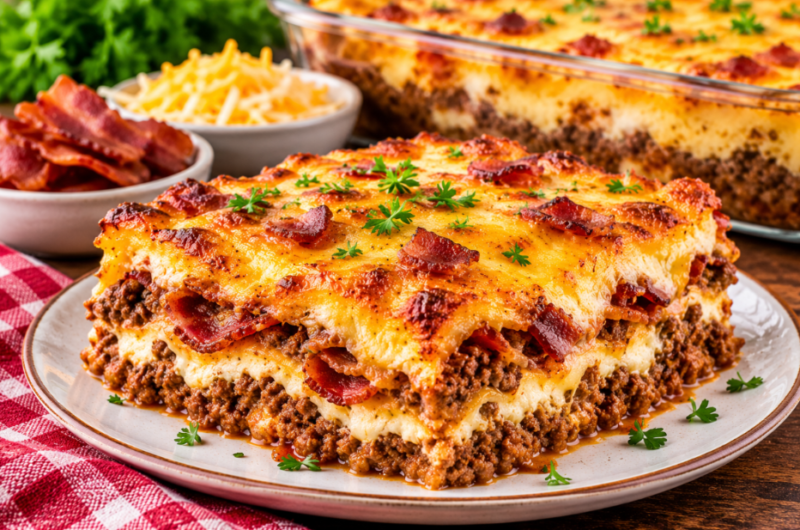
Carnivore Lasagna is a rich, cheesy baked casserole that brings together seasoned ground beef, crispy bacon, eggs, and layers of melted cheese without using traditional pasta sheets. Instead of relying on wheat noodles or other carbohydrate-based ingredients, this recipe uses a combination of ground beef and creamy cheese to create a hearty, satisfying meal. The result is a delicious alternative to traditional lasagna, with plenty of savory flavor in every bite. Made with simple ingredients that are easy to find, this homemade carnivore lasagna is suitable for people exploring animal-based meals or looking for a low-carb dinner idea. The ground beef provides the main structure, while ricotta or cream cheese creates a smooth layer that holds everything together during baking.
2. Why This Easy Carnivore Lasagna Is Worth Making
One of the best things about this carnivore lasagna recipe is its straightforward preparation. You do not need to boil pasta, prepare a complicated sauce, or spend time arranging traditional lasagna noodles. Instead, the recipe focuses on a few familiar ingredients that work together to create a flavorful baked dish. Ground beef provides a substantial base, bacon adds a smoky taste, and mozzarella creates the stretchy, melted cheese layer that makes lasagna so enjoyable. The ricotta or cream cheese mixture adds a creamy contrast to the meat. Another advantage is that the recipe can be adjusted according to your preferences. You can include optional cheddar or provolone for extra flavor, choose between ricotta and cream cheese, or leave out the bacon if you prefer a simpler version.
3. A Different Approach to Traditional Lasagna
Traditional lasagna is usually made with alternating layers of pasta, meat sauce, and cheese. Carnivore lasagna takes a different approach by removing the pasta and making the meat and dairy ingredients the main components of the dish. This creates a denser, richer casserole with a different texture from conventional lasagna. Rather than using noodles to separate the layers, the cooked ground beef and creamy cheese mixture provide the structure. Mozzarella melts between the layers and forms a golden topping during baking. Bacon can also be included to add another savory element. Although the finished dish does not have the same texture as pasta-based lasagna, it offers a satisfying alternative for anyone looking for a noodle-free ground beef casserole with plenty of cheese and flavor.
4. Choosing the Best Ground Beef for Carnivore Lasagna
Ground beef is the foundation of this recipe, so selecting the right type can make a noticeable difference. The recipe recommends two pounds of ground beef, with an 80/20 fat ratio working particularly well. This means the meat contains approximately 80 percent lean beef and 20 percent fat. The fat helps keep the filling moist and contributes to the rich flavor of the finished casserole. When cooking the beef, break it into smaller pieces using a wooden spoon or spatula so that it browns evenly. Add salt according to your taste and allow the meat to cook thoroughly before assembling the lasagna. If a large amount of grease collects in the pan, remove the excess while leaving some fat behind. This helps preserve the flavor and prevents the filling from becoming unnecessarily dry.
5. Why Bacon Makes This Meat Lasagna More Flavorful
Bacon is an optional ingredient, but it adds a wonderful smoky flavor that works particularly well with ground beef and melted cheese. The recipe uses eight to ten slices, depending on your preference and the size of your baking dish. Cooking the bacon separately before assembling the casserole allows it to develop a crisp texture without releasing too much moisture into the meat layers. Once cooked, the slices can be arranged between the ground beef and cheese mixture. During baking, the bacon contributes a savory taste that complements the creamy ingredients. If you enjoy stronger smoky flavors, bacon is a useful addition. However, the recipe can still be prepared without it. Leaving it out does not require changing the other ingredient quantities, making this a flexible option for different preferences.
6. Ricotta or Cream Cheese: Creating the Creamy Layer
The creamy cheese mixture is an important part of carnivore lasagna because it helps replace the texture traditionally provided by pasta and sauce. This recipe allows you to choose between one and a half cups of ricotta cheese or cream cheese. Ricotta has a lighter, slightly grainy texture and a mild dairy flavor, making it suitable for layered casseroles. Cream cheese produces a richer and smoother mixture with a thicker consistency. Both options can be combined with two to three eggs and a small amount of salt to create the filling. When preparing the mixture, make sure the cheese is easy to stir and evenly combined with the eggs. If you choose cream cheese, allowing it to soften before mixing can make preparation easier and help prevent lumps.
7. The Role of Eggs in Carnivore Lasagna
Eggs help bind the creamy cheese layer and give the casserole structure as it cooks. The recipe calls for two to three eggs, which are mixed with the selected cheese and a small pinch of salt. During baking, the eggs gradually set and help hold the ingredients together. This is particularly useful in a lasagna recipe without traditional pasta sheets because the cheese mixture needs to maintain its shape between the meat layers. For a consistent result, crack the eggs into a separate bowl before adding them to the cheese. Mix until the ingredients are evenly combined, avoiding large pockets of egg or unmixed cheese. Spread the mixture carefully over the beef and bacon layers so that it distributes throughout the casserole. Once baked and rested, the egg-based filling helps create portions that are easier to slice and serve.
8. Choosing Mozzarella and Other Cheeses
Mozzarella is the main cheese used in this recipe, with two cups of shredded mozzarella providing a generous amount for the layers and topping. Its mild taste and excellent melting qualities make it a natural choice for a baked ground beef casserole. As the lasagna cooks, the mozzarella melts into the other ingredients and creates a soft, stretchy texture. The recipe also allows one cup of shredded cheddar or provolone as an optional addition. Cheddar brings a sharper, more pronounced flavor, while provolone offers a mild, slightly buttery taste. You can choose whichever option suits your preference or leave out the additional cheese altogether. Distributing the mozzarella evenly between the layers helps ensure that every serving contains a good balance of meat and cheese.
9. Preparing the Ground Beef Before Assembly
Cooking the ground beef properly is one of the most important preparation steps. Begin by placing a large skillet over medium heat and adding the ground beef. Season it with salt according to your taste, then break the meat into smaller pieces as it cooks. Continue stirring occasionally until the beef is thoroughly browned. Ground beef with an 80/20 fat ratio will release some grease during cooking, which contributes to its flavor. If there is an excessive amount in the skillet, carefully drain only the extra grease while leaving some fat behind. This helps maintain moisture in the meat filling. Once the beef is cooked, set it aside while preparing the remaining ingredients. Cooking the meat before assembling the casserole ensures that it is ready to combine with the cheese layers during baking.
10. Cooking Bacon for the Best Texture
If you decide to include bacon, cook it separately before assembling the casserole. Place the slices in a skillet and cook them until they are just crispy, turning as necessary for even browning. Cooking the bacon separately gives you better control over its texture and allows excess grease to be removed before it is added to the lasagna. Avoid cooking it until it becomes extremely hard or burnt because it will continue to heat during the baking process. Once the bacon is ready, transfer it to a plate and allow it to cool slightly. It can then be arranged between the layers of ground beef and cheese. The combination of browned beef, smoky bacon, and melted mozzarella creates a rich flavor profile that makes this noodle-free lasagna particularly satisfying.
11. How to Prepare the Cheese Mixture
Preparing the cheese mixture is a simple process that requires only a mixing bowl and a spoon or whisk. Add the ricotta cheese or cream cheese to the bowl, followed by two to three eggs and a small pinch of salt. Mix everything until the ingredients are evenly combined. If you are using ricotta, the mixture may naturally have a slightly textured appearance. Cream cheese generally creates a smoother and thicker consistency, particularly when it has been softened before mixing. Avoid rushing this step because unevenly combined ingredients can make it harder to spread the mixture across the casserole. The finished cheese filling should be easy to distribute over the ground beef and bacon. Once ready, keep it aside until you begin assembling the lasagna.
12. Assembling the Carnivore Lasagna Layers
Layering the ingredients correctly helps create a casserole that holds together when sliced. Begin by lightly greasing a suitable baking dish with butter or beef tallow. Spread the cooked ground beef across the bottom to form the first layer. Add bacon slices if you are using them, followed by a portion of the prepared ricotta or cream cheese mixture. Sprinkle mozzarella over the cheese mixture to create another layer. Repeat the arrangement until the ingredients have been used, keeping the layers reasonably even. Finish with mozzarella on top and add the optional cheddar or provolone if desired. Try to distribute the ingredients toward the corners of the baking dish so that the casserole cooks consistently. A balanced arrangement makes serving easier and gives each portion a combination of meat and cheese.
13. Why Greasing the Baking Dish Matters
Preparing the baking dish before assembling the ingredients may seem like a small detail, but it can make serving and cleaning much easier. The recipe suggests using a little butter or beef tallow to grease the dish. Both options work as a coating that helps reduce sticking along the bottom and sides. Apply a light layer rather than using an excessive amount. Make sure the corners and edges are covered because cheese and meat can become firmly attached to these areas during baking. A suitable oven-safe dish also helps the casserole cook evenly. Once the dish is prepared, arrange the ground beef, bacon, cheese mixture, and mozzarella in the recommended order. Taking a few moments to prepare the dish properly can make the finished lasagna easier to remove and divide into portions.
14. Baking Carnivore Lasagna at the Right Temperature
The recommended oven temperature for this recipe is 375°F (190°C). Preheat the oven before placing the assembled casserole inside so that the ingredients begin cooking at the correct temperature. Cover the baking dish with aluminum foil and bake for approximately 30 minutes. Covering the dish helps the ingredients heat through while reducing the chance of the cheese becoming too dark too early. After the first baking period, carefully remove the foil and return the casserole to the oven for another 10 to 15 minutes. During this uncovered stage, the mozzarella and optional cheddar or provolone can become bubbly and lightly browned. Keep an eye on the surface toward the end of baking because oven temperatures and baking dishes can vary. The casserole should be hot throughout before serving.
15. Why Resting the Lasagna Before Slicing Is Important
Once the casserole has finished baking, it may be tempting to cut into it immediately. However, allowing it to rest for approximately ten minutes is an important part of the preparation process. The cheese mixture and ground beef are very hot when they first come out of the oven, and the layers may move if the dish is sliced too quickly. During the resting period, the ingredients settle and become easier to portion. This helps the casserole maintain its layered appearance when transferred to individual plates. Use a sharp knife to cut through the top cheese layer and a wide spatula to lift each portion. The short waiting period also makes the meal more comfortable to serve because it allows the temperature to decrease slightly without making the dish cold.
16. Serving Ideas for Cheesy Carnivore Lasagna
Carnivore lasagna is a substantial main dish that can be served on its own as a hearty dinner. Each portion combines seasoned ground beef, a creamy cheese filling, and melted mozzarella, with optional bacon adding extra richness. Because the casserole is already filling, it does not necessarily require additional sides. People following a strict carnivore-style eating pattern may prefer to enjoy it as prepared. Others can serve it with side dishes according to their personal preferences and dietary approach. For a family meal, cut the casserole into individual portions after resting and arrange them on warm plates. The melted cheese and layered ground beef make an attractive presentation without requiring complicated garnishes. Serving the casserole while it is still warm gives you the best experience of its soft, cheesy texture.
17. Simple Variations for Carnivore Lasagna
Although the original recipe has a straightforward ingredient list, there are several optional variations that can change the texture and richness. For an extra-rich version, heavy cream can be added to the cheese mixture according to your preference. Another variation involves using thin omelets as noodle-style layers between the meat portions. This creates a different structure while keeping the dish focused on animal-based ingredients. For a more textured topping, crushed pork rinds mixed with beef fat can be used as an optional spicy carnivore-style variation. These ideas are alternatives rather than required ingredients in the main recipe. If you experiment with them, remember that the final texture, cooking time, and nutritional values may change. Keeping the basic method intact provides a useful starting point for adjusting the casserole.
18. Common Mistakes to Avoid When Making Carnivore Lasagna
A few common preparation mistakes can affect the texture of this ground beef and cheese casserole. One is failing to brown the meat thoroughly before assembly. Since the recipe uses cooked ground beef as its base, this step should not be rushed. Another mistake is draining all the fat from the meat, which can reduce moisture and flavor. Remove excess grease only when there is a large amount. Uneven layering can also make the casserole difficult to slice, so spread each component carefully across the dish. Avoid skipping the foil during the first part of baking because the covered stage helps the casserole heat through before the cheese browns. Finally, allow the finished lasagna to rest for ten minutes. This simple step helps the layers settle and makes serving considerably easier.
19. How to Store and Reheat Leftover Carnivore Lasagna
If you have leftover carnivore lasagna, allow it to cool slightly before dividing it into individual portions. Transfer the portions into airtight food containers and refrigerate promptly at 40°F (4°C) or below. Cooked ground beef and egg-based dishes should generally be consumed within three to four days when stored properly. For reheating, place an individual portion in an oven-safe dish and warm it until the center reaches 165°F (74°C). You can also use a microwave-safe container for quicker reheating, checking that the middle becomes thoroughly hot. Covering the portion during reheating can help prevent the cheese from drying out. Avoid leaving cooked meat and dairy dishes at room temperature for extended periods. Proper storage helps maintain food quality and reduces the risk of foodborne illness.
20. Frequently Asked Questions About Carnivore Lasagna
Can I make carnivore lasagna without bacon?
Yes. Bacon is optional in this recipe. You can leave it out and prepare the casserole using the ground beef, cheese mixture, and mozzarella as the main layers.
Should I use ricotta or cream cheese?
Both options work. Ricotta creates a lighter cheese layer with a slightly textured consistency, while cream cheese produces a richer and smoother filling.
Can I use cheddar instead of mozzarella?
Mozzarella is the main cheese specified in the recipe. Cheddar or provolone can be included as an additional optional cheese rather than replacing the mozzarella.
Why does my carnivore lasagna fall apart when sliced?
Cutting the casserole immediately after baking can cause the layers to move. Allowing it to rest for approximately ten minutes helps the ingredients settle and makes slicing easier.
Can I prepare carnivore lasagna ahead of time?
You can cook the ground beef, prepare the cheese mixture, and arrange the ingredients ahead of baking. Keep prepared ingredients refrigerated and handle them safely until you are ready to bake.
Can I freeze carnivore lasagna?
The cooked casserole can generally be frozen in individual portions using freezer-safe airtight containers. However, the texture of the cheese mixture may change slightly after freezing and thawing.
What temperature should I use to bake this recipe?
The recommended oven temperature is 375°F (190°C). Bake covered for 30 minutes, then uncovered for another 10–15 minutes until bubbly and lightly browned.
Is carnivore lasagna suitable for a keto diet?
This recipe avoids traditional pasta and uses meat, eggs, and cheese. It may fit some low-carbohydrate eating plans, but the actual carbohydrate content depends on the ingredient brands and optional additions.
Carnivore Lasagna – Cheesy Ground Beef and Bacon Casserole
Description: This easy carnivore lasagna is a rich, noodle-free casserole made with seasoned ground beef, optional crispy bacon, a creamy ricotta or cream cheese filling, and layers of melted mozzarella. Baked until bubbly and lightly golden, it is a hearty low-carb-inspired dinner made with simple ingredients.
Course: Main Course
Preparation Duration: Not specified in the original recipe
Cooking Duration: 40–45 minutes
Resting Duration: 10 minutes
Total Duration: Baking and resting require approximately 50–55 minutes, excluding preparation.
Serving: Not specified in the original recipe
Ingredients
- 2 pounds of ground beef (80/20 recommended)
- 8–10 bacon slices (optional)
- 2 cups shredded mozzarella cheese
- 1½ cups ricotta cheese or cream cheese
- 1 cup shredded cheddar or provolone (optional)
- 2–3 eggs
- Salt, according to taste
- A small amount of butter or beef tallow for greasing (optional)
Step-by-Step Instructions
- Cook the ground beef: Place the ground beef in a skillet over medium heat. Season with salt and break the meat into smaller pieces while cooking. Continue until thoroughly browned.
- Manage the excess grease: If the skillet contains a large amount of grease, carefully drain the excess while leaving some fat behind to maintain flavor and moisture.
- Prepare the bacon: If using bacon, cook the slices separately until just crispy. Set aside for assembling the casserole.
- Mix the cheese filling: Add the ricotta cheese or cream cheese to a mixing bowl. Add the eggs and a small pinch of salt. Stir until the ingredients are evenly combined.
- Preheat the oven: Set the oven to 375°F (190°C).
- Prepare the baking dish: Lightly grease an oven-safe baking dish using a little butter or beef tallow.
- Add the first meat layer: Spread the cooked ground beef evenly across the bottom of the prepared baking dish.
- Add the bacon: Arrange the cooked bacon slices over the ground beef if using.
- Spread the cheese mixture: Add a layer of the prepared ricotta or cream cheese mixture.
- Add mozzarella: Sprinkle shredded mozzarella over the cheese mixture.
- Repeat the layers: Continue layering the remaining ingredients in the same order until they have been used.
- Finish the top: Complete the casserole with a final layer of mozzarella. Add the optional shredded cheddar or provolone if desired.
- Bake covered: Cover the baking dish with aluminum foil and bake for 30 minutes.
- Bake uncovered: Remove the foil and continue baking for another 10–15 minutes, until the cheese is bubbly and lightly browned.
- Rest before serving: Remove the casserole from the oven and allow it to rest for approximately 10 minutes.
- Slice and serve: Cut into portions and serve while warm.
Nutritional Information
Nutrition per serving: Not provided in the original recipe.
Accurate nutritional calculations require a confirmed serving count and the exact choices of ingredients, particularly:
- Ground beef fat percentage
- Bacon quantity and brand
- Ricotta or cream cheese selection
- Cheddar or provolone selection
- Number of eggs used
The optional ingredients will also affect the final nutritional values.
Notes
Refrigerate leftovers promptly in airtight containers and consume within three to four days.
Ground beef with an 80/20 fat ratio is recommended for a moist and flavorful filling.
Do not drain all the beef fat; remove excess grease only when necessary.
Bacon is optional, but cooking it separately helps achieve a crisp texture.
Choose either ricotta cheese or cream cheese for the creamy layer.
Butter or beef tallow can be used to grease the baking dish.
For an extra-rich variation, heavy cream can be added to the cheese mixture.
Thin omelets can be used as alternative noodle-style layers.
Crushed pork rinds mixed with beef fat are suggested as an optional topping variation.
Rest the casserole for ten minutes before slicing to help the layers hold their shape.