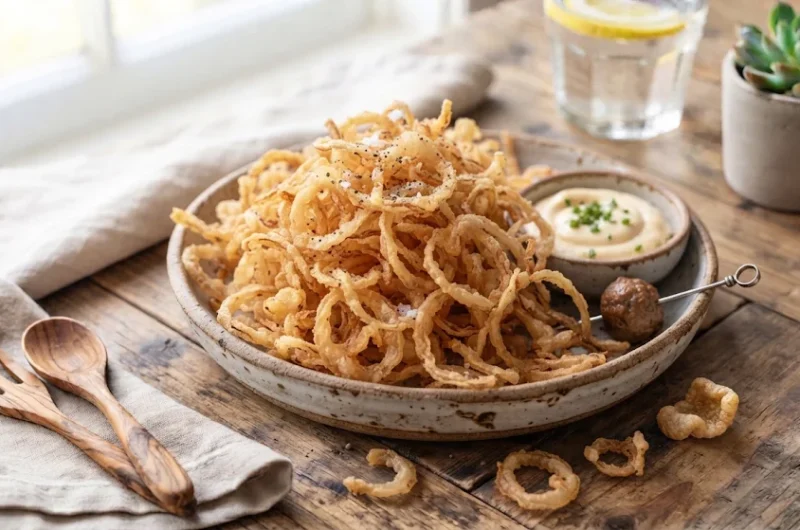
Crispy fried onions are a delicious, golden-brown topping that can instantly make everyday meals more flavorful and satisfying. Thinly sliced onions are coated lightly, fried until beautifully golden, and transformed into crunchy bites with a naturally sweet and savory taste. Whether you want to add texture to burgers, sandwiches, salads, casseroles, rice dishes, or homemade soups, crispy fried onions are a versatile kitchen favorite. Making them at home is easier than you might think, and you only need a few basic ingredients to achieve a crunchy result. Homemade fried onions also allow you to control the thickness, color, seasoning, and crispiness according to your preference. Once you learn the simple frying technique, you can prepare a fresh batch whenever you need a flavorful topping.
What Are Crispy Fried Onions?
Crispy fried onions are thin slices of onion cooked in hot oil until their moisture evaporates and their natural sugars develop a golden-brown color. The frying process creates a crunchy texture and a slightly sweet, savory flavor that works well with many different foods. They are commonly used as toppings for casseroles, rice dishes, soups, burgers, and sandwiches. In some cuisines, fried onions are also an important ingredient in traditional recipes because they add depth and aroma. Their texture can range from lightly crisp and delicate to deeply golden and crunchy, depending on how thinly they are sliced and how long they are cooked. When prepared correctly, homemade crispy onions can stay crunchy after cooling and make an excellent addition to everyday meals.
Why You Will Love This Homemade Crispy Fried Onions Recipe
There are many reasons to make crispy fried onions at home instead of relying entirely on packaged toppings. First, the ingredients are simple and affordable. All you need are onions, oil, and a few optional seasonings. Second, homemade fried onions allow you to control the flavor and texture. You can prepare thin, delicate slices for salads or slightly thicker pieces for burgers and casseroles. Third, they are incredibly versatile and can be used in both everyday cooking and special meals. You can also make a larger batch and store it for later use once completely cooled. The best part is the fresh aroma that fills your kitchen while the onions cook, creating a delicious topping that tastes wonderful on freshly prepared food.
Best Onions for Crispy Fried Onions
Choosing the right onions is important for achieving the best flavor and texture. Yellow onions are one of the most reliable options because they have a balanced flavor that becomes naturally sweet during frying. White onions can also be used and tend to have a slightly sharper taste. Red onions offer a deeper color and a mildly sweet flavor, making them an attractive option for certain dishes. Sweet onions are another good choice if you prefer a milder, sweeter result. Whichever variety you select, choose firm onions without soft spots or signs of spoilage. Fresh onions are easier to slice evenly and generally produce better results. Medium or large onions are convenient because they provide enough slices to make a useful batch of crispy toppings.
Ingredients Needed for Crispy Fried Onions
This easy recipe uses thinly sliced onions, all-purpose flour, salt, and vegetable oil for frying. The onions provide natural sweetness and flavor, while a light flour coating helps create a crisp exterior. Salt enhances the flavor and can be adjusted according to your taste. Vegetable oil is suitable because it has a relatively neutral flavor and can handle the temperature needed for frying. You can also use canola, sunflower, or another neutral oil suitable for deep frying. The flour coating is optional if you prefer a simpler onion-only version, but it helps produce a more consistently crunchy texture. A small amount of black pepper or paprika can be added for extra seasoning if desired.
How to Slice Onions for the Best Crunch
The thickness of your onion slices has a major effect on the finished texture. Thin, even slices generally become crisp more quickly and create delicate onion strands. If the slices are too thick, the outside may brown before the inside has lost enough moisture, leaving the onions soft rather than crunchy. A sharp knife works well, but a mandoline slicer can help produce more consistent slices. If using a mandoline, always use its safety guard to protect your fingers. Try to keep the slices approximately the same thickness so they cook at a similar rate. Separate the onion rings and strands gently before coating them. Removing large clumps helps the flour distribute more evenly and allows hot oil to reach each piece during frying.
Why Removing Excess Moisture Matters
Onions naturally contain a significant amount of water, and excess moisture can affect how well they fry. If the slices are wet, the flour coating may become sticky and uneven. This can also cause the oil to bubble more aggressively and make the onions cook inconsistently. After slicing, spread the onions over a clean kitchen towel or paper towels and gently pat them dry. You do not need to remove every trace of moisture, but reducing surface water makes coating and frying easier. Some cooks also allow the sliced onions to rest briefly before frying. This helps the surface dry slightly and can improve the final texture. Avoid leaving prepared onions uncovered for too long in a warm kitchen.
How to Coat Onions for a Crispy Finish
A light coating of flour helps create the crunchy exterior that makes homemade fried onions so enjoyable. Place the sliced onions in a mixing bowl and sprinkle the flour over them gradually. Toss gently using your hands or a fork until the strands are lightly coated. The goal is to cover the onions with a thin layer rather than create thick clumps of flour. If too much flour collects at the bottom of the bowl, shake off the excess before frying. An overly heavy coating can become dense and may absorb more oil. For an even coating, work in small batches and separate the onion strands as you toss them. This simple preparation step helps produce a more consistent golden color.
Choosing the Right Oil for Frying
The oil you use plays an important role in the taste and texture of crispy fried onions. Neutral oils such as vegetable, canola, and sunflower oil are popular choices because they do not overpower the natural flavor of the onions. Choose an oil suitable for frying and avoid oils that smoke easily at the temperatures needed for this recipe. Add enough oil to a deep, heavy-bottomed pan to allow the onion slices to move freely without overcrowding. The exact quantity depends on the size of your pan. Heat the oil gradually and monitor its temperature carefully. Using the correct oil temperature helps the onions cook evenly and reduces the chance of greasy results.
The Ideal Oil Temperature for Crispy Onions
Maintaining the correct oil temperature is one of the most important parts of frying onions successfully. Oil that is too cool can make the onions absorb excess oil and become greasy or limp. Oil that is too hot may brown the outside too quickly while leaving the inside insufficiently crisp. For this recipe, aim for approximately 325°F to 350°F (163°C to 177°C). A kitchen thermometer makes temperature control easier, especially when frying multiple batches. If you do not have a thermometer, test the oil with one small onion strand. It should bubble steadily when added, without immediately turning dark. Adjust the heat as necessary and allow the oil to return to the desired temperature between batches.
How to Make Crispy Fried Onions Step by Step
Start by peeling the onions and slicing them into thin, even strands. Separate the slices gently and pat them dry with paper towels. Transfer the onions to a bowl and sprinkle them with flour and salt, tossing until lightly coated. Heat vegetable oil in a deep, heavy-bottomed pan over medium heat until it reaches approximately 325°F to 350°F (163°C to 177°C). Add a small handful of coated onions to the hot oil, making sure not to overcrowd the pan. Stir gently to separate the strands and help them cook evenly. Fry until the onions become golden brown and crisp. Remove them using a slotted spoon and transfer them to a paper towel-lined plate or wire rack. Allow them to cool completely before serving or storing.
Why You Should Fry Onions in Small Batches
Frying onions in small batches is essential for achieving a crunchy result. Adding too many onion slices at once lowers the temperature of the oil, which can make the onions absorb more oil and cook unevenly. Crowded onions also tend to stick together, creating soft areas that do not become properly crisp. Instead, divide the prepared onions into several small portions and fry each portion separately. Give the strands enough room to move in the oil, and stir gently to prevent clumping. Allow the oil to return to the proper temperature before adding the next batch. Although this method takes a little longer, it produces a more consistent golden color and a better overall texture.
How to Get Golden-Brown Onions Without Burning Them
Onions can change from perfectly golden to burnt very quickly, especially when sliced thinly. For this reason, stay near the stove and watch each batch carefully during the final minutes of cooking. Remove the onions when they are golden brown rather than waiting for them to become very dark. Remember that residual heat can continue cooking them slightly after they leave the oil. If you wait until the onions look completely dark and crispy while still frying, they may become bitter as they cool. Use a slotted spoon to remove them promptly and spread them out in a single layer. Avoid stacking hot onions because trapped steam can soften their crispy exterior.
How to Drain Fried Onions Properly
Draining the onions correctly helps preserve their crunchy texture. Once they reach the desired golden color, remove them from the oil using a slotted spoon or spider strainer. Allow excess oil to drip back into the pan before transferring them to a prepared draining surface. A wire rack placed over a tray is an excellent option because air can circulate around the onions. Paper towels also work well for absorbing excess oil, although you should spread the onions out rather than piling them into one thick layer. Do not cover the onions while they are hot because trapped steam can make them soft. Let them cool completely before placing them in a storage container.
How to Make Extra Crispy Fried Onions
If you want especially crunchy onions, focus on three important details: consistent slicing, low surface moisture, and proper oil temperature. Thin slices cook more evenly, while dry onion surfaces help the flour coating adhere properly. Frying in small batches prevents the oil temperature from dropping too much. Another useful technique is allowing the fried onions to cool in a single layer on a wire rack. This prevents moisture from collecting underneath them. You should also avoid using too much flour because a thick coating can create a heavy texture rather than a delicate crunch. Finally, remove the onions when they are golden brown and allow them to cool fully before judging their final crispiness.
Can You Make Crispy Fried Onions Without Flour?
Yes, onions can be fried without flour. Simply slice them thinly, pat them dry, and fry them directly in hot oil until golden and crisp. This produces a more natural onion texture without a flour coating. However, the final result may be slightly different from traditional crispy fried onions made with flour. The slices may also need more careful attention because their natural sugars can brown quickly. If you prefer a simple onion-only topping, use this method and make sure the slices are separated before frying. This version is useful when you want to avoid flour or prefer a less coated, more delicate result.
Best Ways to Use Crispy Fried Onions
Crispy fried onions are incredibly versatile and can improve the flavor and texture of many meals. Sprinkle them over homemade burgers, sandwiches, hot dogs, and wraps for an extra crunchy layer. They also work beautifully on green salads, baked potatoes, roasted vegetables, and creamy soups. In rice dishes, fried onions add a sweet, savory flavor that complements spices and herbs. They are especially popular as a topping for casseroles and traditional dishes where a crunchy finish makes the meal more appealing. You can even add them to scrambled eggs, omelets, or savory breakfast bowls. Because their flavor is concentrated, a small handful is often enough to make a noticeable difference.
How to Store Homemade Crispy Fried Onions
Allow the fried onions to cool completely before storing them. Any remaining warmth can create condensation inside a container, which may soften the onions. Once cooled, transfer them to a clean, dry, airtight container. Keep the container in a cool, dry place away from direct sunlight and moisture. For the best texture, use them within several days and check that they remain crisp before adding them to food. If they become soft, you may be able to restore some of their crunch by warming them briefly in an oven at a low temperature. Avoid storing them while they are still warm or placing them in a damp environment.
Can You Freeze Crispy Fried Onions?
Freezing is possible, but it is not always the best way to preserve the texture of crispy fried onions. Moisture can affect their crunch when they thaw, especially if they are not stored properly. If you choose to freeze them, make sure they have cooled completely before placing them in a freezer-safe airtight container. Separate layers with parchment paper if needed to prevent clumping. When ready to use, reheat the onions briefly in an oven or air fryer rather than allowing them to sit uncovered at room temperature for too long. For the best results, make smaller batches and store them in a dry, airtight container for short-term use.
Common Mistakes to Avoid
One of the most common mistakes is slicing the onions unevenly. Thick pieces take longer to crisp, while thin pieces may burn before the thicker ones are ready. Another mistake is overcrowding the pan, which lowers the oil temperature and causes uneven cooking. Using oil that is too cool can make the onions greasy, while excessively hot oil can burn them quickly. Applying too much flour can also create a heavy coating that affects the texture. Finally, do not cover the onions while they are cooling. Allowing steam to escape is essential for keeping them crunchy. By controlling these simple details, you can achieve a consistently golden and crisp result.
Frequently Asked Questions
Why are my fried onions not crispy?
They may contain too much moisture, have been fried in oil that was too cool, or have been overcrowded in the pan. Pat the onions dry and fry in small batches.
How thin should I slice onions for frying?
Thin, even slices work best because they cook quickly and become crisp more consistently. Aim for approximately ⅛-inch slices or thinner.
Can I use red onions instead of yellow onions?
Yes. Red onions work well and provide a slightly different flavor and color. Yellow and white onions are also excellent options.
How do I know when fried onions are ready?
They should be evenly golden brown and crisp-looking. Remove them before they become very dark because they continue to cook slightly after being taken out of the oil.
Can I make fried onions ahead of time?
Yes. Prepare them ahead, allow them to cool completely, and store them in an airtight container in a dry place.
Can I make crispy onions in an air fryer?
Yes. Thinly sliced onions can be lightly coated with oil and air-fried in small batches, although the texture will differ from traditional deep-fried onions. Shake the basket regularly and watch closely because thin onion strands can brown quickly.Crispy Fried Onions Recipe
Crispy Fried Onions
Description: These homemade crispy fried onions are thinly sliced, lightly coated, and fried until beautifully golden and crunchy. They make a delicious topping for burgers, salads, casseroles, soups, sandwiches, and rice dishes.
Preparation Time: 15 minutes
Cooking Time: 15–20 minutes
Total Time: 30–35 minutes
Servings: 6
Ingredients
- 2 large yellow onions
- ½ cup all-purpose flour
- ½ teaspoon salt
- 2 cups vegetable oil, or enough for frying
Instructions
- Prepare the onions: Peel the onions and slice them into thin, even rings or strands, approximately ⅛ inch thick.
- Separate the slices: Gently separate the onion rings and strands with your fingers.
- Remove excess moisture: Spread the onions on paper towels and pat them dry.
- Coat the onions: Place the sliced onions in a large bowl. Add flour and salt, then toss until the onions are lightly coated. Shake off excess flour.
- Heat the oil: Pour vegetable oil into a deep, heavy-bottomed pan. Heat over medium heat until it reaches approximately 325°F to 350°F (163°C to 177°C).
- Fry in batches: Add a small handful of onions to the hot oil. Avoid overcrowding the pan.
- Cook until golden: Stir gently and fry for approximately 2 to 4 minutes, depending on the thickness, until the onions become golden brown.
- Remove from oil: Use a slotted spoon to transfer the onions to a wire rack or paper towel-lined plate.
- Repeat: Continue frying the remaining onions in small batches, allowing the oil to return to the correct temperature between batches.
- Cool and serve: Let the onions cool completely so they develop their final crunchy texture. Use immediately or store in an airtight container.
Notes
- Slice onions evenly for consistent cooking.
- Pat the onions dry before adding flour.
- Do not overcrowd the pan because this lowers the oil temperature.
- Remove onions when golden brown; they can darken further as they cool.
- For a flour-free version, skip the flour and fry the dried onion slices directly.
- Use a thermometer to monitor the oil temperature when possible.
- Allow the onions to cool completely before storing.
Estimated Nutrition Per Serving
- Calories: 190 kcal
- Protein: 2 g
- Carbohydrates: 13 g
- Fat: 15 g
- Fiber: 1 g
- Sugar: 3 g
- Sodium: 200 mg
Nutrition values are estimates and may vary depending on the amount of oil absorbed during frying and the ingredients used.