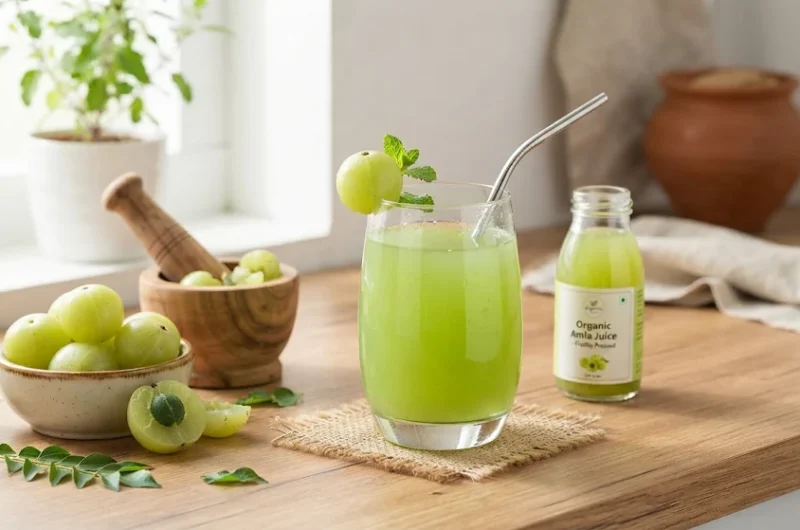
Fresh Gooseberry Amla Juice is a refreshing homemade drink prepared from fresh Indian gooseberries, commonly known as amla. This traditional Indian beverage has a naturally tangy, slightly sour taste that can be balanced with water, lemon, mint, honey, or a little black salt. It is simple to prepare, requires only a handful of ingredients, and makes a refreshing addition to your everyday drink collection.
Amla is a small green fruit widely used in Indian and South Asian cooking. Its distinctive flavor is sharp, tart, and slightly bitter, which makes it particularly delicious when blended with fresh herbs and a touch of sweetness. When prepared as juice, fresh amla produces a bright, refreshing drink that can be served chilled or over ice.
One of the best things about homemade gooseberry amla juice is that you can adjust its flavor according to your preference. If you enjoy naturally sour drinks, you can keep the recipe simple with fresh amla and water. If you prefer something milder, add honey, mint leaves, or a small amount of lemon juice. You can also prepare a larger batch and store it in the refrigerator for convenient serving.
This recipe uses fresh ingredients and does not require a juicer. A regular blender, a fine-mesh strainer, and a few minutes of preparation are enough to make a smooth and delicious drink at home.
What Is Gooseberry Amla Juice?
Gooseberry amla juice is a traditional beverage made by extracting the juice from fresh Indian gooseberries and mixing it with water and optional flavorings. Indian gooseberry, scientifically known as Phyllanthus emblica, is different from the common European gooseberry, although both fruits are sometimes called gooseberries.
Fresh amla is usually round, pale green, and divided into subtle vertical sections. Its flavor is intensely sour and astringent, making it less commonly eaten in large quantities on its own. Blending it with water and complementary ingredients creates a more balanced drink.
Amla juice is popular in many South Asian households and is often enjoyed as part of traditional food routines. Some people prefer it plain, while others combine it with ginger, mint, honey, cumin, or black salt for additional flavor.
The drink can be served in a small glass as a concentrated beverage or diluted with extra water for a lighter refreshment. Its fresh, tangy taste makes it especially enjoyable during warm weather.
Why You Will Love This Homemade Amla Juice
There are several reasons to make fresh amla juice at home instead of purchasing a packaged drink.
First, the recipe uses fresh fruit and simple ingredients. You can control exactly what goes into your glass, including the amount of sweetener and salt. This is useful if you prefer a naturally tart drink or want to avoid unnecessary added ingredients.
Second, homemade amla juice is quick to prepare. Once the fruit has been washed, deseeded, and chopped, the blender does most of the work. You can prepare a serving in approximately 10 minutes.
Another advantage is its versatility. Fresh amla pairs beautifully with mint, ginger, cumin, lemon, and honey. These ingredients allow you to create different flavor combinations without changing the basic preparation method.
Finally, the recipe is easy to adjust for different serving preferences. You can make a stronger concentrate, dilute it with chilled water, or serve it with ice for a refreshing summer drink.
Ingredients for Fresh Gooseberry Amla Juice
You only need a few ingredients to make this homemade amla drink. Fresh fruit is the most important ingredient, while the remaining additions help balance its naturally sharp flavor.
Fresh Indian Gooseberries (Amla)
Fresh amla gives the juice its characteristic tangy flavor. Choose firm, fresh-looking fruits with a light green color. Avoid fruit that looks excessively soft, damaged, or spoiled.
Wash the gooseberries thoroughly before preparing them. Remove the seeds and cut the flesh into smaller pieces so it blends more easily.
Cold Water
Water helps dilute the strong flavor of fresh amla and creates a drinkable consistency. Use filtered drinking water for the best taste.
You can adjust the quantity depending on whether you prefer a concentrated juice or a lighter beverage. Chilled water is particularly refreshing when serving the drink immediately.
Honey
Honey is optional but helps balance the sourness of amla. Start with a small quantity and adjust according to your preferred sweetness.
You can also leave out the honey completely if you prefer an unsweetened drink. Avoid adding honey to very hot liquid; this recipe uses cool or room-temperature ingredients.
Fresh Mint Leaves
Mint adds a refreshing herbal flavor that complements the sharp taste of gooseberries. It also gives the juice a pleasant aroma.
Use fresh, clean mint leaves. A small handful is enough to create a noticeable flavor without overpowering the fruit.
Lemon Juice
A little lemon juice can brighten the overall flavor. Since amla is already naturally sour, lemon is optional and should be added carefully.
If your gooseberries are particularly tart, you may prefer to skip the lemon entirely.
Black Salt
Black salt is a traditional flavoring used in many South Asian drinks. A small pinch adds a savory, slightly mineral taste that works well with sour fruits.
Use it sparingly because too much can overpower the natural flavor of the amla.
Roasted Cumin Powder
Roasted cumin powder gives the drink a warm, earthy flavor. It is optional but especially useful if you enjoy savory-style Indian beverages.
A small pinch is usually enough for one batch.
How to Make Gooseberry Amla Juice
Step 1: Wash the Fresh Amla
Rinse the fresh gooseberries thoroughly under clean running water. Remove any dirt or residue from the surface.
Place the washed fruit on a clean kitchen towel and pat it dry. Inspect each gooseberry and discard any fruit that appears spoiled or damaged.
Step 2: Remove the Seeds
Cut each gooseberry into sections along its natural lines. Separate the edible flesh from the hard central seed.
Amla seeds are quite firm, so make sure you remove them before blending. Cutting the fruit into smaller pieces will also help your blender process it evenly.
Step 3: Add the Ingredients to a Blender
Transfer the chopped amla pieces into a blender. Add the cold water, fresh mint leaves, honey, and optional black salt.
If you are using roasted cumin powder or lemon juice, you can add those ingredients now as well.
Step 4: Blend Until Smooth
Blend the mixture until the gooseberry pieces are finely processed and the liquid looks evenly combined.
Depending on your blender, this may take approximately 30–60 seconds. If the mixture is too thick, add a little extra water and blend again.
Step 5: Strain the Juice
Place a fine-mesh strainer over a clean bowl or jug. Pour the blended mixture through the strainer and use a spoon to press gently against the pulp.
This separates the liquid from most of the fibrous fruit material and produces a smoother drink.
If you enjoy a thicker, more textured beverage, you can skip straining and serve the blended mixture directly.
Step 6: Adjust the Flavor
Taste the juice and adjust the ingredients according to your preference.
Add a little more honey if the drink is too sour, or extra water if the flavor is too strong. You can also add a pinch of black salt or roasted cumin for a more traditional savory taste.
Step 7: Chill the Juice
Transfer the prepared juice to a glass or serving jug. Refrigerate briefly if you prefer it extra cold.
You can also serve it immediately over ice. Stir well before serving because natural fruit particles may settle at the bottom.
Step 8: Garnish and Serve
Pour the juice into serving glasses and garnish with a fresh mint leaf if desired.
Serve immediately for the freshest flavor. Enjoy this refreshing homemade gooseberry amla drink as part of your everyday beverage routine.
Tips for the Best Amla Juice
Choose fresh, firm gooseberries because the quality of the fruit has a major effect on the final flavor. Fresh amla should have a clean appearance and no unpleasant smell.
Remove all hard seeds before blending. This makes preparation easier and prevents unwanted hard pieces from remaining in the finished drink.
Start with a moderate amount of water. You can always dilute the juice later, but adding too much water at the beginning can make it difficult to achieve a strong fruit flavor.
Do not add too much honey at once. Amla is naturally sour, but its tart flavor is part of what makes the drink distinctive. Add sweetener gradually until the balance is right.
If you enjoy a savory drink, use black salt and roasted cumin instead of honey. This creates a different flavor profile that pairs well with traditional South Asian meals.
Strain the mixture if you prefer a smoother consistency. However, keeping some pulp gives the drink a thicker texture and retains more of the fruit’s natural fiber.
Finally, stir the juice before serving. Freshly prepared fruit drinks may separate naturally, so a quick stir helps distribute the ingredients evenly.
Health and Nutrition Information About Amla
Indian gooseberries are known for their naturally occurring vitamin C and plant compounds. Fresh amla also contains dietary fiber and various naturally occurring antioxidants.
Vitamin C contributes to normal immune system function, collagen formation, and protection of cells from oxidative stress. However, the exact amount of vitamin C retained in homemade juice depends on fruit freshness, preparation, storage, and whether the pulp is discarded.
Amla contains naturally occurring plant compounds, including polyphenols. These compounds are studied for their antioxidant properties, although drinking amla juice should not be considered a treatment for any disease.
It is important to remember that traditional uses and nutritional properties do not mean that amla juice can prevent or cure specific medical conditions. A balanced diet, appropriate medical care, and healthy lifestyle habits remain important.
Because amla is acidic and naturally tart, people who experience acid reflux, stomach discomfort, or sensitivity to acidic foods may prefer a smaller, diluted serving or may choose to avoid it if it causes symptoms.
If you have a medical condition or take regular medication, especially medication that affects blood sugar or blood clotting, ask a healthcare professional whether concentrated amla products are appropriate for you. The effects of concentrated preparations may differ from those of ordinary food portions.
Different Ways to Customize Amla Juice
One of the easiest ways to enjoy amla juice is to experiment with different flavor combinations. The basic recipe can be adjusted to suit your taste.
Amla Mint Juice
For a refreshing herbal version, blend fresh amla with mint leaves and chilled water. Add a small amount of honey if you prefer a sweeter flavor.
This combination is especially enjoyable when served over ice during warm weather.
Amla Ginger Juice
Add a small piece of peeled fresh ginger to the blender along with the amla. Ginger gives the drink a warm, spicy note that balances its tart flavor.
Use a small amount initially because fresh ginger can quickly become overpowering.
Amla Honey Juice
If you prefer a simple, naturally sweetened beverage, combine fresh amla with water and honey. Blend until smooth and strain if desired.
This version keeps the ingredient list short and allows the fruit’s flavor to remain the main focus.
Amla Cumin Drink
For a savory Indian-style beverage, add roasted cumin powder and a small pinch of black salt. Skip the honey if you prefer a savory flavor.
This variation has a more traditional spiced-drink taste.
Amla Lemon Juice
Combine amla with chilled water and a small amount of lemon juice. Since both ingredients are acidic, use lemon sparingly and taste before adding more.
Amla Green Juice
Blend amla with cucumber, mint, and water for a lighter vegetable-and-fruit drink. Cucumber softens the sharp flavor and creates a refreshing combination.
What to Serve with Amla Juice
Fresh gooseberry juice can be enjoyed on its own or served alongside everyday meals.
Its tangy flavor pairs well with traditional South Asian breakfasts such as vegetable paratha, poha, upma, and savory toast. A lightly sweetened version can also be served with a simple breakfast spread.
For lunch, the savory cumin-and-black-salt variation works well alongside rice dishes, lentils, vegetable curries, and grilled foods.
You can also serve chilled amla juice as a refreshing drink at family gatherings. Prepare it shortly before serving and keep it refrigerated until guests arrive.
If you are serving it as part of a larger meal, use small glasses because the flavor can be quite strong.
How to Store Homemade Amla Juice
Freshly prepared amla juice is best enjoyed immediately. This helps preserve its fresh taste and reduces the time it spends exposed to air.
If you need to store it, transfer the juice to a clean, airtight glass bottle or container and refrigerate it promptly. For best quality, use it within 24 hours.
Natural separation is normal, so shake or stir the juice before drinking. Discard it if you notice an unusual smell, visible mold, unexpected fermentation, or any other sign of spoilage.
Avoid leaving freshly prepared juice at room temperature for extended periods, especially in warm weather.
Can You Freeze Amla Juice?
Yes, you can freeze fresh amla juice if you want to keep it for longer.
Pour the juice into clean freezer-safe containers or ice cube trays. Leave a little space at the top of containers because liquids expand when frozen.
Once frozen, transfer the cubes to a labeled freezer bag or airtight container. For best flavor and quality, use within approximately 2–3 months.
To use frozen amla juice, thaw the required amount in the refrigerator. Stir or shake it before serving because the texture may change slightly after freezing.
Avoid repeatedly thawing and refreezing the same batch.
Common Mistakes to Avoid
Using Spoiled Fruit: Soft, damaged, or spoiled gooseberries can negatively affect the taste and quality of the juice. Always inspect the fruit before preparation.
Leaving the Seeds in: Amla seeds are hard and should be removed before blending. This makes the preparation process easier and produces a better texture.
Adding Too Much Lemon: Amla is already naturally acidic. Adding too much lemon can make the juice excessively sour.
Using Too Little Water: Concentrated amla can taste extremely sharp. Add enough water to create a flavor you can comfortably enjoy.
Adding Too Much Sweetener: Excessive honey can overpower the natural fruit flavor. Begin with a small quantity and adjust gradually.
Storing It Too Long: Fresh homemade juice does not contain the preservatives found in many commercial products. Refrigerate it promptly and use it within 24 hours for best quality.
Frequently Asked Questions
What Is Amla Juice Made From?
Amla juice is made from fresh Indian gooseberries, also known as amla. The fruit is washed, deseeded, blended with water, and strained if a smoother texture is preferred.
Can I Make Amla Juice Without a Juicer?
Yes. A regular kitchen blender works perfectly. Blend the deseeded amla with water and strain the mixture through a fine-mesh strainer.
Should I Drink Amla Juice Sweet or Unsweetened?
It depends on your taste. Unsweetened amla juice has a stronger natural sour flavor, while honey creates a milder and sweeter drink.
Can I Drink Amla Juice Every Day?
Amla can be included in a balanced diet, but there is no universal daily serving requirement. Start with a small, diluted portion if you are unfamiliar with its strong flavor. If you have a medical condition or take medication, consult a healthcare professional before making concentrated juice a regular habit.
Can I Use Frozen Amla?
Yes. Frozen amla can be used after thawing enough to cut and blend it safely. The flavor and texture may be slightly different from freshly harvested fruit.
Why Does Amla Juice Taste So Sour?
Amla naturally contains organic acids and has a strong tart flavor. Adding water, mint, or a little honey can make the drink more balanced.
Do I Have to Strain Amla Juice?
No. Straining is optional. If you prefer a smoother beverage, use a fine-mesh strainer. If you enjoy a thicker drink with more pulp, serve it without straining.
How Long Does Homemade Amla Juice Last?
For best quality, keep homemade amla juice in a clean, airtight container in the refrigerator and use it within 24 hours.
Recipe Description: A refreshing homemade Indian gooseberry juice made with fresh amla, chilled water, mint, and optional honey. This easy blender recipe creates a tangy, flavorful drink that can be customized with ginger, lemon, black salt, or roasted cumin.
Prep Time: 10 minutes
Cook Time: 0 minutes
Total Time: 10 minutes
Servings: 2 glasses
Course: Beverage
Cuisine: Indian
Method: Blending
Ingredients
- 6 fresh Indian gooseberries (amla), approximately 150 g
- 2 cups cold drinking water
- 1 tbsp honey (optional)
- 6 fresh mint leaves
- 1 tsp lemon juice (optional)
- ¼ tsp black salt (optional)
- ¼ tsp roasted cumin powder (optional)
- Ice cubes, for serving
Instructions
- Wash the fresh amla thoroughly under running water.
- Cut each gooseberry into sections and remove the hard central seeds.
- Add the chopped amla to a blender.
- Pour in the cold water and add the mint leaves.
- Add honey, lemon juice, black salt, and roasted cumin powder if using.
- Blend for approximately 30–60 seconds until the mixture is smooth.
- Place a fine-mesh strainer over a clean jug and pour the mixture through it.
- Press the pulp gently with a spoon to extract the liquid.
- Taste and adjust the sweetness or water quantity as needed.
- Pour into glasses over ice, garnish with mint, and serve immediately.
Notes
- Use fresh, firm Indian gooseberries for the best flavor.
- Remove all hard seeds before blending.
- Adjust the water quantity according to your preferred consistency.
- Honey is optional and can be omitted for an unsweetened drink.
- Skip the lemon if the amla is already very sour.
- Straining is optional if you prefer a thicker drink with pulp.
- Refrigerate leftovers in an airtight container and use within 24 hours.
- Nutrition values are estimates and vary depending on the size of the fruit and optional ingredients.
Estimated Nutrition Per Serving
- Calories: 45 kcal
- Protein: 0.5 g
- Carbohydrates: 11 g
- Fat: 0.2 g
- Fiber: 2 g
- Sugar: 8 g
- Sodium: 10 mg