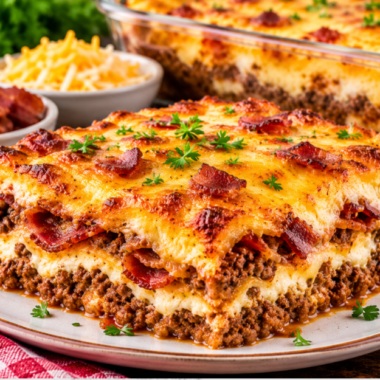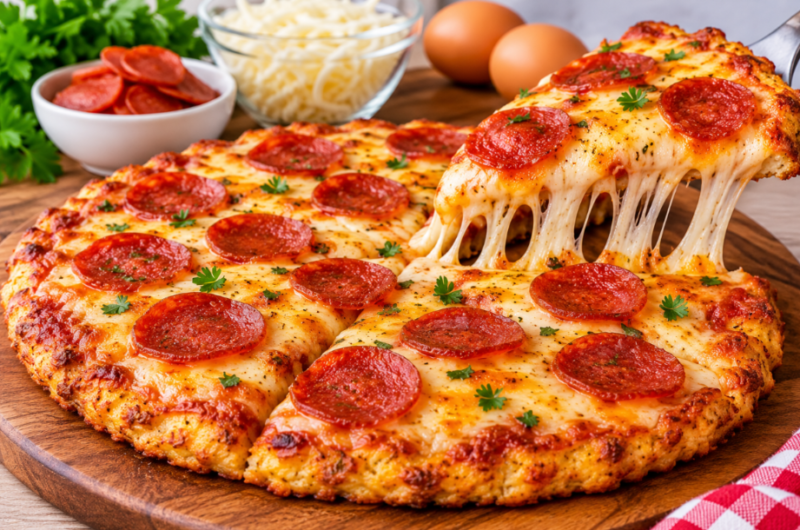
Carnivore Pizza is a delicious alternative to traditional pizza, made without regular flour, wheat dough, or plant-based toppings. Instead of using a conventional pizza crust, this recipe uses ground chicken, eggs, and cheese to create a firm, flavorful base that can hold your favorite pizza toppings. The finished pizza is topped with melted mozzarella, pepperoni, and additional cheese for a satisfying combination of savory flavors. Whether you follow a carnivore diet, prefer low-carb meals, or simply want to experiment with a different homemade pizza recipe, this version is worth trying. It brings together familiar pizza flavors while keeping the ingredient list focused on animal-based foods. The crust bakes until firm and golden, creating a delicious foundation for the melted cheese and toppings.
2. Why You Will Love This Easy Carnivore Pizza Recipe
One of the best things about this easy carnivore pizza recipe is that it does not require traditional pizza dough. There is no need to measure flour, activate yeast, knead dough, or wait for it to rise. Ground chicken, eggs, and grated Parmesan cheese form the base, making preparation straightforward for beginner home cooks. Another reason to enjoy this recipe is its versatility. You can use mozzarella, cheddar, Parmesan, pepperoni, cooked bacon, or other suitable meat toppings depending on your preferences. The crust is baked separately before adding the toppings, which helps it become firm enough to support the cheese. This approach creates a hearty, cheesy pizza that can be served for lunch, dinner, or as a weekend meal when you want something different from ordinary homemade pizza.
3. What Makes Carnivore Pizza Different from Regular Pizza?
Traditional pizza usually contains a wheat-based crust, tomato sauce, cheese, and a variety of vegetable or meat toppings. Carnivore pizza takes a different approach by replacing the flour-based dough with a crust made primarily from animal-based ingredients. This changes both the texture and nutritional composition of the finished dish. Instead of a chewy bread-like base, the crust is more similar to a savory baked chicken and cheese layer. It provides structure while adding protein and flavor to every slice. The toppings can also be adjusted to keep the recipe aligned with a carnivore-style eating pattern. Mozzarella, Parmesan, eggs, ground chicken, and pepperoni are useful ingredients because they work together to create a filling pizza without traditional flour. The result is a creative alternative for people who enjoy pizza but want to experiment with a different crust.
4. Choosing the Best Ground Chicken for the Pizza Crust
Ground chicken is the main ingredient in this carnivore pizza crust. It provides the structure needed to replace conventional pizza dough and creates a savory base that pairs well with cheese and meat toppings. For this recipe, choose fresh ground chicken from a reliable source. Ground chicken made from a mixture of breast and thigh meat can provide a good balance of flavor and moisture. Very lean ground chicken may produce a slightly firmer crust, while meat containing more fat can create a richer texture. Make sure the ground chicken is fresh and properly refrigerated before preparation. When combining it with the other ingredients, mix until everything is evenly distributed. Spreading the mixture into an even layer is also important because thicker areas may take longer to cook than thinner sections. A consistent thickness helps the crust bake more evenly.
5. Why Eggs Are Important in Carnivore Pizza
Eggs help bind the ground chicken and cheese together, creating a mixture that can be shaped into a pizza crust. Without a binding ingredient, the ground chicken may crumble or separate during baking. Eggs help the ingredients hold their shape as the mixture cooks, making the finished base easier to lift and slice. They also contribute moisture and richness to the crust. For the best result, add the eggs to the ground chicken and grated Parmesan before mixing everything together. Make sure the ingredients are evenly combined rather than leaving sections containing only meat or cheese. Avoid adding too many extra ingredients because they can change the consistency of the mixture. Once the crust has been shaped and baked, the eggs help it become firm enough to support the mozzarella and other pizza toppings.
6. The Role of Parmesan Cheese in the Crust
Parmesan cheese is an important ingredient because it adds savory flavor and helps improve the texture of the chicken crust. Its naturally strong taste complements the mild flavor of ground chicken, making the base more enjoyable even before the toppings are added. When baked, Parmesan contributes to browning and helps the crust develop a slightly firmer surface. Finely grated Parmesan is particularly useful because it distributes more evenly throughout the chicken mixture. Coarsely grated cheese may create uneven pockets, so choose a texture that combines easily with the other ingredients. Parmesan also pairs well with mozzarella, allowing you to enjoy two different cheese flavors in one pizza. Together, these ingredients create a rich base that works particularly well with pepperoni and other savory toppings.
7. Why Mozzarella Is the Best Choice for Pizza Toppings
Mozzarella is one of the most popular cheeses used in pizza recipes because of its excellent melting qualities. It softens in the oven and creates the familiar stretchy cheese layer that many people associate with homemade pizza. In this carnivore pizza recipe, mozzarella is spread over the baked chicken crust before the pizza returns to the oven. As it melts, it combines with the other toppings and creates a delicious golden surface. Low-moisture shredded mozzarella is a useful choice because it generally releases less moisture than fresh mozzarella. This can help prevent the finished pizza from becoming too wet. You can also combine mozzarella with a little Parmesan for a stronger cheese flavor. Distribute the cheese evenly so that the entire pizza receives a consistent topping.
8. Adding Pepperoni for Classic Pizza Flavor
Pepperoni gives carnivore pizza a familiar flavor that makes it feel closer to traditional pizza. Its savory taste and slightly crisp edges complement the ground chicken crust and melted mozzarella. Choose pepperoni that fits your ingredient preferences and check the label if you want to avoid added sugar, starches, or other ingredients that do not fit your dietary approach. Arrange the slices across the cheese layer rather than placing them all in the center. This allows the flavor to spread throughout the pizza and gives each slice a balanced amount of topping. During baking, the pepperoni releases some of its fat, which adds flavor to the cheese. You can use the recommended quantity or adjust the distribution according to your taste.
9. Preparing the Ingredients Before Making Carnivore Pizza
Preparing everything before mixing the crust makes the cooking process easier. Start by measuring the ground chicken, eggs, Parmesan, mozzarella, and pepperoni. Having the ingredients ready prevents unnecessary interruptions once you begin assembling the pizza. If your cheese needs grating, prepare it before mixing the crust. You should also select a suitable baking tray or pizza pan and line it with parchment paper to make handling easier. Ground chicken mixtures can be sticky, so parchment paper helps prevent the crust from attaching to the baking surface. Preheat the oven before preparing the final crust shape so that the mixture can go directly into a properly heated oven. Organizing the ingredients in advance also helps ensure that the crust and toppings are prepared in the correct order.
10. How to Make the Carnivore Pizza Crust
To prepare the crust, place the ground chicken in a large mixing bowl. Add the eggs and grated Parmesan cheese, then mix until the ingredients are evenly combined. You can use a spoon or clean hands to distribute the ingredients throughout the mixture. Avoid leaving large pockets of Parmesan or egg because these can affect the texture. Once everything is combined, transfer the mixture to a parchment-lined baking tray. Shape it into a round pizza base or a rectangle, depending on the tray you are using. Spread the mixture evenly and keep the thickness consistent from the center to the edges. A crust that is too thick may take longer to cook, while a very thin crust may become dry. Shape the edges neatly to give the pizza a more traditional appearance.
11. Baking the Chicken Pizza Crust
The first baking stage is essential because the crust needs to cook and become firm before you add the toppings. Place the shaped ground chicken mixture into a preheated oven at 400°F (200°C). Bake it until the chicken is thoroughly cooked and the surface becomes lightly golden. Depending on the thickness of the crust and your oven, this may take approximately 20 to 25 minutes. Check the center to make sure the chicken is fully cooked. Ground chicken should reach an internal temperature of 165°F (74°C), measured with a food thermometer. Once the crust is ready, carefully remove it from the oven. If there is excess liquid or grease on the surface, carefully drain it or blot it with a paper towel. This step helps create a better surface for the toppings.
12. Adding Cheese and Meat Toppings
After the chicken crust has baked, it is time to turn it into a pizza. Spread the shredded mozzarella evenly over the surface, leaving a small border around the edges if you prefer a defined crust. Arrange the pepperoni slices across the cheese so that every portion receives a good amount. You can also add a little extra Parmesan for a stronger savory flavor. If you enjoy a richer meat topping, cooked bacon can be included as an additional variation. Keep the toppings reasonably balanced because adding too much cheese or meat can make the pizza difficult to slice. The goal is to create a layer that melts evenly without overwhelming the crust. Once everything is arranged, return the pizza to the oven for the final baking stage.
13. Melting the Cheese to Perfection
The second baking stage allows the mozzarella to melt and the pepperoni to develop slightly crisp edges. Return the topped pizza to the 400°F (200°C) oven for approximately 8 to 12 minutes. Watch the cheese as it melts, especially during the final few minutes. You want it soft, bubbly, and lightly golden rather than dark or burnt. The pepperoni should be heated through, and any additional cheese should have melted into the topping layer. Oven performance can vary, so use the appearance of the pizza as a guide rather than relying only on the timer. When the cheese reaches your preferred consistency, remove the tray from the oven. The finished pizza should have a firm chicken crust, a generous melted cheese topping, and a savory aroma.
14. How to Get a Firm Carnivore Pizza Crust
A firm crust is important because it allows the pizza to be sliced and served without falling apart. One of the most useful steps is baking the chicken mixture before adding the toppings. This gives the base time to cook and release excess moisture. Spreading the mixture evenly also helps prevent some areas from remaining soft while others become overcooked. Another useful technique is allowing the crust to rest briefly after its first baking stage. If excess liquid collects on the baking tray, remove it carefully before adding the mozzarella. Using low-moisture shredded cheese can also help prevent unnecessary moisture from entering the pizza. Finally, avoid adding too many toppings. A balanced topping layer helps the crust support the finished pizza and makes individual slices easier to handle.
15. Common Mistakes to Avoid When Making Carnivore Pizza
There are a few mistakes that can affect the quality of homemade carnivore pizza. One common problem is spreading the chicken mixture too thickly. This can make the middle take longer to cook and may leave the crust difficult to slice. Another issue is skipping the initial baking stage and adding the toppings before the chicken has cooked. The crust needs to be thoroughly cooked before the mozzarella and pepperoni are added. Using too much cheese can also create a greasy or overly heavy topping. It is important to drain excess liquid from the first baking stage when necessary. Finally, avoid cutting the pizza immediately after removing it from the oven. Giving it a few minutes to settle helps the cheese firm slightly and makes serving easier.
16. Delicious Ways to Customize Your Carnivore Pizza
One advantage of homemade carnivore pizza is that you can adjust the toppings to suit your taste. Pepperoni is a classic choice, but cooked bacon, ground beef, sausage, and other suitable meat toppings can also be used. You can combine different cheeses to create a richer flavor, using mozzarella as the main melting cheese and Parmesan for additional savory depth. Cheddar can also be included if you enjoy a stronger cheese flavor. If you prefer a simple pizza, use only mozzarella and pepperoni. For a more filling version, distribute cooked meat evenly across the surface. Keep in mind that optional toppings change the nutritional information and may affect the baking time. Adding too many ingredients can also make the crust harder to support, so moderation is useful.
17. Is Carnivore Pizza Suitable for a Keto Diet?
Carnivore pizza can be suitable for some people following a ketogenic or low-carbohydrate eating plan because it replaces conventional flour-based pizza dough with a chicken and cheese crust. The main ingredients are naturally low in carbohydrates, although the exact nutritional content depends on the products selected. Some packaged pepperoni and shredded cheeses contain small amounts of carbohydrates from added ingredients. Checking food labels can help you understand what you are eating. It is also important to remember that low-carb and carnivore diets are not exactly the same. A carnivore-style approach generally focuses on animal-based foods, while a ketogenic diet can include a much wider variety of ingredients. This recipe is a useful option for people interested in a flour-free pizza, but individual dietary needs should always guide food choices.
18. How to Store Leftover Carnivore Pizza
If you have leftover carnivore pizza, allow it to cool slightly before storing it. Cut the pizza into individual slices and place them in an airtight container. Refrigerate promptly at 40°F (4°C) or below. Cooked chicken dishes should generally be consumed within three to four days when stored correctly. For reheating, place the slices in an oven or air fryer until the center is thoroughly hot. Reheating in an oven can help restore some firmness to the crust, while an air fryer can make the cheese and pepperoni slightly crisp again. You can also use a microwave if convenience is more important than texture. Avoid leaving cooked chicken pizza at room temperature for extended periods. Proper storage helps maintain its quality and keeps leftovers suitable for another meal.
19. Frequently Asked Questions About Carnivore Pizza
Can I make carnivore pizza without flour?
Yes. This recipe uses ground chicken, eggs, and Parmesan cheese to create a flour-free crust. No wheat flour or traditional pizza dough is required.
Does carnivore pizza taste like regular pizza?
It has familiar pizza flavors from mozzarella and pepperoni, but the crust is different. Instead of a bread-like texture, it has a savory chicken and cheese base.
How do I stop the chicken crust from becoming soggy?
Bake the crust before adding toppings, spread it evenly, and remove excess liquid or grease after the first baking stage when necessary.
Can I use ground beef instead of ground chicken?
Ground beef can be used as an alternative, although it will create a richer and denser crust. The fat content may also affect the final texture.
Can I make the pizza ahead of time?
You can prepare and bake the crust ahead of time, then refrigerate it. Add the toppings and complete the final baking stage when you are ready to serve.
Can I freeze carnivore pizza?
Yes. Allow the cooked pizza to cool, separate it into slices, and store the portions in freezer-safe containers. The texture may change slightly after freezing and reheating.
What temperature should the chicken crust reach?
Ground chicken should reach an internal temperature of 165°F (74°C) to ensure it is thoroughly cooked.
Can I add bacon to carnivore pizza?
Absolutely. Cooked bacon is a suitable meat-based topping and adds a smoky flavor that pairs well with mozzarella and chicken.
Carnivore Pizza – Cheesy Chicken Crust Pizza
Description: A delicious flour-free carnivore pizza made with a savory ground chicken, egg, and Parmesan crust, topped with melted mozzarella and pepperoni. This homemade pizza is a hearty alternative to traditional pizza dough and is suitable for people looking for a low-carb-inspired meal.
Course: Main Course
Preparation Duration: 15 minutes
Cooking Duration: 28–37 minutes
Resting Duration: 5 minutes
Total Duration: Approximately 48–57 minutes
Serving: 4 servings
Ingredients
For the Crust
- 1 lb ground chicken
- 2 large eggs
- ½ cup grated Parmesan cheese
For the Topping
- 1½ cups shredded mozzarella cheese
- 15–20 slices pepperoni
- 2 tablespoons grated Parmesan cheese (optional)
Step-by-Step Instructions
1. Preheat the oven: Set your oven to 400°F (200°C). Prepare a baking tray or pizza pan by lining it with parchment paper.
2. Prepare the crust mixture: Place the ground chicken in a large mixing bowl. Add the eggs and grated Parmesan cheese.
3. Combine the ingredients: Mix everything until the chicken, eggs, and Parmesan are evenly distributed.
4. Shape the pizza crust: Transfer the mixture to the prepared baking tray. Spread it into a round or rectangular pizza shape, keeping the thickness even.
5. Bake the crust: Place the tray in the preheated oven and bake for approximately 20–25 minutes, until the chicken is thoroughly cooked and the surface is lightly golden.
6. Check the chicken: Use a food thermometer to make sure the center reaches 165°F (74°C).
7. Remove excess moisture: Carefully remove the crust from the oven. Drain or blot any excess liquid or grease if necessary.
8. Add mozzarella: Spread the shredded mozzarella evenly over the baked chicken crust.
9. Arrange the pepperoni: Distribute the pepperoni slices across the cheese layer.
10. Add extra Parmesan: Sprinkle additional Parmesan over the toppings if desired.
11. Bake again: Return the pizza to the oven for another 8–12 minutes, until the mozzarella has melted and the pepperoni is heated through.
12. Rest and slice: Remove the pizza from the oven and allow it to rest for approximately five minutes before cutting.
13. Serve: Slice and enjoy your homemade carnivore pizza while warm.
Nutritional Information
Estimated values per serving, based on four servings. Actual values depend on ingredient brands and quantities.
- Calories: Approximately 390 kcal
- Protein: Approximately 39 g
- Total Fat: Approximately 24 g
- Total Carbohydrates: Approximately 2–3 g
- Fiber: 0 g
- Net Carbohydrates: Approximately 2–3 g
- Sugar: Approximately 1 g
Notes
- Spread the chicken mixture evenly to help the crust cook consistently.
- Always bake the chicken crust before adding the toppings.
- Make sure the chicken reaches an internal temperature of 165°F (74°C).
- Remove excess moisture before adding mozzarella to help prevent a soggy crust.
- Low-moisture mozzarella works well for this recipe.
- You can replace pepperoni with cooked bacon, ground beef, or sausage.
- Allow the finished pizza to rest for five minutes before slicing.
- Refrigerate leftovers in an airtight container for three to four days.
- Nutritional information is estimated and can change depending on the cheese, chicken, and pepperoni brands used.