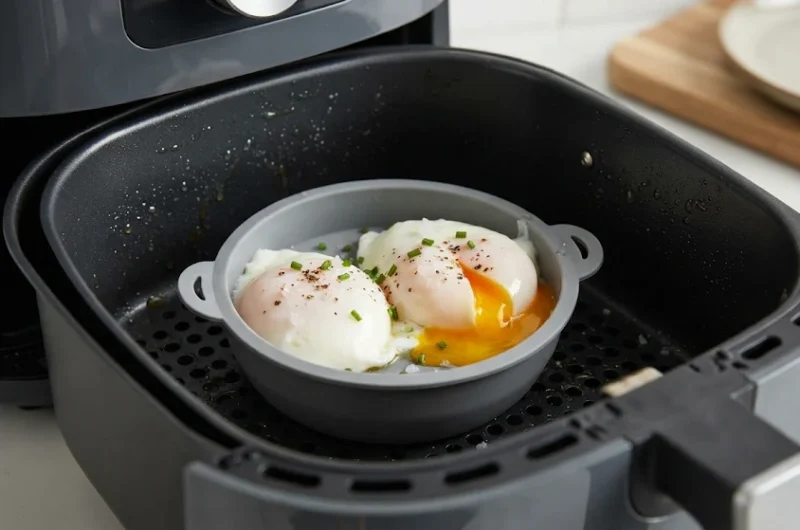
Air fryer poached eggs are a simple and convenient way to enjoy a classic breakfast without dealing with a pot of simmering water or complicated stovetop techniques. Traditionally, poaching eggs requires careful attention to water temperature, timing, and technique to prevent the whites from spreading throughout the pan. Using an air fryer makes the process more manageable because the eggs cook individually in heat-safe ramekins filled with hot water. The result is tender, delicate egg whites surrounding a beautifully soft yolk. Whether you prefer a completely runny center or a slightly thicker consistency, you can adjust the cooking time to suit your taste. This easy air fryer egg recipe is especially useful for busy mornings when you want something nutritious, satisfying, and quick to prepare. With just a handful of everyday ingredients and minimal preparation, you can make restaurant-style poached eggs right in your kitchen.
Why Air Fryer Poached Eggs Are Worth Making
Preparing poached eggs in an air fryer offers a convenient alternative to conventional water poaching. You do not need to create a swirling motion in a saucepan, monitor a simmering pot, or worry as much about the egg whites spreading apart. Instead, each egg is placed into its own ramekin containing hot water, keeping everything neatly contained while cooking. This approach is particularly helpful for people who are new to making poached eggs or those who find traditional methods difficult to manage. Another advantage is the relatively simple cleanup, as the ramekins can be washed separately after use. The recipe also requires very little added fat, making it suitable for anyone looking for a lighter breakfast option. Once you understand how your particular air fryer cooks eggs, you can easily adjust the timing and prepare them regularly for breakfast, brunch, or a quick protein-rich meal.
What Makes a Perfect Poached Egg?
A properly prepared poached egg has two important characteristics: tender, fully cooked whites and a soft, creamy yolk. The outside should look smooth and delicate, while the center should remain rich enough to flow when gently cut with a fork. Achieving this texture depends on several factors, including egg freshness, water temperature, cooking duration, and the size of the ramekin. Fresh eggs are particularly important because their whites tend to remain closer to the yolk instead of spreading into thin, watery layers. Hot water also helps create the right cooking environment inside the ramekin, while the air fryer provides consistent surrounding heat. Although the process is relatively straightforward, even small adjustments can change the final texture. For example, an additional minute of cooking can turn a very runny yolk into a creamier one. Paying attention to these details will help you prepare attractive, delicious poached eggs with a texture that suits your preferences.
How the Air Fryer Poaching Method Works
Unlike fried eggs, which cook directly against a hot cooking surface, air fryer poached eggs are prepared in water inside individual heat-safe containers. The ramekins hold the eggs in place, while the hot air circulating around them gradually heats the water. This creates a gentle cooking environment that helps the whites become firm without requiring the eggs to touch the air fryer basket directly. The method is different from traditional stovetop poaching, but it offers a similar style of finished egg when the temperature and cooking time are properly adjusted. Using hot water rather than cold water is an important part of the process because it allows cooking to begin more efficiently. Preheating the appliance also helps establish a consistent starting temperature. Once the ramekins are positioned securely inside the basket, the eggs can cook without constant supervision. This makes the technique particularly appealing for people who want an easier approach to preparing poached eggs at home.
Ingredients Needed for Air Fryer Poached Eggs
One of the best features of this easy air fryer poached eggs recipe is its short ingredient list. You only need two large fresh eggs, one cup of very hot water, and a few optional ingredients for preparing and serving. Cooking spray or a teaspoon of oil can be used to lightly grease the ramekins, helping the cooked eggs release more easily. Salt and black pepper provide simple seasoning, while fresh herbs can add color and a little extra flavor. Fresh eggs are the most important ingredient because they generally produce a neater shape and better texture. When choosing your eggs, look for shells without cracks and use eggs that have been stored correctly. You do not need vinegar for this cooking method because the ramekins keep the eggs contained throughout the process. Keeping the ingredient list simple allows the natural flavor of the eggs to remain the main focus while giving you plenty of opportunities to customize the finished dish with different toppings.
Choosing the Right Ramekins and Kitchen Equipment
The equipment you use can make a noticeable difference when preparing poached eggs in an air fryer. Small heat-safe ramekins are ideal because they provide enough room for an egg and its surrounding water without taking up too much space in the basket. Choose containers that are specifically suitable for oven or air fryer temperatures, and check that they fit comfortably inside your appliance. Two ramekins are needed for this recipe, allowing you to prepare both eggs at the same time. You will also need a measuring cup for the water, a spoon for transferring the eggs, and an electric kettle or saucepan for heating the water. Oven mitts are particularly useful because the ramekins and water become extremely hot during cooking. Before starting, arrange all your equipment on the counter so everything is within reach. Having the right tools ready makes preparation easier and reduces the risk of accidentally spilling hot water when placing or removing the ramekins.
Preparing the Air Fryer Before Cooking
Start by preheating your air fryer to 350°F (175°C) for approximately three to five minutes. Preheating helps the appliance reach a consistent cooking temperature before the ramekins are added. While the air fryer heats, prepare the water by heating it until very hot but not vigorously boiling. Water at approximately 190°F to 200°F is recommended for this recipe. Next, lightly coat the inside of each ramekin with cooking spray or a small amount of oil if desired. This optional step can make it easier to remove the eggs once they are cooked. Pour the hot water into each ramekin until it is approximately halfway full, leaving enough room for the egg without allowing the water to overflow. Working carefully at this stage is important because very hot water can cause burns if spilled. Once both containers are prepared, you can move on to adding the eggs and getting everything ready for the air fryer.
How to Add the Eggs Without Breaking the Yolks
Cracking the eggs carefully is an important step in achieving attractive poached eggs. Break each egg individually and gently slide it into a prepared ramekin containing hot water. Try to keep the yolk intact and positioned near the center of the container. If possible, crack the egg into a small cup first before transferring it into the ramekin. This can give you better control, especially if you are not confident cracking eggs directly into water. Avoid dropping the eggs from a height because the impact can break the yolks or cause unnecessary splashing. The water should surround the eggs without completely covering them with excessive liquid. Once both eggs have been added, inspect the ramekins to make sure they are not overfilled. Keeping the yolks intact and the eggs properly positioned helps produce a more attractive finished result. You can now carefully transfer the ramekins into the preheated air fryer basket.
Step-by-Step Guide to Cooking Poached Eggs in an Air Fryer
Place the prepared ramekins carefully inside the air fryer basket, making sure they sit on a flat and stable surface. They should not touch one another or become tilted when the basket is moved. Close the air fryer and cook the eggs according to your preferred yolk consistency. For a very runny yolk, begin with approximately six minutes. Seven minutes generally produces a soft, creamy center, while eight minutes creates a slightly firmer yolk. If you prefer a mostly set center, nine minutes may be more suitable. These timings are starting points rather than guaranteed results because different air fryer models can heat differently. Avoid repeatedly opening the appliance during cooking, as releasing hot air can affect the temperature and increase the overall cooking time. When the timer finishes, carefully inspect the eggs and determine whether they have reached your desired consistency. If additional cooking is necessary, return them to the air fryer in one-minute increments.
Air Fryer Poached Egg Cooking Times and Texture Guide
Cooking time is one of the most important factors when making poached eggs in an air fryer. A small difference in timing can significantly affect the consistency of the yolk, so it is worth experimenting until you find the setting that works best for your appliance. At approximately six minutes, the yolk should be very runny, making it excellent for dipping toast or spreading over avocado. Around seven minutes generally creates a soft, creamy yolk that holds its shape but still has a smooth center. Eight minutes produces a slightly firmer texture, while nine minutes is suitable for people who prefer a mostly set yolk. If you enjoy firm yolks, you can experiment with approximately nine to ten minutes. Remember that ramekin size, water temperature, egg size, and air fryer performance can influence the results. For the most reliable outcome, use the suggested times as a starting point and adjust gradually instead of immediately choosing a longer cooking duration.
How to Check Whether Your Poached Eggs Are Fully Cooked
After cooking, carefully remove one ramekin from the air fryer using oven mitts. The water and container will be extremely hot, so avoid touching them directly. Look closely at the egg white to check whether it has become opaque and firm. Properly cooked whites should no longer have translucent or watery sections. The yolk should remain intact, with a consistency that matches the cooking time you selected. If the white still appears undercooked, place the ramekin back into the air fryer for another minute. Continue checking at one-minute intervals until the desired texture is reached. It is also important to remember that eggs can continue cooking slightly after removal because of the residual heat retained by the water and ramekin. For this reason, remove them as soon as the whites are properly set rather than leaving them in the hot water longer than necessary. Careful checking helps prevent overcooking and keeps the yolks pleasantly soft.
How to Remove Poached Eggs Without Breaking Them
Removing the eggs from their ramekins requires a little patience because the cooked whites and yolks are delicate. Take a large spoon and gently slide it underneath the egg, following the curve of the ramekin. Lift slowly, allowing the excess water to drain away before transferring the egg to a serving plate. If the egg appears to stick to the sides, carefully move the spoon around its outer edge to loosen it. Lightly greasing the ramekins before cooking can make this step easier. Avoid using a fork or pressing directly against the yolk because it can break unexpectedly. Once the egg is lifted, let it drain for several seconds so that excess water does not make your toast or other breakfast ingredients soggy. Arrange the eggs carefully on your plate and season them with salt and black pepper. For the best experience, serve them while they are still warm and enjoy the soft texture immediately.
Delicious Ways to Serve Air Fryer Poached Eggs
Air fryer poached eggs are versatile enough to accompany many different meals. One of the simplest serving ideas is placing them over buttered sourdough toast, where the creamy yolk creates a naturally rich topping. Avocado toast is another popular option because the combination of smooth avocado and soft eggs makes a satisfying breakfast. For a more substantial brunch, serve the eggs on toasted English muffins with smoked salmon or alongside crispy breakfast potatoes. They also work beautifully with roasted asparagus, spinach, grilled tomatoes, and other vegetables. If you prefer something different from traditional breakfast dishes, add a poached egg to a rice bowl, quinoa bowl, or fresh salad. A little freshly ground black pepper, chopped parsley, chives, dill, paprika, chili flakes, or grated Parmesan cheese can enhance the flavor. Because the eggs have a mild taste, they pair well with both simple ingredients and more elaborate breakfast combinations.
How to Store Leftover Poached Eggs
Freshly prepared poached eggs are best enjoyed immediately because their whites and yolks have their most delicate texture shortly after cooking. However, if you have leftovers or want to prepare them slightly ahead of time, refrigeration is an option. Transfer the cooked eggs into a clean container filled with cold water, making sure they remain submerged. Cover the container securely and place it in the refrigerator. For this recipe, the recommended storage period is up to 24 hours. Keeping the eggs in water helps prevent the exposed surfaces from drying out and becoming unpleasantly firm. Before storing, allow the eggs to cool appropriately and avoid leaving cooked eggs at room temperature for extended periods. When you are ready to serve them, remove the required portion from the container and reheat gently using hot water. Discard any eggs that have been stored improperly or show unusual changes in smell or appearance. Proper refrigeration is important for maintaining both food quality and safety.
Best Way to Reheat Refrigerated Poached Eggs
Reheating poached eggs requires a gentle approach because excessive heat can quickly turn a soft yolk into a firm one. The easiest method is to heat a small amount of water until it is hot but not boiling. Carefully lower the refrigerated egg into the water using a spoon and leave it for approximately one minute. This allows the egg to warm without exposing it to the intense direct heat of a skillet or air fryer. Once warmed, lift it out carefully and allow the excess water to drain before serving. Avoid reheating poached eggs in the microwave because the yolk may heat unevenly and can become extremely hot. Using an air fryer or frying pan for reheating is also not recommended because these methods can make the delicate egg whites rubbery and overcook the center. Gentle hot-water reheating is a much better option when you want to preserve the original texture.
Expert Notes for Consistently Good Results
A few small adjustments can make this recipe more reliable every time you prepare it. Always choose fresh eggs because firmer whites generally create a neater shape. Preheat the air fryer so that cooking begins under consistent conditions, and use very hot water instead of cold water. Lightly greasing the ramekins is optional, but it can make removing the eggs easier. Make sure the containers are heat-safe and fit securely inside the basket without overcrowding. Keep them level to prevent water from spilling over the sides. Because every air fryer model is slightly different, pay attention to the first batch and record the timing that produces your preferred texture. If the whites are not fully opaque, add another minute rather than increasing the temperature immediately. Finally, season the eggs after cooking and serve them promptly. These practical adjustments help improve the appearance, texture, and overall consistency of your air fryer breakfast.
Common Mistakes to Avoid When Making Air Fryer Poached Eggs
Although the method is straightforward, certain mistakes can affect the final result. Using older eggs is one of the most common problems because their whites are often thinner and more likely to spread. Another mistake is starting with cold water, which can change the cooking time and make the results less predictable. Skipping preheating may also affect consistency, particularly if your appliance takes time to reach its selected temperature. Overcooking is another issue because the yolk can become firm before you realize it. It is also important not to use ramekins that are too shallow, too large, or unsuitable for high temperatures. Repeatedly opening the air fryer can release heat and interfere with cooking. Finally, avoid lifting the eggs too quickly or using sharp utensils that may damage the yolks. Taking care with these details will make the process easier and help you achieve better results with every batch.
Are Air Fryer Poached Eggs a Healthy Breakfast Choice?
Poached eggs can be a nutritious addition to a balanced breakfast because they provide protein along with several essential nutrients. One large egg contains approximately 72 calories and six grams of protein, making it a relatively low-calorie ingredient that can contribute to a satisfying meal. The air fryer poaching method also requires very little added fat, especially when you choose to skip the optional cooking spray or oil. Eggs pair well with whole-grain toast, avocado, fresh vegetables, and other nutrient-rich ingredients, allowing you to create a balanced meal with a variety of flavors and textures. They can also be added to salads and grain bowls for extra protein. Keep in mind that the nutritional content of the complete dish will depend on the ingredients served alongside the eggs. Butter, cheese, smoked salmon, and additional toppings can increase the overall calories, fat, and sodium. Enjoying poached eggs with a variety of wholesome foods is an easy way to build a satisfying meal.
Frequently Asked Questions About Air Fryer Poached Eggs
Can I Cook More Than Two Poached Eggs at Once?
Yes, you can prepare additional eggs if your air fryer basket has enough room for more heat-safe ramekins. Each egg should have its own container so that it remains properly positioned during cooking. Avoid overcrowding the basket, and make sure the ramekins sit flat without touching or becoming unstable. If you are preparing several portions, check that the containers receive consistent heat and adjust the cooking time if necessary. Depending on the size and design of your air fryer, cooking in separate batches may provide more reliable results.
Do I Need Vinegar to Make Poached Eggs in an Air Fryer?
No, vinegar is not necessary for this recipe. Traditional stovetop poaching sometimes uses vinegar to help the egg whites coagulate and stay closer to the yolk. However, the ramekins used in this air fryer method keep the eggs contained during cooking. Simply add the eggs to the hot water and cook them according to the recommended timing. This keeps the ingredient list short while still producing tender poached eggs.
Can I Use Silicone Cups Instead of Ramekins?
Yes, heat-safe silicone baking cups can be used as an alternative if they are suitable for oven or air fryer temperatures. Make sure they are stable enough to hold the hot water and eggs without bending excessively. Rigid ramekins are often easier to handle because they remain stable when transferring them into and out of the air fryer. Whatever container you choose, always check its temperature rating before using it.
Why Are My Air Fryer Poached Egg Whites Still Runny?
Runny or translucent whites usually indicate that the eggs need additional cooking time. Air fryer models can vary in heating performance, and factors such as water temperature, ramekin size, and egg size can influence the final result. Return the ramekin to the appliance and cook for another minute before checking again. Repeat as necessary until the whites become fully opaque. Avoid increasing the temperature immediately, as gradual adjustments make it easier to control the yolk consistency.
Can I Make Poached Eggs With Firm Yolks?
Absolutely. If you prefer a firmer center instead of a runny yolk, increase the cooking time to approximately nine or ten minutes. The exact duration will depend on your air fryer and the starting temperature of the water. Check the egg toward the end of cooking to avoid making the whites unnecessarily tough. Adjust the timing gradually until you find the consistency you enjoy.
Final Thoughts on This Easy Air Fryer Poached Eggs Recipe
Making poached eggs in an air fryer is a practical way to enjoy a familiar breakfast with less hands-on preparation. The ramekin-and-hot-water technique eliminates much of the difficulty associated with traditional stovetop poaching, making it accessible to beginners and experienced home cooks alike. With only a few basic ingredients, you can prepare eggs with tender whites and yolks ranging from very runny to mostly set. The recipe is easy to customize, whether you want to serve the eggs over avocado toast, pair them with smoked salmon, or add them to a fresh vegetable bowl. Once you become familiar with your air fryer’s cooking performance, preparing consistent batches becomes even easier. Keep the ingredients simple, use fresh eggs, and adjust the timing to match your preferred texture. This easy air fryer poached eggs recipe is a useful addition to any breakfast routine, especially when you want a delicious, protein-rich meal without spending too much time in the kitchen.
Part 2: Structured Recipe Card
Air Fryer Poached Eggs
Description: Make perfectly tender air fryer poached eggs with delicate whites and creamy, runny yolks using a simple ramekin-and-hot-water technique. This easy breakfast recipe requires minimal preparation and is perfect for toast, avocado, brunch plates, salads, and healthy everyday meals.
Preparation Time: 5 minutes
Cooking Time: 6–9 minutes
Total Time: 11–14 minutes
Servings: 2
Cooking Temperature: 350°F (175°C)
Ingredients
- 2 large fresh eggs
- 1 cup very hot water
- Cooking spray or 1 teaspoon oil (optional)
- Salt, to taste
- Black pepper, to taste
- Fresh herbs for garnish (optional)
Equipment
- Air fryer
- 2 heat-safe ramekins
- Electric kettle or saucepan
- Spoon
- Measuring cup
- Oven mitts
- Small serving plate
Step-by-Step Instructions
Step 1: Preheat the Air Fryer
Set your air fryer to 350°F (175°C) and preheat for approximately 3–5 minutes.
Step 2: Heat the Water
Heat the water until very hot but not vigorously boiling. A temperature of approximately 190°F–200°F is recommended.
Step 3: Prepare the Ramekins
Lightly coat the inside of each ramekin with cooking spray or a small amount of oil if desired.
Step 4: Add the Hot Water
Pour the hot water into the ramekins, filling each approximately halfway.
Step 5: Crack in the Eggs
Carefully crack one fresh egg into each ramekin. Keep the yolks intact and avoid splashing the water.
Step 6: Arrange in the Air Fryer
Place both ramekins carefully inside the preheated air fryer basket. Make sure they sit flat and have enough room around them.
Step 7: Cook the Eggs
Cook for approximately 6–9 minutes, depending on your preferred yolk consistency.
- 6 minutes: Very runny yolk
- 7 minutes: Soft and creamy yolk
- 8 minutes: Slightly firmer yolk
- 9 minutes: Mostly set yolk
Step 8: Check for Doneness
Carefully remove a ramekin using oven mitts. Check that the egg white is fully opaque. If necessary, return it to the air fryer for another minute.
Step 9: Remove the Eggs
Gently slide a large spoon underneath each egg. Lift carefully and allow excess water to drain before transferring to a serving plate.
Step 10: Season and Serve
Sprinkle with salt and black pepper. Add fresh herbs if desired and serve immediately with your favorite breakfast sides.
Nutritional Information
Approximate nutritional values per egg:
| Nutrient | Amount |
|---|---|
| Calories | 72 kcal |
| Protein | 6 g |
| Total Fat | 5 g |
| Carbohydrates | 0.5 g |
| Cholesterol | 186 mg |
| Sodium | 70 mg |
| Sugar | 0 g |
Nutrition information is approximate and may vary depending on egg size, preparation method, and additional toppings.
Recipe Notes
Air fryer poached eggs are a simple and convenient way to enjoy a classic breakfast without dealing with a pot of simmering water or complicated stovetop techniques. Traditionally, poaching eggs requires careful attention to water temperature, timing, and technique to prevent the whites from spreading throughout the pan. Using an air fryer makes the process more manageable because the eggs cook individually in heat-safe ramekins filled with hot water. The result is tender, delicate egg whites surrounding a beautifully soft yolk. Whether you prefer a completely runny center or a slightly thicker consistency, you can adjust the cooking time to suit your taste. This easy air fryer egg recipe is especially useful for busy mornings when you want something nutritious, satisfying, and quick to prepare. With just a handful of everyday ingredients and minimal preparation, you can make restaurant-style poached eggs right in your kitchen.
Why Air Fryer Poached Eggs Are Worth Making
Preparing poached eggs in an air fryer offers a convenient alternative to conventional water poaching. You do not need to create a swirling motion in a saucepan, monitor a simmering pot, or worry as much about the egg whites spreading apart. Instead, each egg is placed into its own ramekin containing hot water, keeping everything neatly contained while cooking. This approach is particularly helpful for people who are new to making poached eggs or those who find traditional methods difficult to manage. Another advantage is the relatively simple cleanup, as the ramekins can be washed separately after use. The recipe also requires very little added fat, making it suitable for anyone looking for a lighter breakfast option. Once you understand how your particular air fryer cooks eggs, you can easily adjust the timing and prepare them regularly for breakfast, brunch, or a quick protein-rich meal.
What Makes a Perfect Poached Egg?
A properly prepared poached egg has two important characteristics: tender, fully cooked whites and a soft, creamy yolk. The outside should look smooth and delicate, while the center should remain rich enough to flow when gently cut with a fork. Achieving this texture depends on several factors, including egg freshness, water temperature, cooking duration, and the size of the ramekin. Fresh eggs are particularly important because their whites tend to remain closer to the yolk instead of spreading into thin, watery layers. Hot water also helps create the right cooking environment inside the ramekin, while the air fryer provides consistent surrounding heat. Although the process is relatively straightforward, even small adjustments can change the final texture. For example, an additional minute of cooking can turn a very runny yolk into a creamier one. Paying attention to these details will help you prepare attractive, delicious poached eggs with a texture that suits your preferences.
How the Air Fryer Poaching Method Works
Unlike fried eggs, which cook directly against a hot cooking surface, air fryer poached eggs are prepared in water inside individual heat-safe containers. The ramekins hold the eggs in place, while the hot air circulating around them gradually heats the water. This creates a gentle cooking environment that helps the whites become firm without requiring the eggs to touch the air fryer basket directly. The method is different from traditional stovetop poaching, but it offers a similar style of finished egg when the temperature and cooking time are properly adjusted. Using hot water rather than cold water is an important part of the process because it allows cooking to begin more efficiently. Preheating the appliance also helps establish a consistent starting temperature. Once the ramekins are positioned securely inside the basket, the eggs can cook without constant supervision. This makes the technique particularly appealing for people who want an easier approach to preparing poached eggs at home.
Ingredients Needed for Air Fryer Poached Eggs
One of the best features of this easy air fryer poached eggs recipe is its short ingredient list. You only need two large fresh eggs, one cup of very hot water, and a few optional ingredients for preparing and serving. Cooking spray or a teaspoon of oil can be used to lightly grease the ramekins, helping the cooked eggs release more easily. Salt and black pepper provide simple seasoning, while fresh herbs can add color and a little extra flavor. Fresh eggs are the most important ingredient because they generally produce a neater shape and better texture. When choosing your eggs, look for shells without cracks and use eggs that have been stored correctly. You do not need vinegar for this cooking method because the ramekins keep the eggs contained throughout the process. Keeping the ingredient list simple allows the natural flavor of the eggs to remain the main focus while giving you plenty of opportunities to customize the finished dish with different toppings.
Choosing the Right Ramekins and Kitchen Equipment
The equipment you use can make a noticeable difference when preparing poached eggs in an air fryer. Small heat-safe ramekins are ideal because they provide enough room for an egg and its surrounding water without taking up too much space in the basket. Choose containers that are specifically suitable for oven or air fryer temperatures, and check that they fit comfortably inside your appliance. Two ramekins are needed for this recipe, allowing you to prepare both eggs at the same time. You will also need a measuring cup for the water, a spoon for transferring the eggs, and an electric kettle or saucepan for heating the water. Oven mitts are particularly useful because the ramekins and water become extremely hot during cooking. Before starting, arrange all your equipment on the counter so everything is within reach. Having the right tools ready makes preparation easier and reduces the risk of accidentally spilling hot water when placing or removing the ramekins.
Preparing the Air Fryer Before Cooking
Start by preheating your air fryer to 350°F (175°C) for approximately three to five minutes. Preheating helps the appliance reach a consistent cooking temperature before the ramekins are added. While the air fryer heats, prepare the water by heating it until very hot but not vigorously boiling. Water at approximately 190°F to 200°F is recommended for this recipe. Next, lightly coat the inside of each ramekin with cooking spray or a small amount of oil if desired. This optional step can make it easier to remove the eggs once they are cooked. Pour the hot water into each ramekin until it is approximately halfway full, leaving enough room for the egg without allowing the water to overflow. Working carefully at this stage is important because very hot water can cause burns if spilled. Once both containers are prepared, you can move on to adding the eggs and getting everything ready for the air fryer.
How to Add the Eggs Without Breaking the Yolks
Cracking the eggs carefully is an important step in achieving attractive poached eggs. Break each egg individually and gently slide it into a prepared ramekin containing hot water. Try to keep the yolk intact and positioned near the center of the container. If possible, crack the egg into a small cup first before transferring it into the ramekin. This can give you better control, especially if you are not confident cracking eggs directly into water. Avoid dropping the eggs from a height because the impact can break the yolks or cause unnecessary splashing. The water should surround the eggs without completely covering them with excessive liquid. Once both eggs have been added, inspect the ramekins to make sure they are not overfilled. Keeping the yolks intact and the eggs properly positioned helps produce a more attractive finished result. You can now carefully transfer the ramekins into the preheated air fryer basket.
Step-by-Step Guide to Cooking Poached Eggs in an Air Fryer
Place the prepared ramekins carefully inside the air fryer basket, making sure they sit on a flat and stable surface. They should not touch one another or become tilted when the basket is moved. Close the air fryer and cook the eggs according to your preferred yolk consistency. For a very runny yolk, begin with approximately six minutes. Seven minutes generally produces a soft, creamy center, while eight minutes creates a slightly firmer yolk. If you prefer a mostly set center, nine minutes may be more suitable. These timings are starting points rather than guaranteed results because different air fryer models can heat differently. Avoid repeatedly opening the appliance during cooking, as releasing hot air can affect the temperature and increase the overall cooking time. When the timer finishes, carefully inspect the eggs and determine whether they have reached your desired consistency. If additional cooking is necessary, return them to the air fryer in one-minute increments.
Air Fryer Poached Egg Cooking Times and Texture Guide
Cooking time is one of the most important factors when making poached eggs in an air fryer. A small difference in timing can significantly affect the consistency of the yolk, so it is worth experimenting until you find the setting that works best for your appliance. At approximately six minutes, the yolk should be very runny, making it excellent for dipping toast or spreading over avocado. Around seven minutes generally creates a soft, creamy yolk that holds its shape but still has a smooth center. Eight minutes produces a slightly firmer texture, while nine minutes is suitable for people who prefer a mostly set yolk. If you enjoy firm yolks, you can experiment with approximately nine to ten minutes. Remember that ramekin size, water temperature, egg size, and air fryer performance can influence the results. For the most reliable outcome, use the suggested times as a starting point and adjust gradually instead of immediately choosing a longer cooking duration.
How to Check Whether Your Poached Eggs Are Fully Cooked
After cooking, carefully remove one ramekin from the air fryer using oven mitts. The water and container will be extremely hot, so avoid touching them directly. Look closely at the egg white to check whether it has become opaque and firm. Properly cooked whites should no longer have translucent or watery sections. The yolk should remain intact, with a consistency that matches the cooking time you selected. If the white still appears undercooked, place the ramekin back into the air fryer for another minute. Continue checking at one-minute intervals until the desired texture is reached. It is also important to remember that eggs can continue cooking slightly after removal because of the residual heat retained by the water and ramekin. For this reason, remove them as soon as the whites are properly set rather than leaving them in the hot water longer than necessary. Careful checking helps prevent overcooking and keeps the yolks pleasantly soft.
How to Remove Poached Eggs Without Breaking Them
Removing the eggs from their ramekins requires a little patience because the cooked whites and yolks are delicate. Take a large spoon and gently slide it underneath the egg, following the curve of the ramekin. Lift slowly, allowing the excess water to drain away before transferring the egg to a serving plate. If the egg appears to stick to the sides, carefully move the spoon around its outer edge to loosen it. Lightly greasing the ramekins before cooking can make this step easier. Avoid using a fork or pressing directly against the yolk because it can break unexpectedly. Once the egg is lifted, let it drain for several seconds so that excess water does not make your toast or other breakfast ingredients soggy. Arrange the eggs carefully on your plate and season them with salt and black pepper. For the best experience, serve them while they are still warm and enjoy the soft texture immediately.
Delicious Ways to Serve Air Fryer Poached Eggs
Air fryer poached eggs are versatile enough to accompany many different meals. One of the simplest serving ideas is placing them over buttered sourdough toast, where the creamy yolk creates a naturally rich topping. Avocado toast is another popular option because the combination of smooth avocado and soft eggs makes a satisfying breakfast. For a more substantial brunch, serve the eggs on toasted English muffins with smoked salmon or alongside crispy breakfast potatoes. They also work beautifully with roasted asparagus, spinach, grilled tomatoes, and other vegetables. If you prefer something different from traditional breakfast dishes, add a poached egg to a rice bowl, quinoa bowl, or fresh salad. A little freshly ground black pepper, chopped parsley, chives, dill, paprika, chili flakes, or grated Parmesan cheese can enhance the flavor. Because the eggs have a mild taste, they pair well with both simple ingredients and more elaborate breakfast combinations.
How to Store Leftover Poached Eggs
Freshly prepared poached eggs are best enjoyed immediately because their whites and yolks have their most delicate texture shortly after cooking. However, if you have leftovers or want to prepare them slightly ahead of time, refrigeration is an option. Transfer the cooked eggs into a clean container filled with cold water, making sure they remain submerged. Cover the container securely and place it in the refrigerator. For this recipe, the recommended storage period is up to 24 hours. Keeping the eggs in water helps prevent the exposed surfaces from drying out and becoming unpleasantly firm. Before storing, allow the eggs to cool appropriately and avoid leaving cooked eggs at room temperature for extended periods. When you are ready to serve them, remove the required portion from the container and reheat gently using hot water. Discard any eggs that have been stored improperly or show unusual changes in smell or appearance. Proper refrigeration is important for maintaining both food quality and safety.
Best Way to Reheat Refrigerated Poached Eggs
Reheating poached eggs requires a gentle approach because excessive heat can quickly turn a soft yolk into a firm one. The easiest method is to heat a small amount of water until it is hot but not boiling. Carefully lower the refrigerated egg into the water using a spoon and leave it for approximately one minute. This allows the egg to warm without exposing it to the intense direct heat of a skillet or air fryer. Once warmed, lift it out carefully and allow the excess water to drain before serving. Avoid reheating poached eggs in the microwave because the yolk may heat unevenly and can become extremely hot. Using an air fryer or frying pan for reheating is also not recommended because these methods can make the delicate egg whites rubbery and overcook the center. Gentle hot-water reheating is a much better option when you want to preserve the original texture.
Expert Notes for Consistently Good Results
A few small adjustments can make this recipe more reliable every time you prepare it. Always choose fresh eggs because firmer whites generally create a neater shape. Preheat the air fryer so that cooking begins under consistent conditions, and use very hot water instead of cold water. Lightly greasing the ramekins is optional, but it can make removing the eggs easier. Make sure the containers are heat-safe and fit securely inside the basket without overcrowding. Keep them level to prevent water from spilling over the sides. Because every air fryer model is slightly different, pay attention to the first batch and record the timing that produces your preferred texture. If the whites are not fully opaque, add another minute rather than increasing the temperature immediately. Finally, season the eggs after cooking and serve them promptly. These practical adjustments help improve the appearance, texture, and overall consistency of your air fryer breakfast.
Common Mistakes to Avoid When Making Air Fryer Poached Eggs
Although the method is straightforward, certain mistakes can affect the final result. Using older eggs is one of the most common problems because their whites are often thinner and more likely to spread. Another mistake is starting with cold water, which can change the cooking time and make the results less predictable. Skipping preheating may also affect consistency, particularly if your appliance takes time to reach its selected temperature. Overcooking is another issue because the yolk can become firm before you realize it. It is also important not to use ramekins that are too shallow, too large, or unsuitable for high temperatures. Repeatedly opening the air fryer can release heat and interfere with cooking. Finally, avoid lifting the eggs too quickly or using sharp utensils that may damage the yolks. Taking care with these details will make the process easier and help you achieve better results with every batch.
Are Air Fryer Poached Eggs a Healthy Breakfast Choice?
Poached eggs can be a nutritious addition to a balanced breakfast because they provide protein along with several essential nutrients. One large egg contains approximately 72 calories and six grams of protein, making it a relatively low-calorie ingredient that can contribute to a satisfying meal. The air fryer poaching method also requires very little added fat, especially when you choose to skip the optional cooking spray or oil. Eggs pair well with whole-grain toast, avocado, fresh vegetables, and other nutrient-rich ingredients, allowing you to create a balanced meal with a variety of flavors and textures. They can also be added to salads and grain bowls for extra protein. Keep in mind that the nutritional content of the complete dish will depend on the ingredients served alongside the eggs. Butter, cheese, smoked salmon, and additional toppings can increase the overall calories, fat, and sodium. Enjoying poached eggs with a variety of wholesome foods is an easy way to build a satisfying meal.
Frequently Asked Questions About Air Fryer Poached Eggs
Can I Cook More Than Two Poached Eggs at Once?
Yes, you can prepare additional eggs if your air fryer basket has enough room for more heat-safe ramekins. Each egg should have its own container so that it remains properly positioned during cooking. Avoid overcrowding the basket, and make sure the ramekins sit flat without touching or becoming unstable. If you are preparing several portions, check that the containers receive consistent heat and adjust the cooking time if necessary. Depending on the size and design of your air fryer, cooking in separate batches may provide more reliable results.
Do I Need Vinegar to Make Poached Eggs in an Air Fryer?
No, vinegar is not necessary for this recipe. Traditional stovetop poaching sometimes uses vinegar to help the egg whites coagulate and stay closer to the yolk. However, the ramekins used in this air fryer method keep the eggs contained during cooking. Simply add the eggs to the hot water and cook them according to the recommended timing. This keeps the ingredient list short while still producing tender poached eggs.
Can I Use Silicone Cups Instead of Ramekins?
Yes, heat-safe silicone baking cups can be used as an alternative if they are suitable for oven or air fryer temperatures. Make sure they are stable enough to hold the hot water and eggs without bending excessively. Rigid ramekins are often easier to handle because they remain stable when transferring them into and out of the air fryer. Whatever container you choose, always check its temperature rating before using it.
Why Are My Air Fryer Poached Egg Whites Still Runny?
Runny or translucent whites usually indicate that the eggs need additional cooking time. Air fryer models can vary in heating performance, and factors such as water temperature, ramekin size, and egg size can influence the final result. Return the ramekin to the appliance and cook for another minute before checking again. Repeat as necessary until the whites become fully opaque. Avoid increasing the temperature immediately, as gradual adjustments make it easier to control the yolk consistency.
Can I Make Poached Eggs With Firm Yolks?
Absolutely. If you prefer a firmer center instead of a runny yolk, increase the cooking time to approximately nine or ten minutes. The exact duration will depend on your air fryer and the starting temperature of the water. Check the egg toward the end of cooking to avoid making the whites unnecessarily tough. Adjust the timing gradually until you find the consistency you enjoy.
Air Fryer Poached Eggs
Description: Make perfectly tender air fryer poached eggs with delicate whites and creamy, runny yolks using a simple ramekin-and-hot-water technique. This easy breakfast recipe requires minimal preparation and is perfect for toast, avocado, brunch plates, salads, and healthy everyday meals.
Preparation Time: 5 minutes
Cooking Time: 6–9 minutes
Total Time: 11–14 minutes
Servings: 2
Cooking Temperature: 350°F (175°C)
Ingredients
- 2 large fresh eggs
- 1 cup very hot water
- Cooking spray or 1 teaspoon oil (optional)
- Salt, to taste
- Black pepper, to taste
- Fresh herbs for garnish (optional)
Equipment
- Air fryer
- 2 heat-safe ramekins
- Electric kettle or saucepan
- Spoon
- Measuring cup
- Oven mitts
- Small serving plate
Step-by-Step Instructions
Step 1: Preheat the Air Fryer
Set your air fryer to 350°F (175°C) and preheat for approximately 3–5 minutes.
Step 2: Heat the Water
Heat the water until very hot but not vigorously boiling. A temperature of approximately 190°F–200°F is recommended.
Step 3: Prepare the Ramekins
Lightly coat the inside of each ramekin with cooking spray or a small amount of oil if desired.
Step 4: Add the Hot Water
Pour the hot water into the ramekins, filling each approximately halfway.
Step 5: Crack in the Eggs
Carefully crack one fresh egg into each ramekin. Keep the yolks intact and avoid splashing the water.
Step 6: Arrange in the Air Fryer
Place both ramekins carefully inside the preheated air fryer basket. Make sure they sit flat and have enough room around them.
Step 7: Cook the Eggs
Cook for approximately 6–9 minutes, depending on your preferred yolk consistency.
- 6 minutes: Very runny yolk
- 7 minutes: Soft and creamy yolk
- 8 minutes: Slightly firmer yolk
- 9 minutes: Mostly set yolk
Step 8: Check for Doneness
Carefully remove a ramekin using oven mitts. Check that the egg white is fully opaque. If necessary, return it to the air fryer for another minute.
Step 9: Remove the Eggs
Gently slide a large spoon underneath each egg. Lift carefully and allow excess water to drain before transferring to a serving plate.
Step 10: Season and Serve
Sprinkle with salt and black pepper. Add fresh herbs if desired and serve immediately with your favorite breakfast sides.
Nutritional Information
Approximate nutritional values per egg:
| Nutrient | Amount |
|---|---|
| Calories | 72 kcal |
| Protein | 6 g |
| Total Fat | 5 g |
| Carbohydrates | 0.5 g |
| Cholesterol | 186 mg |
| Sodium | 70 mg |
| Sugar | 0 g |
Nutrition information is approximate and may vary depending on egg size, preparation method, and additional toppings.
Recipe Notes
- Fresh eggs generally produce better-shaped poached eggs.
- Use heat-safe ramekins designed for high-temperature cooking.
- Hot water is recommended instead of cold water.
- Cooking spray or oil is optional but can help prevent sticking.
- Air fryer cooking times may vary between different models.
- Add extra cooking time in one-minute increments if the whites remain translucent.
- For firmer yolks, experiment with approximately 9–10 minutes.
- Refrigerate leftover poached eggs submerged in cold water in a covered container for up to 24 hours.
- Reheat refrigerated eggs in hot, non-boiling water for approximately one minute.
- Serve immediately for the best flavor and texture.