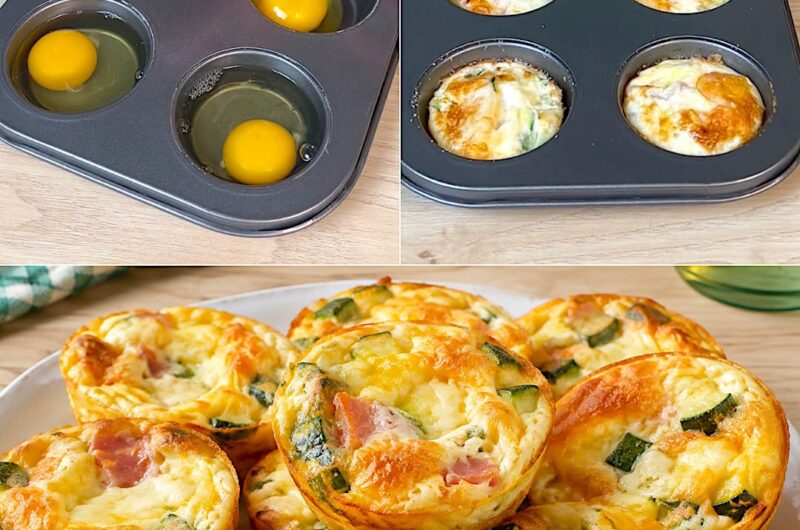
If you need a quick dinner that feels homemade without requiring hours in the kitchen, these baked egg muffin cups are an excellent choice. They are simple, filling, colorful, and easy to prepare with everyday ingredients. Eggs form the base, while bell pepper, zucchini, ham, cheese, and Parmesan add layers of flavor and texture.
Although egg muffins are often associated with breakfast, there is no reason to save them for the morning. These loaded egg cups make a convenient light dinner, lunch, brunch, or meal-prep option. Pair them with a crisp salad, toasted bread, roasted potatoes, or fresh fruit, and you have an easy meal that can fit into a busy weekday schedule.
The best part is the individual serving size. Instead of baking one large egg casserole and cutting it into portions, the mixture is cooked directly in a muffin tin. Each cup comes out as a neat little portion with vegetables, ham, and melted cheese distributed throughout. This makes the recipe particularly convenient for serving families or preparing food ahead of time.
Why I Keep Coming Back to These Egg Muffins
There are plenty of reasons to make easy egg muffin cups, but convenience is probably the biggest one.
The preparation is straightforward: chop the ingredients, prepare the muffin tin, add the eggs and fillings, and bake. There is no pastry crust, complicated sauce, or lengthy stovetop cooking involved.
The finished egg cups are also naturally versatile. You can enjoy them fresh from the oven for dinner or prepare them ahead and refrigerate them for another meal. Similar egg-muffin recipes are commonly used for meal preparation because they are portioned individually and can be reheated quickly.
This particular version keeps things especially simple because the vegetables, ham, and cheese are added directly to the muffin cups rather than requiring a separate cooking stage.
What Makes These Loaded Egg Cups Different?
Think of these as a cross between a mini omelet and a crustless quiche.
The eggs provide a soft, savory base. Bell pepper adds sweetness and a little crunch, zucchini contributes moisture and a mild vegetable flavor, while cubed ham brings a satisfying savory element. Cheese melts into the egg mixture and creates little pockets of richness throughout each cup.
Parmesan is used as a finishing touch rather than the main cheese. A light sprinkle over the top gives the muffins a delicious golden finish and adds a more pronounced savory flavor.
Because there is no pastry crust, these are also a convenient low-carb egg muffin style meal. They are substantial without feeling as heavy as a traditional pastry-based quiche.
The Ingredients Work Together Naturally
The ingredient list is short, but each item has a purpose.
Eggs
Six eggs create the foundation of the recipe. When baked, they transform into a tender, fluffy mixture that holds the other ingredients together.
For the best texture, use fresh eggs and crack them carefully. You can either add them directly to the muffin cups as instructed or lightly beat them first if you prefer a more evenly distributed egg mixture.
Bell Pepper
Bell pepper brings color, mild sweetness, and a pleasant vegetable bite. Red, yellow, orange, or green bell pepper can work depending on what you have available, although the color will naturally change the appearance of the finished dish.
The most important thing is to dice it fairly small. Large chunks can make the egg cups difficult to eat and may prevent the fillings from being evenly distributed.
Zucchini
Zucchini is mild enough to blend beautifully with eggs, cheese, and ham. It also adds moisture to the cups.
Since zucchini contains a lot of water, small cubes are ideal. Avoid adding unusually large pieces because they can release more moisture while baking.
Cubed Ham
The 50 grams of ham gives these egg muffins a hearty, savory quality. Small cubes ensure that every serving gets some ham rather than leaving all of it concentrated in just a few cups.
If your ham is already cooked, it can go directly into the recipe. There is no need to cook it separately.
Cheese
Cheese adds richness and helps create that appealing melted texture associated with loaded egg dishes.
Cutting the cheese into small cubes allows it to soften and melt throughout the egg cups. You can also shred it if that is more convenient, but keep the total quantity at the specified 50 grams to preserve the intended ingredient balance.
Parmesan
Parmesan is the finishing ingredient. Since the recipe says to use it “to taste,” you can sprinkle as much or as little as you prefer.
A modest amount provides plenty of flavor because Parmesan has a naturally strong savory character.
Salt
A small amount of salt helps bring the flavors together. Keep in mind that ham and Parmesan already contribute saltiness, so you do not need a heavy hand.
How to Get the Best Texture
One of the most important things with baked egg muffins is avoiding excessive moisture.
The eggs naturally contain moisture, and zucchini contributes additional water. If the vegetables are cut into large pieces or the cups are overloaded, the finished egg muffins may be softer than expected.
Small, evenly sized pieces are the easiest solution.
Another useful tip is not to overfill the muffin cups. Eggs expand as they cook, so leaving a little room at the top helps prevent spills and makes the individual cups easier to remove.
If you are using a standard 12-cup muffin pan, six eggs will not necessarily fill every cavity depending on the amount of filling and the size of your pan. Distribute the ingredients evenly rather than trying to force the mixture into every cup.
Preparing Your Muffin Tin
Egg mixtures can stick surprisingly well to metal muffin tins, especially when cheese is involved.
For that reason, thoroughly grease the muffin cups before adding the ingredients. Cooking spray is convenient, while a light coating of butter or oil also works.
Pay particular attention to the sides and bottom of each cavity.
Silicone muffin liners can also make removal easier if you have them available. The goal is simply to create a surface that allows the cooked egg cups to release without tearing.
This small preparation step can make a significant difference when serving.
Why Small Dices Are Better
The size of your vegetables and ham matters more than you might think.
Small cubes distribute throughout the egg mixture more evenly. That means you are more likely to get bell pepper, zucchini, ham, and cheese in every bite.
Large chunks can also make individual egg cups difficult to remove cleanly because the ingredients may press against the sides of the muffin cavity.
For this recipe, aim for small, bite-sized pieces that are similar in size.
There is no need for perfectly uniform restaurant-style cubes. Just keep them reasonably small and consistent.
The Baking Process
The oven should be heated to 374°F (190°C) before the egg cups go inside.
A properly preheated oven helps the eggs begin cooking immediately and promotes even baking.
Once the muffin tin has been filled, carefully transfer it to the oven and bake for approximately 25 minutes, or until the eggs are set and the tops are lightly golden.
The exact baking time can vary slightly depending on your oven, muffin tin, and the size of the cups. Instead of relying solely on the clock, look for visual signs of doneness.
The center should no longer look wet or liquid, and the eggs should be set.
For an additional food-safety check, the USDA recommends cooking egg dishes to an internal temperature of 160°F (71°C).
Don’t Rush the Cooling Step
Freshly baked egg cups are delicate.
When they first come out of the oven, the egg mixture is extremely hot and soft. Giving the cups several minutes to cool allows them to firm up slightly.
Run a thin spatula or butter knife carefully around the edges if needed, then lift each egg cup out gently.
If you try to remove them immediately, they are more likely to break apart.
A few minutes of patience can give you much neater servings.
Turning Egg Muffins Into Dinner
These baked egg cups for dinner are delicious on their own, but adding a simple side can turn them into a more complete meal.
A fresh green salad is one of the easiest options. Lettuce, cucumber, tomato, and a light dressing provide a refreshing contrast to the warm, cheesy egg cups.
Toast is another simple pairing. A slice of whole-grain or crusty bread can make the meal more substantial.
You could also serve the egg muffins alongside roasted vegetables or a small portion of potatoes.
For brunch, fresh fruit works beautifully because its natural sweetness contrasts with the savory ham and Parmesan.
Great for Busy Weeknights
There are nights when you want something homemade but do not want to spend an hour preparing dinner.
That’s where this recipe shines.
The chopping takes only a few minutes, and once everything is in the muffin tin, the oven does most of the work.
This makes easy dinner recipes with eggs particularly useful for busy households. Eggs cook relatively quickly, and the individual muffin format eliminates the need to portion a large casserole afterward.
If you prepare the vegetables and ham in advance, the actual assembly becomes even faster.
A Handy Meal-Prep Option
These egg cups can also be prepared ahead of time.
Once cooked, allow them to cool appropriately and refrigerate them in a covered container. USDA guidance recommends refrigerating cooked egg dishes promptly and using refrigerated leftovers within 3 to 4 days.
For meal prep, portion the egg cups into individual containers so you can grab exactly what you need.
When reheating refrigerated egg dishes, the FDA recommends reheating them thoroughly to 165°F.
A microwave is convenient for a quick serving, while an oven or toaster oven can provide a slightly better texture.
Can You Freeze Them?
Egg muffins are often considered freezer-friendly, but freezing can slightly change the texture of the vegetables.
If you want to freeze this recipe, allow the cooked egg cups to cool completely before packaging them appropriately for freezer storage. Freezing individual portions makes them easier to use later.
When you are ready to eat them, thawing in the refrigerator is a practical approach before reheating thoroughly.
For the best quality, I prefer making a smaller batch for several days rather than keeping cooked egg dishes frozen for an unnecessarily long time.
Easy Ways to Serve Them
These loaded egg cups can fit into several meals.
For breakfast: Serve with fruit and toast.
For lunch: Pair two or three cups with a crisp salad.
For dinner: Add roasted potatoes or vegetables.
For brunch: Arrange them on a platter with fruit and bread.
For a quick snack: Enjoy one warm egg muffin when you need something savory.
Their individual size also makes them convenient for lunchboxes, although they should be kept properly chilled until ready to eat.
Why This Recipe Is Family-Friendly
The mild flavors make these egg muffins easy to adapt to different preferences.
Children who enjoy eggs and cheese may like the soft texture and bite-sized shape. Adults can appreciate the combination of vegetables, ham, and Parmesan.
The recipe also avoids complicated sauces and strong seasonings. That gives you a neutral base that works for many occasions.
If you are serving people with different tastes, you can even vary the amount of Parmesan or distribute the fillings differently between cups.
Keeping the Recipe Exactly as Intended
Although egg muffins are highly customizable, the version here intentionally keeps the original ingredient quantities unchanged:
- 6 eggs
- 1 bell pepper
- 1 zucchini
- 50 grams cubed ham
- 50 grams cheese
- Parmesan to taste
- Salt to taste
I have not added milk, cream, onions, spinach, bacon, or other ingredients to the core recipe. Those additions can be found in many variations of egg muffins, but changing the ingredient list would change this particular recipe.
That simplicity is part of its appeal.
A Few Final Kitchen Tips
For the most reliable result, remember these simple points:
Grease the pan well. Cheese and cooked egg can cling to the surface.
Dice the fillings small. This helps them distribute evenly.
Don’t overfill the cups. Eggs expand during baking.
Watch the final minutes. You want set eggs and lightly golden tops rather than a dry texture.
Let them cool briefly. This makes removal easier.
Use a thermometer if you have one. Egg dishes should reach 160°F for safe cooking.
Refrigerate leftovers promptly. Cooked egg dishes should be chilled rather than left at room temperature for extended periods.
Ultimately, these loaded baked egg muffin cups are a practical recipe built around familiar ingredients. The combination of eggs, colorful vegetables, ham, and melted cheese makes them satisfying without requiring complicated cooking techniques.
Whether you call them egg muffins, baked egg cups, mini omelets, or crustless egg bites, the idea is the same: simple ingredients transformed into convenient individual portions.
And while they are perfect for breakfast, don’t overlook them as a quick dinner. Add a fresh salad and a slice of toast, and you have a warm, comforting meal that requires very little effort.
Part 2: My Quick Loaded Egg Muffin Cups Recipe
Easy Baked Egg Cups With Ham, Veggies & Cheese
Prep Time: 5 minutes
Cook Time: 25 minutes
Total Time: 30 minutes
Difficulty: Easy
Serves: 3 people
Ingredients
- 6 eggs
- 1 bell pepper
- 1 zucchini
- 50 grams cubed ham
- 50 grams cheese
- Parmesan cheese, to taste
- Salt, to taste
How I Make Them
- Preheat your oven to 374°F (190°C).
- Cut the bell pepper, zucchini, ham, and cheese into small cubes. Grate the Parmesan if needed.
- Thoroughly grease a muffin tin with cooking spray, butter, or oil.
- Crack one egg into each prepared muffin cup.
- Divide the diced bell pepper, zucchini, ham, and cheese among the cups.
- Finish each cup with Parmesan and a small pinch of salt.
- Bake for approximately 25 minutes, or until the eggs are fully set and the tops are lightly golden.
- Remove the pan from the oven and allow the egg cups to cool for a few minutes.
- Carefully loosen them from the muffin tin and serve warm.
Serving Idea
Enjoy these baked egg muffins for dinner with a fresh green salad, toast, roasted vegetables, or fresh fruit.
Storage Note
Refrigerate cooked egg cups promptly in a covered container and use within 3–4 days. For food safety, egg dishes should reach 160°F (71°C) during cooking; refrigerated cooked egg dishes should be reheated thoroughly before serving.