There is something incredibly satisfying about baking a fresh loaf of bread at home. The comforting aroma, the golden crust, and the soft, fluffy slices straight from the oven create an experience that store-bought bread simply cannot match. If you regularly maintain a sourdough starter, you probably know that feeding it often leaves you with extra sourdough discard. Instead of throwing it away, you can transform it into a delicious loaf that combines the rich flavor of sourdough with the light texture of traditional Amish white bread.
This Sourdough Discard Amish White Bread recipe is designed for home bakers who want the best of both worlds. It uses active dry yeast to provide a dependable rise while incorporating sourdough discard to add subtle depth of flavor. The result is a loaf with a beautifully soft crumb, a tender golden crust, and a mild tang that makes every bite more flavorful than ordinary white bread.
Unlike rustic artisan sourdough, which often requires several rounds of folding and long fermentation, this bread is simple enough for beginners. The added yeast keeps the process straightforward while still allowing the sourdough discard to contribute its unique character. Whether you are baking your very first loaf or adding another favorite recipe to your collection, this bread offers consistent results with everyday ingredients.
Freshly baked slices are wonderful served with butter, fruit preserves, honey, or peanut butter. They also make outstanding sandwiches, toast, grilled cheese, French toast, and homemade garlic bread. Because the loaf stays soft for several days, it is perfect for weekly meal preparation, family lunches, or holiday gatherings.
If you have been searching for the best sourdough discard bread recipe, easy homemade white bread, soft sandwich bread, or Amish white bread with sourdough starter discard, this recipe deserves a place in your kitchen.
Why This Homemade Bread Recipe Stands Out
Many homemade bread recipes are either very rustic or overly complicated. This loaf is different because it combines classic comfort with practical baking techniques.
Using sourdough discard creates a deeper flavor without requiring the lengthy fermentation associated with traditional sourdough baking. At the same time, active dry yeast ensures the dough rises beautifully, making this recipe ideal for busy home bakers.
Some of the reasons this recipe has become a favorite include:
- Soft, fluffy texture that’s perfect for sandwiches.
- Mild sourdough flavor without overwhelming tanginess.
- Simple pantry ingredients.
- Excellent way to reduce food waste.
- Beginner-friendly method.
- Beautiful golden crust.
- Freezes well for future meals.
- Perfect for breakfast, lunch, dinner, or snacks.
Every loaf delivers bakery-quality results while allowing you to make good use of leftover sourdough starter.
What Makes Sourdough Discard So Valuable?
Many people mistakenly think sourdough discard has no purpose once it has been removed from the starter jar. In reality, it still contains valuable flavor and natural fermentation by-products that can improve baked goods.
Although discard may not have enough strength to raise bread by itself, it contributes:
- Richer flavor
- Better aroma
- Improved texture
- Slight natural tanginess
- Enhanced moisture
When combined with commercial yeast, sourdough discard becomes an excellent ingredient for creating soft breads that rise consistently while offering more complexity than standard white bread.
Using discard also helps reduce unnecessary food waste, making your baking routine more sustainable and economical.
The Inspiration Behind Amish White Bread
Traditional Amish white bread has earned its reputation as one of the softest and most comforting homemade breads. It is known for its tender crumb, slightly sweet flavor, and buttery finish.
Unlike crusty European artisan loaves, Amish white bread is designed to be soft enough for everyday sandwiches while remaining rich enough to enjoy with nothing more than butter.
Its popularity comes from several characteristics:
- Light texture
- Delicate sweetness
- Thin golden crust
- Excellent slicing ability
- Long-lasting softness
By incorporating sourdough discard into this classic recipe, you create an even more flavorful loaf without sacrificing the pillowy texture that Amish bread is famous for.
Why Homemade Bread Is Better Than Store-Bought
Making bread from scratch offers benefits that extend far beyond taste.
Fresher Flavor
Nothing compares to bread enjoyed just hours after baking. Homemade loaves have a fresh aroma and soft texture that packaged bread rarely matches.
Better Ingredient Control
Preparing bread yourself allows you to select high-quality ingredients while avoiding unnecessary preservatives, artificial conditioners, and excess sodium.
You control every ingredient, including:
- Flour
- Butter
- Salt
- Sugar
- Yeast
- Sourdough discard
Cost-Effective Baking
Homemade bread often costs significantly less than premium bakery loaves while producing superior quality.
Reduced Food Waste
Finding creative uses for sourdough discard helps maximize every feeding of your starter, making your baking more sustainable.
Understanding the Ingredients
Each ingredient contributes an important role in creating the finished loaf.
Flour
All-purpose flour provides the structure of the bread while creating a soft, tender crumb.
Bread flour may also be used if you prefer slightly more chew and structure.
Sourdough Discard
Discard introduces mild acidity and additional flavor complexity.
Rather than creating a strongly sour loaf, it simply enhances the overall taste while contributing moisture to the dough.
Active Dry Yeast
Since sourdough discard is no longer highly active, commercial yeast provides the lifting power.
The yeast creates carbon dioxide during fermentation, allowing the dough to rise into a light and fluffy loaf.
Sugar
Sugar performs several functions.
It:
- Feeds the yeast
- Adds mild sweetness
- Encourages browning
- Helps produce a softer crumb
The finished bread remains balanced rather than overly sweet.
Butter
Butter enriches the dough by adding:
- Rich flavor
- Tender texture
- Moisture
- Softer crust
Using unsalted butter allows better control of the overall seasoning.
Salt
Salt strengthens gluten while balancing sweetness and enhancing every other ingredient.
Even though only a small amount is used, it plays a major role in developing flavor.
Water
Warm water activates the yeast and hydrates the flour.
Water that is too hot may damage the yeast, while cold water slows fermentation.
The Secret to an Ultra-Soft Loaf
The remarkable softness of this bread comes from several baking techniques working together.
Proper Kneading
Kneading develops gluten, giving the dough elasticity while allowing it to trap gases produced during fermentation.
A properly kneaded dough becomes:
- Smooth
- Stretchy
- Soft
- Slightly tacky
Enough Rising Time
Allowing the dough to double in size creates a lighter loaf with a finer crumb.
Trying to rush fermentation often produces dense bread.
Balanced Hydration
A well-hydrated dough creates a softer interior.
Avoid adding too much flour during kneading, even if the dough initially feels sticky.
Gentle Shaping
Handling the dough carefully after the first rise helps preserve air pockets, producing a lighter finished loaf.
Why This Bread Is Perfect for Everyday Meals
One reason this recipe is so popular is its incredible versatility.
Fresh slices can be enjoyed in countless ways.
For breakfast:
- Toast with butter
- Honey
- Fruit preserves
- Nut butter
For lunch:
- Turkey sandwiches
- Ham and cheese
- Chicken salad
- Egg salad
For dinner:
- Garlic bread
- Soup accompaniment
- Dinner rolls
- Grilled cheese
For dessert:
- Bread pudding
- French toast
- Cinnamon toast
- Sweet breakfast casserole
Its mild sweetness pairs equally well with savory fillings and sweet toppings.
A Wonderful Bread for Family Baking
Bread baking has always been more than simply preparing food.
Mixing dough by hand, watching it rise, and filling the kitchen with the aroma of fresh bread creates memories that often last a lifetime.
This recipe is an excellent choice for:
- Weekend baking projects
- Holiday gatherings
- Family dinners
- Meal preparation
- Beginner bread classes
- Homemade gift baskets
Because it is reliable and forgiving, it helps build confidence while producing bakery-quality results every time.
Part 2: Easy Sourdough Discard Amish White Bread Recipe
Soft & Fluffy Homemade Sandwich Bread
Prep Time: 20 minutes
Rise Time: 2–2½ hours
Bake Time: 30–35 minutes
Total Time: About 3 hours 15 minutes
Servings: 2 standard loaves
Difficulty: Easy
Ingredients
For the Dough
- 1 cup sourdough discard (unfed or recently fed, at room temperature)
- 1½ cups warm water (about 105–110°F / 40–43°C)
- 2¼ teaspoons active dry yeast (1 packet)
- ⅔ cup granulated sugar
- 1½ teaspoons salt
- ¼ cup unsalted butter, softened (or melted and slightly cooled)
- 6 cups all-purpose flour (more if needed for kneading)
Optional Topping
- Melted butter for brushing after baking
Kitchen Equipment
- Large mixing bowl
- Measuring cups and spoons
- Wooden spoon or dough hook
- Stand mixer (optional)
- Two 9×5-inch loaf pans
- Clean kitchen towel or plastic wrap
- Cooling rack
- Pastry brush
Instructions
Step 1: Activate the Yeast
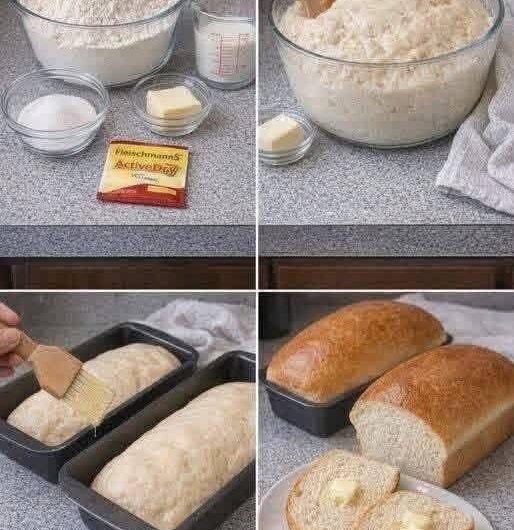
In a large mixing bowl, combine the warm water, active dry yeast, and granulated sugar.
Let the mixture sit for 5–10 minutes until it becomes foamy.
Step 2: Mix the Dough
Add the sourdough discard, softened butter, and salt to the yeast mixture.
Gradually stir in the flour, one cup at a time, until a soft dough forms.
Step 3: Knead Until Smooth
Transfer the dough to a lightly floured surface.
Knead for 8–10 minutes, or until the dough becomes smooth, soft, and elastic.
If using a stand mixer, knead with the dough hook for about 6–8 minutes.
Step 4: First Rise
Lightly grease a large bowl.
Place the dough inside and turn it once to coat.
Cover with a clean towel or plastic wrap.
Allow it to rise in a warm place for 1 to 1½ hours, or until doubled in size.
Step 5: Shape the Loaves
Punch down the risen dough gently to release excess air.
Divide the dough into two equal portions.
Shape each portion into a loaf and place them into greased loaf pans.
Step 6: Second Rise
Cover the pans loosely.
Let the dough rise again for 30–45 minutes, until it rises just above the edge of the pans.
Meanwhile, preheat your oven to 350°F (175°C).
Step 7: Bake
Bake for 30–35 minutes, or until the tops are golden brown and the loaves sound hollow when tapped.
If available, the internal temperature should reach about 190–200°F (88–93°C).
Step 8: Cool and Finish
Remove the bread from the pans immediately.
Brush the tops with melted butter for an extra-soft crust, if desired.
Cool completely on a wire rack before slicing.
Expert Tips
- Use room-temperature sourdough discard for better mixing.
- Avoid adding too much flour; the dough should remain soft and slightly tacky.
- Knead thoroughly to develop gluten and create a fluffy loaf.
- Let the bread cool before slicing to prevent a gummy texture.
- Store in an airtight bag to keep the bread soft longer.
Flavor Variations
Honey Butter Bread
Replace part of the sugar with honey for a richer sweetness.
Whole Wheat Version
Substitute up to 2 cups of all-purpose flour with whole wheat flour for added fiber.
Herb Bread
Mix dried rosemary, thyme, oregano, or parsley into the dough.
Garlic Butter Bread
Add garlic powder to the dough and brush the baked loaf with garlic butter.
Cinnamon Raisin Bread
Mix raisins and ground cinnamon into the dough for a delicious breakfast loaf.
Serving Suggestions
Enjoy this soft homemade bread with:
- Butter and fruit jam
- Honey or maple syrup
- Peanut or almond butter
- Homemade soup
- Grilled cheese sandwiches
- French toast
- Breakfast sandwiches
- Chicken or turkey sandwiches
- Garlic butter
- Cheese boards
Storage
Room Temperature
Store in an airtight bread bag or container for up to 4 days.
Refrigerator
Keep refrigerated for up to 1 week.
Freezer
Wrap tightly in plastic wrap and foil, then freeze for up to 3 months.
Thaw at room temperature before serving.
Approximate Nutrition (Per Slice)
- Calories: 180
- Protein: 5 g
- Carbohydrates: 33 g
- Fat: 3 g
- Saturated Fat: 2 g
- Fiber: 1 g
- Sugar: 5 g
- Sodium: 210 mg
Nutrition values are approximate and may vary depending on ingredient brands and serving sizes.
Recipe Notes
- Sourdough discard adds a mild tang and deeper flavor without making the bread overly sour.
- Active dry yeast ensures a dependable rise, making this recipe suitable for beginner bakers.
- Bread flour can be used for a slightly chewier texture.
- For the softest crust, brush the warm loaves with melted butter immediately after baking.
- This bread slices beautifully for sandwiches and also works well for toast, French toast, or bread pudding.