There’s something truly special about pulling a freshly baked loaf of brioche bread from the oven. With its shiny golden crust, rich buttery aroma, and incredibly soft interior, brioche is one of the most luxurious breads you can make at home. Unlike everyday sandwich bread, brioche is an enriched dough made with butter, eggs, milk, and a touch of sugar, giving it a tender crumb and a slightly sweet flavor that pairs beautifully with both sweet and savory dishes.
Whether you’re an experienced home baker or trying enriched bread for the first time, this classic homemade brioche recipe delivers bakery-quality results using simple pantry ingredients. The dough may require a little patience because of its rising time, but every step is worthwhile. The reward is a loaf that’s fluffy, flavorful, and versatile enough to enjoy for breakfast, lunch, dinner, or dessert.
One of the biggest advantages of making brioche from scratch is the ability to control every ingredient. You can choose high-quality butter, fresh eggs, and premium flour while avoiding preservatives and artificial additives commonly found in store-bought loaves. The result is a richer taste, softer texture, and fresher bread that your family will love.
Homemade brioche can be served warm with butter and jam, transformed into decadent French toast, used for gourmet sandwiches, or enjoyed simply with a cup of coffee or tea. It’s also perfect for holidays, brunches, celebrations, or weekend baking projects.
If you’re searching for the best homemade brioche bread recipe, soft buttery bread, French brioche loaf, or easy enriched bread recipe, this guide will help you create a beautiful loaf that looks and tastes like it came from an artisan bakery.
What Makes Brioche Different from Regular Bread?
At first glance, brioche may look similar to a standard loaf of bread, but its ingredients and texture make it completely unique.
Traditional bread is usually prepared with flour, water, yeast, and salt. Brioche, however, belongs to a category called enriched bread dough, which includes additional ingredients that create a softer and richer texture.
These enriching ingredients include:
- Butter
- Eggs
- Whole milk
- Sugar
Because of these additions, brioche develops a delicate crumb that almost melts in your mouth while maintaining enough structure for slicing and toasting.
The butter provides richness and moisture, while the eggs contribute color, tenderness, and stability. Milk enhances softness, and a small amount of sugar balances the flavors without making the bread overly sweet.
This unique combination gives brioche its signature characteristics:
- Light and fluffy interior
- Rich buttery flavor
- Slight sweetness
- Beautiful golden crust
- Soft texture that stays fresh longer
Unlike crusty artisan bread, brioche is prized for its pillowy softness and luxurious feel, making it one of the most popular homemade bread recipes worldwide.
The Story Behind Traditional French Brioche
Brioche has been part of French baking traditions for centuries and remains one of the country’s most celebrated breads. Historically, it was considered a premium bread because butter, eggs, and milk were expensive ingredients that many households could not afford to use regularly.
As a result, brioche was often baked for holidays, family celebrations, weddings, and other special occasions. Over time, it became associated with elegance and fine dining while remaining a comforting homemade favorite.
Today, brioche is enjoyed across the globe and has evolved into many different forms, including:
- Sandwich loaves
- Braided bread
- Dinner rolls
- Burger buns
- Sweet breakfast pastries
Despite these variations, the classic buttery loaf remains one of the most beloved versions because of its versatility and timeless flavor.
Why You’ll Love This Homemade Brioche Recipe
There are many reasons this recipe deserves a place in your baking collection.
Rich Buttery Flavor
Every slice is packed with the unmistakable taste of real butter, creating a loaf that’s both comforting and indulgent.
Soft and Airy Texture
The combination of eggs, milk, butter, and proper kneading produces a feather-light crumb that remains moist for days.
Perfect for Sweet and Savory Meals
Brioche pairs beautifully with:
- Butter and jam
- Honey
- Chocolate spread
- Cheese
- Eggs
- Turkey
- Chicken
- Smoked salmon
Great for Meal Prep
The loaf freezes well, making it easy to bake ahead and enjoy throughout the week.
Simple Pantry Ingredients
Despite its bakery-quality appearance, brioche requires only basic ingredients commonly found in most kitchens.
The Secret to Soft, Fluffy Brioche Bread
One of the biggest reasons homemade brioche tastes so luxurious is the balance between ingredients and technique.
Several factors contribute to the perfect loaf.
Butter
Butter is responsible for the rich flavor and soft texture.
Using high-quality unsalted butter allows you to control the salt content while creating a smoother dough.
As the bread bakes, the butter melts throughout the loaf, producing its famous tender crumb.
Eggs
Eggs provide:
- Structure
- Color
- Moisture
- Richness
They also give brioche its beautiful yellow interior and help the bread rise into a light, fluffy loaf.
Room-temperature eggs mix more evenly into the dough, ensuring a consistent texture.
Whole Milk
Warm whole milk activates the yeast while adding moisture to the dough.
The natural fats in whole milk contribute to a softer crumb than water alone.
Avoid overheating the milk, as excessive heat can weaken or kill the yeast.
Yeast
Yeast is the ingredient that creates the bread’s airy texture.
During fermentation, yeast releases carbon dioxide, causing the dough to expand while developing flavor.
Allowing the dough enough time to rise is essential for producing a light loaf.
Why Room Temperature Ingredients Matter
Professional bakers often emphasize using room-temperature ingredients when making enriched bread.
Cold ingredients slow gluten development and prevent butter from blending smoothly into the dough.
For the best results:
- Allow eggs to sit at room temperature for about 30 minutes.
- Soften butter until it is pliable but not melted.
- Warm the milk slightly before mixing.
These small steps help create a silky dough that kneads easily and rises evenly.
Understanding Brioche Dough
If you’ve only baked traditional bread before, brioche dough may feel different.
Because it contains more butter and eggs, the dough is naturally:
- Soft
- Smooth
- Slightly sticky
- Elastic
Many beginner bakers mistakenly add extra flour because the dough feels wetter than expected.
However, too much flour can make the finished loaf dense instead of fluffy.
After several minutes of kneading, the dough becomes smooth, glossy, and stretchy—clear signs that the gluten has developed properly.
Why Homemade Brioche Is Better Than Store-Bought
Although many supermarkets sell brioche, homemade bread offers several advantages.
Fresher Taste
Freshly baked brioche has a buttery aroma and delicate texture that packaged bread simply cannot match.
Better Ingredients
When baking at home, you choose:
- Premium butter
- Fresh eggs
- High-quality flour
- Pure ingredients
without unnecessary preservatives or artificial flavors.
More Flavor
Long rising times allow the dough to develop deeper, richer flavors that improve the finished loaf.
Softer Texture
Homemade brioche stays incredibly tender because it’s freshly baked and properly proofed.
Part 2:
Easy Homemade Brioche Bread Recipe (Original & Copyright-Free)
Soft & Buttery Homemade Brioche Bread
Prep Time: 25 minutes
Rise Time: 2½–3 hours
Bake Time: 25–30 minutes
Total Time: About 4 hours
Servings: 1 large loaf (10–12 slices)
Difficulty: Intermediate
Ingredients
For the Brioche Dough
- 3½ cups (440 g) all-purpose flour
- ¼ cup granulated sugar
- 1 teaspoon salt
- 2¼ teaspoons instant yeast (1 packet)
- ⅓ cup warm whole milk
- 4 large eggs, at room temperature
- ½ cup unsalted butter, softened and cut into small cubes
Optional Flavor Add-Ins
Sweet Ideas
- Chocolate chips
- Cinnamon sugar
- Raisins or dried cranberries
- 1 teaspoon vanilla extract
- Orange or lemon zest
Savory Ideas
- Shredded cheddar, Parmesan, or Gruyère cheese
- Finely minced garlic
- Fresh rosemary, thyme, or parsley
- Cracked black pepper
For the Egg Wash
- 1 large egg
- 1 tablespoon water or milk
Optional Toppings
- Sesame seeds
- Poppy seeds
- Pearl sugar
- Honey glaze (after baking)
Kitchen Equipment
- Large mixing bowl
- Stand mixer with dough hook (optional)
- Measuring cups and spoons
- Loaf pan
- Pastry brush
- Plastic wrap or clean kitchen towel
- Cooling rack
Instructions
Step 1: Mix the Dry Ingredients
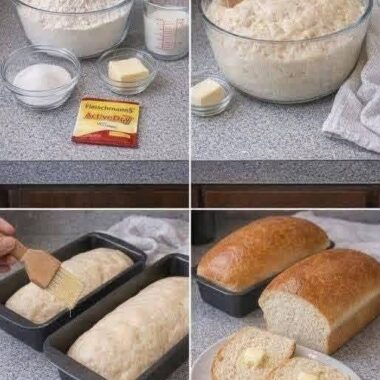
In a large mixing bowl, whisk together the flour, sugar, salt, and instant yeast until evenly combined.
Step 2: Add the Wet Ingredients
Pour the warm milk into the bowl and add the room-temperature eggs.
Mix until a rough dough starts to form.
Step 3: Incorporate the Butter
Gradually add the softened butter a few cubes at a time while kneading.
Continue kneading for 10–15 minutes until the dough becomes smooth, soft, elastic, and slightly shiny.
Step 4: First Rise
Lightly grease a bowl with butter or oil.
Place the dough inside, cover with plastic wrap or a towel, and let it rise in a warm place for 1½–2 hours, or until doubled in size.
Step 5: Shape the Dough
Gently press down the risen dough to release excess air.
Shape it into a loaf (or divide into small balls for a braided or pull-apart loaf) and place it into a greased loaf pan.
Step 6: Second Proof
Cover loosely and allow the dough to rise again for 45–60 minutes until noticeably puffy.
Meanwhile, preheat the oven to 375°F (190°C).
Step 7: Brush with Egg Wash
Whisk together one egg and one tablespoon of water (or milk).
Brush the top of the dough evenly for a beautiful glossy finish.
Sprinkle with sesame seeds, pearl sugar, or poppy seeds if desired.
Step 8: Bake
Bake for 25–30 minutes, or until the loaf is deep golden brown and sounds hollow when tapped on the bottom.
If the top browns too quickly, loosely cover it with aluminum foil during the last few minutes of baking.
Step 9: Cool Before Slicing
Transfer the loaf to a wire rack.
Allow it to cool for at least 20–30 minutes before slicing to help the crumb set properly.
Serve warm or toasted.
Expert Baking Tips
- Use room-temperature eggs and softened butter for smooth dough.
- Avoid adding extra flour unless absolutely necessary to keep the bread light.
- Knead thoroughly to develop gluten for a fluffy texture.
- An overnight chill in the refrigerator enhances flavor and makes shaping easier.
- Don’t skip the second rise—it creates a taller, softer loaf.
- Use high-quality butter for the richest flavor.
- Let the bread cool before cutting to prevent a gummy interior.
Serving Ideas
This buttery brioche tastes wonderful served with:
- Butter and fruit jam
- Honey or maple syrup
- Nut butter
- Fresh berries
- Scrambled eggs
- French toast
- Gourmet sandwiches
- Bread pudding
- Coffee, tea, or hot chocolate
Storage
Room Temperature:
Store in an airtight container or bread bag for up to 3 days.
Refrigerator:
Keep refrigerated for up to 1 week.
Freezer:
Wrap tightly in plastic wrap and foil, then freeze for up to 3 months. Thaw at room temperature before serving.
Approximate Nutrition (Per Slice)
- Calories: 190
- Protein: 5 g
- Carbohydrates: 25 g
- Fat: 8 g
- Saturated Fat: 5 g
- Fiber: 1 g
- Sugar: 3 g
- Sodium: 180 mg
Nutrition values are estimates and may vary depending on ingredient brands and optional additions.
Recipe Notes
- Bread flour may be substituted for all-purpose flour to create a slightly chewier loaf.
- For extra richness, brush the baked loaf with melted butter while still warm.
- Brioche dough is naturally softer and stickier than regular bread dough, so avoid over-flouring your work surface.
- This dough can also be shaped into dinner rolls, burger buns, or braided bread.