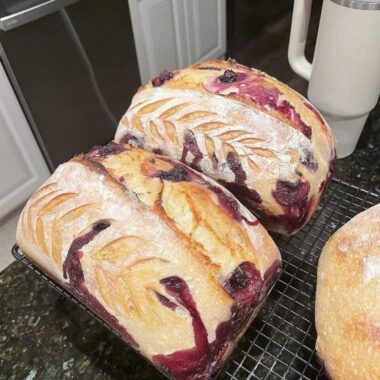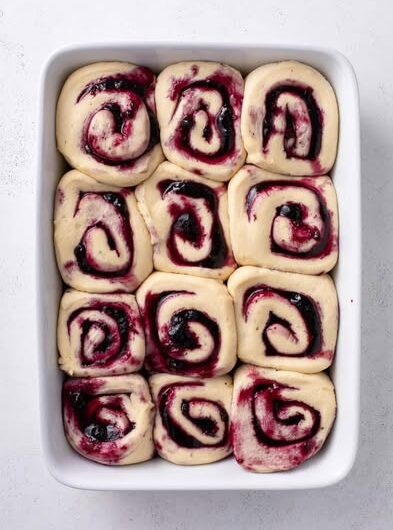
There is something especially satisfying about turning a jar of leftover sourdough discard into a beautiful homemade pastry. Instead of letting that extra starter go to waste, you can transform it into soft Sourdough Discard Lemon Blueberry Rolls filled with sweet berries, fragrant lemon zest, and a silky citrus glaze.
These homemade lemon blueberry rolls bring together three flavors that work exceptionally well: the gentle tang of sourdough, the juicy sweetness of blueberries, and the fresh brightness of lemon. The result is a sweet roll that feels comforting enough for a lazy weekend breakfast but pretty enough to serve at a holiday brunch, baby shower, afternoon tea, or family gathering.
The dough is enriched with milk, egg, butter, and sugar, giving the finished rolls a tender and fluffy texture. A layer of lemon-scented butter adds richness before the blueberry filling goes on top. Once the dough is rolled, sliced, and baked, the beautiful purple-blue fruit swirls peek through every spiral. A simple lemon glaze finishes everything with just the right amount of sweetness and acidity.
What makes this recipe particularly useful is that the sourdough discard does not need to be the sole leavening agent. Instant yeast helps the dough rise, while the discard contributes its characteristic fermented flavor and adds depth to the finished pastry. That means you can enjoy the flavor of sourdough without waiting through a long sourdough fermentation schedule.
Why These Homemade Lemon Blueberry Rolls Are Worth Making
If you already bake sourdough bread, you probably know that discard can accumulate quickly. Pancakes and crackers are popular ways to use it, but sweet rolls are another excellent option.
These blueberry rolls are especially appealing because they combine familiar cinnamon-roll techniques with a fresh fruit and citrus filling.
The dough is soft and buttery rather than heavy. The blueberry layer provides pockets of fruity sweetness, while lemon keeps the overall flavor from becoming overly rich. Finally, the glaze adds a smooth, sweet finish that melts slightly over the warm rolls.
Here are some of the biggest reasons to put this recipe on your baking list:
- It is a creative way to use sourdough discard.
- The dough develops a soft, fluffy crumb.
- Blueberries provide natural fruity sweetness and vibrant color.
- Fresh lemon zest gives the rolls a bright citrus aroma.
- The recipe makes 12 generous rolls.
- Fresh and frozen blueberries can both be used.
- The rolls can be prepared ahead of time.
- Unglazed rolls can be frozen for later.
- They are suitable for breakfast, brunch, snacks, and dessert.
- The finished rolls have a bakery-style appearance without complicated decorating.
What Makes Sourdough Discard So Useful Here?
Sourdough discard is the portion of starter that is removed during regular starter feeding. While it may not be at peak activity for making a naturally leavened loaf, it can still be extremely useful in recipes where another leavening method is included.
In these rolls, instant yeast handles the main job of helping the dough expand. The discard is there primarily for flavor, moisture, and complexity.
That distinction is important. You do not need to wait for the discard to become bubbly and active before making these rolls. A recently fed or unfed discard can work, provided it is suitable for consumption and has been stored properly.
The mild acidity of sourdough discard also works beautifully with fruit. Blueberries have a naturally sweet-tart character, and lemon adds another layer of acidity. Instead of competing with those flavors, the sourdough background gives the dough a slightly deeper taste.
The result is not an aggressively sour pastry. Rather, the sourdough note sits quietly underneath the butter, lemon, sugar, and blueberries.
The Ingredients That Build the Flavor
This recipe uses straightforward baking ingredients, but each one has a particular purpose.
Sourdough discard
The star ingredient is 1 cup, or 240 grams, of sourdough discard. It contributes moisture and a subtle fermented flavor.
Warm milk
Warm milk helps create a tender dough and provides the liquid needed to bring the ingredients together. Keep it warm rather than hot, because excessive heat can interfere with yeast activity.
Instant yeast
Instant yeast provides dependable lift, helping the dough become light and airy without requiring a long natural fermentation.
Granulated sugar
Sugar sweetens the dough and contributes to browning. A little sweetness also helps balance the tang of the sourdough discard and the acidity of the lemon.
Egg
The egg adds richness, structure, and tenderness. For easier mixing, it is helpful to use an egg that is not extremely cold.
Unsalted butter
Melted butter enriches the dough, while softened butter is used in the lemon sugar layer. Together they create the rich, tender quality associated with homemade sweet rolls.
All-purpose flour
All-purpose flour gives the rolls enough structure to hold the filling while remaining soft after baking.
Salt
Salt is essential in sweet dough. It keeps the flavor from tasting flat and helps balance the sugar.
Blueberries
Fresh or frozen blueberries can be used. Fresh berries are especially wonderful when they are in season, while frozen blueberries make this recipe accessible throughout the year.
Cornstarch
Cornstarch helps thicken the blueberry mixture so the filling stays inside the rolls rather than becoming excessively runny.
Lemon
This recipe uses lemon zest in multiple components. Zest gives a concentrated citrus aroma without adding too much liquid. Lemon juice provides acidity and brightness.
Powdered sugar
Powdered sugar creates a smooth glaze that is easy to drizzle over the warm rolls.
Fresh or Frozen Blueberries: Which Should You Choose?
Both options work well.
Fresh blueberries are ideal when they are plentiful and sweet. They tend to give the filling a particularly fresh berry character.
Frozen blueberries are convenient because they are available year-round. There is no need to thaw them before cooking the filling. Simply add them directly to the saucepan and allow them to heat gradually.
Frozen fruit can release more liquid as it cooks, which is one reason the cornstarch is important. Cook the mixture until it has visibly thickened before taking it off the heat.
Regardless of which type you choose, the most important step is to cool the blueberry filling completely before spreading it over the dough.
Getting the Yeast Started
Begin by combining the warm milk, sugar, and instant yeast in a large mixing bowl.
Let the mixture stand for approximately 5 to 10 minutes.
Depending on the type of instant yeast and temperature of your kitchen, you may see some foaming. The purpose of this step is also to give the ingredients a moment to combine evenly before the remaining dough ingredients are introduced.
Avoid using milk that is extremely hot. A comfortably warm temperature is much safer for yeast.
Bringing the Dough Together
Once the milk mixture is ready, add the sourdough discard, egg, and melted butter.
Whisk or stir until the mixture is reasonably smooth.
Next, begin adding the all-purpose flour and salt gradually. You are looking for a soft dough rather than a stiff, dry mass.
Do not automatically add extra flour just because the dough feels slightly tacky. Sweet dough often feels softer than ordinary bread dough. Adding too much flour can produce rolls that are dense instead of tender.
Once the ingredients have come together, transfer to kneading.
Kneading for a Soft and Elastic Dough
Knead the dough for approximately 8 to 10 minutes.
If using a stand mixer, a dough hook can make the process easier. You can also knead by hand if you prefer.
As gluten develops, the dough should become smoother, more elastic, and easier to handle. It may still feel a little tacky, but it should not behave like a wet batter.
One useful test is the windowpane test.
Take a small piece of dough and gently stretch it between your fingers. If the dough can stretch into a thin membrane before tearing, the gluten has developed reasonably well.
You do not need perfection. The goal is a dough that can stretch enough to hold the filling and maintain its spiral shape.
Giving the Dough Its First Rise
Place the kneaded dough into a lightly greased bowl and cover it with a clean towel or suitable cover.
Let it rise for approximately 1 to 1½ hours, or until it has roughly doubled in size.
The exact timing can vary considerably depending on your kitchen temperature. A warm room may speed up the rise, while a cooler kitchen can require additional time.
Instead of watching the clock alone, pay attention to the dough itself. A visibly expanded, airy dough is a better indicator than a strict minute-by-minute schedule.
Making the Blueberry Lemon Filling
While the dough rises, prepare the fruit filling.
Add the blueberries, granulated sugar, cornstarch, and lemon juice to a saucepan.
Cook over medium heat, stirring regularly.
As the blueberries warm, they will begin releasing their juices. The mixture will gradually change from loose fruit to a thick, glossy filling.
This generally takes around 5 to 7 minutes, although the exact time depends on the berries and the heat level.
Keep stirring so the mixture does not stick to the bottom of the pan.
Once thickened, remove the saucepan from the heat and stir in the lemon zest.
Then let the filling cool completely.
Why the Filling Needs to Be Cold
This step is easy to overlook, but it can make a significant difference.
If hot blueberry filling is spread over the dough, it can soften the butter layer and make the dough difficult to roll. The filling can also become more likely to squeeze out as you shape the log.
A cooled, thickened filling is much easier to spread.
For an even cleaner result, you can prepare the filling in advance and refrigerate it until it is thoroughly chilled.
Preparing the Lemon Sugar Butter
The second layer is a simple mixture of softened butter, granulated sugar, and lemon zest.
Combine the three ingredients in a small bowl and mix until creamy.
This layer creates the buttery foundation between the dough and the blueberry mixture.
The lemon zest is especially important here because it releases aromatic citrus oils into the butter. Instead of relying entirely on lemon juice, the zest gives you a concentrated lemon fragrance without making the butter mixture watery.
Set it aside while you finish preparing the dough.
Rolling Out the Dough
When the dough has doubled, gently deflate it and transfer it to a lightly floured work surface.
Roll it into a rectangle approximately 12 by 18 inches.
Try to maintain an even thickness from one side to the other. An uneven rectangle can lead to rolls of different sizes and inconsistent baking.
There is no need to force the dough into a perfect geometric shape. A reasonably even rectangle is enough.
If the dough repeatedly springs back while you roll it, let it rest for several minutes. This allows the gluten to relax and usually makes shaping easier.
Building the Signature Blueberry Swirl
Spread the lemon sugar butter across the dough, leaving a small border around the edges.
Next, distribute the completely cooled blueberry filling over the butter.
Spread it as evenly as possible, but avoid piling the filling too thickly near the edges.
A common temptation with fruit-filled rolls is to add as much filling as possible. More filling does not necessarily produce better rolls. An excessively thick layer can squeeze out during rolling and make the finished pastry messy.
The goal is to have enough blueberry mixture in every bite without overwhelming the dough.
Rolling the Dough Into a Log
Starting from one long side of the rectangle, begin rolling the dough into a log.
Keep the roll firm but do not crush it.
Use steady pressure as you work from one end toward the other. Try to keep the log reasonably even in thickness.
Once rolled, you should have a long spiral of dough containing layers of lemon butter and blueberry filling.
This is the stage where the rolls start to resemble the bakery-style pastries they will become.
Cutting Twelve Even Rolls
Use a sharp knife to divide the log into 12 pieces.
You can also use unflavored dental floss to make clean cuts without compressing the dough.
Aim for equal portions so they bake at approximately the same rate.
Place each roll cut-side up so the blueberry spiral is visible.
If a little filling escapes while cutting, do not worry. Small imperfections are normal, and the rolls will still look beautiful after baking.
The Second Rise Makes a Difference
Arrange the rolls in a greased 9×13-inch baking dish, leaving some room between them.
Cover the pan loosely and allow the rolls to rise again for about 30 to 45 minutes.
During this second rise, the individual spirals should become noticeably puffier.
The rolls do not have to double again. Look for a light, airy appearance. They may begin touching one another as they expand.
A gentle press with your fingertip can also help you judge the dough. It should feel soft and aerated rather than dense.
Baking the Lemon Blueberry Rolls
As the second rise approaches its end, preheat the oven to 350°F (175°C).
Bake the rolls for approximately 25 to 30 minutes.
The tops should become lightly golden, while the centers should be fully baked.
Because blueberry filling contains moisture, the center of the pan can take longer to bake than the outside rolls. Avoid judging doneness solely by the color of the edges.
If the tops begin browning too quickly, loosely cover the pan with foil during the final portion of baking.
This protects the surface while allowing the centers to continue cooking.
Let Them Cool Before Glazing
Once the rolls come out of the oven, resist the urge to glaze them immediately.
Allow them to rest for about 10 to 15 minutes.
You want them warm, but not scorching hot.
This brief cooling period allows the interior to settle while still keeping the rolls soft enough for the lemon glaze to melt gently into the layers.
A Simple Lemon Glaze for the Finishing Touch
The glaze requires only three ingredients: powdered sugar, fresh lemon juice, and lemon zest.
Whisk everything together until smooth.
If the glaze seems too thick, add a little more lemon juice.
If it becomes too loose, add additional powdered sugar.
The ideal consistency is thick enough to sit on the rolls while still flowing easily from a spoon or whisk.
Drizzle the glaze generously over the warm rolls.
Some will remain on the surface, while some will sink into the soft spirals. That contrast between the sweet glaze, tart lemon, and blueberry filling is one of the best parts of the recipe.
How These Rolls Should Taste
A successful batch should have several layers of flavor.
The dough should be soft, buttery, and lightly tangy from the sourdough discard.
The blueberry filling should taste fruity and sweet, with enough lemon to keep it lively.
The lemon sugar layer contributes richness and aroma.
The glaze provides the final sweet-tart finish.
Instead of one overwhelming flavor, every component contributes something different.
How to Serve Lemon Blueberry Sweet Rolls
These rolls are especially delicious while still slightly warm.
For breakfast, serve them alongside coffee, tea, or a glass of cold milk.
For brunch, arrange them on a serving platter with fresh blueberries and thin lemon slices for a colorful presentation.
They can also make a wonderful afternoon treat with tea or lemonade.
For dessert, serve an individual roll slightly warm and allow the glaze to soften across the top.
Making Them Ahead for a Busy Morning
These sweet rolls are well suited to advance preparation.
You can shape the rolls, place them into the prepared baking dish, cover them tightly, and refrigerate overnight.
The following morning, allow them to come closer to room temperature and give them time to become puffy before baking.
This approach is especially convenient for holidays and weekend brunches because most of the hands-on work can be completed the night before.
The exact proofing time will depend on how cold the dough becomes in the refrigerator and the temperature of your kitchen.
Storing Leftover Rolls
Keep the baked rolls covered at room temperature for up to about 2 days.
For longer storage, refrigerate them for up to 5 days in a well-covered container.
Because refrigeration can make sweet rolls firmer, gently warming them before serving helps restore their soft texture.
A short microwave reheat of approximately 15 to 20 seconds works well for an individual roll.
Heat gradually so the glaze does not become excessively hot.
Freezing for Later
For the best freezer texture, freeze the baked rolls without the lemon glaze.
Wrap them securely and place them in a freezer-safe container or bag.
They can be frozen for up to about 3 months.
When you are ready to enjoy them, thaw them and warm gently before adding fresh lemon glaze.
Fresh glaze makes the rolls taste much closer to a newly baked batch.
Smart Tips for Consistent Results
A few small details can make this recipe easier.
First, do not use excessively hot milk when working with yeast.
Second, resist adding large amounts of flour simply because the dough is slightly sticky.
Third, make sure the blueberry filling is completely cooled before spreading it over the dough.
Fourth, try to cut the log into similar-sized portions so the rolls finish baking at roughly the same time.
Finally, avoid overbaking. Once sweet rolls lose too much moisture in the oven, they can become dry rather than fluffy.
Common Problems and Easy Fixes
The dough feels sticky
A slightly tacky dough is not necessarily a problem. Knead it thoroughly first. If it remains difficult to handle, add flour in very small amounts rather than adding a large quantity at once.
The blueberry filling is runny
Continue cooking it until it thickens. Remember that it will become firmer as it cools.
The filling leaks out
This usually happens when the filling is too warm, too loose, or spread too close to the edge. Leave a small border around the dough and use completely cooled filling.
The rolls are dense
Dense rolls may result from insufficient kneading, inadequate rising time, or an overly flour-heavy dough. Watch the dough’s appearance and texture rather than relying only on the clock.
The tops brown too quickly
Cover the rolls loosely with foil toward the end of baking.
The glaze is too thick
Add lemon juice a little at a time until it reaches your preferred drizzling consistency.
The glaze is too thin
Whisk in additional powdered sugar.
Easy Ways to Change the Recipe
Once you are comfortable with the basic method, you can experiment with the flavor profile.
For an extra-rich version, you can incorporate cream cheese into the filling or serve the rolls with a cream cheese-style topping. This changes the recipe from a simple lemon glaze into a richer dessert-style pastry.
For mixed berry rolls, replace part of the blueberries with raspberries, blackberries, or strawberries while keeping the filling properly thickened.
If you enjoy lemon and poppy seed flavors, adding poppy seeds to the dough can create another variation.
For a cheesecake-inspired pastry, a thin layer of sweetened cream cheese beneath the blueberry mixture can add richness.
The key is to avoid making the filling excessively wet, since too much moisture can interfere with the dough’s texture.
Frequently Asked Questions
Can sourdough discard be replaced with active starter?
Yes. Active starter can be used, although the character of the dough may vary slightly depending on the starter’s hydration and maturity.
Are frozen blueberries okay?
Yes. Frozen blueberries are a convenient option and do not need to be thawed before cooking the filling.
Do I need to ferment these rolls overnight?
No. The recipe includes instant yeast, so you can make them the same day. An overnight preparation is simply a convenient make-ahead option.
Can I make the rolls smaller?
Yes. Smaller rolls can be shaped from the same dough, but keep in mind that smaller portions may require less baking time.
Can I leave off the glaze?
Certainly. The rolls will still contain plenty of flavor from the blueberry and lemon layers. However, the glaze adds an appealing sweet-tart finish.
Can I prepare the blueberry filling in advance?
Yes. Preparing and cooling the filling ahead of time can actually make assembly easier.
Final Thoughts
These Sourdough Discard Lemon Blueberry Rolls are a wonderful example of how an ingredient that might otherwise be thrown away can become the foundation of something special.
The soft enriched dough provides a comforting base, while blueberry filling brings sweetness and color. Lemon zest cuts through the richness with a fresh citrus aroma, and the simple lemon glaze ties everything together.
They are impressive enough for a brunch table but approachable enough for an ordinary weekend baking project.
If you have sourdough discard waiting in your refrigerator, this is a delicious way to give it a second life. The combination of fluffy dough, juicy blueberry filling, fragrant lemon, and sweet glaze makes these homemade rolls particularly hard to resist.
Part 2 — Quick Recipe Card
Sourdough Discard Lemon Blueberry Rolls — Quick Recipe
Sourdough Discard Lemon Blueberry Rolls
Prep Time: 30 minutes
Rise Time: About 2 hours
Bake Time: 25–30 minutes
Total Time: About 3 hours
Yield: 12 rolls
Oven: 350°F (175°C)
Ingredients
For the Dough
- 1 cup sourdough discard (240g)
- ¾ cup warm milk
- 2¼ teaspoons instant yeast
- ¼ cup granulated sugar
- 1 large egg
- ¼ cup unsalted butter, melted
- 3½ cups all-purpose flour
- 1 teaspoon salt
For the Blueberry Filling
- 2 cups fresh or frozen blueberries
- ⅓ cup granulated sugar
- 1 tablespoon cornstarch
- 1 tablespoon lemon juice
- Zest of 1 lemon
For the Lemon Sugar Layer
- ¼ cup softened butter
- 2 tablespoons granulated sugar
- Zest of 1 lemon
For the Lemon Glaze
- 1½ cups powdered sugar
- 2–3 tablespoons fresh lemon juice
- 1 teaspoon lemon zest
Method
- Start the dough: Stir warm milk, sugar, and yeast together. Let stand for 5–10 minutes.
- Add the wet ingredients: Mix in sourdough discard, egg, and melted butter.
- Add flour: Gradually mix in flour and salt until a soft dough forms.
- Knead: Knead for 8–10 minutes until smooth, elastic, and slightly tacky.
- First rise: Place in a lightly greased bowl, cover, and let rise for 1–1½ hours, or until doubled.
- Cook the filling: Simmer blueberries, sugar, cornstarch, and lemon juice over medium heat for about 5–7 minutes, stirring frequently.
- Finish filling: Remove from heat, stir in lemon zest, and cool completely.
- Make lemon butter: Mix softened butter, sugar, and lemon zest until creamy.
- Roll the dough: Roll risen dough into a 12×18-inch rectangle.
- Layer: Spread lemon butter over the dough, followed by the cooled blueberry filling.
- Shape: Roll from the long edge into a firm log.
- Slice: Cut into 12 equal rolls.
- Second rise: Arrange in a greased 9×13-inch pan. Cover and let rise 30–45 minutes.
- Bake: Bake at 350°F (175°C) for 25–30 minutes, until lightly golden and baked through.
- Cool: Rest for 10–15 minutes.
- Make glaze: Whisk powdered sugar, lemon juice, and lemon zest until smooth.
- Finish: Drizzle the lemon glaze generously over the warm rolls and serve.
Storage: Keep covered at room temperature for up to 2 days or refrigerate for up to 5 days. Unglazed baked rolls can be frozen for up to 3 months.