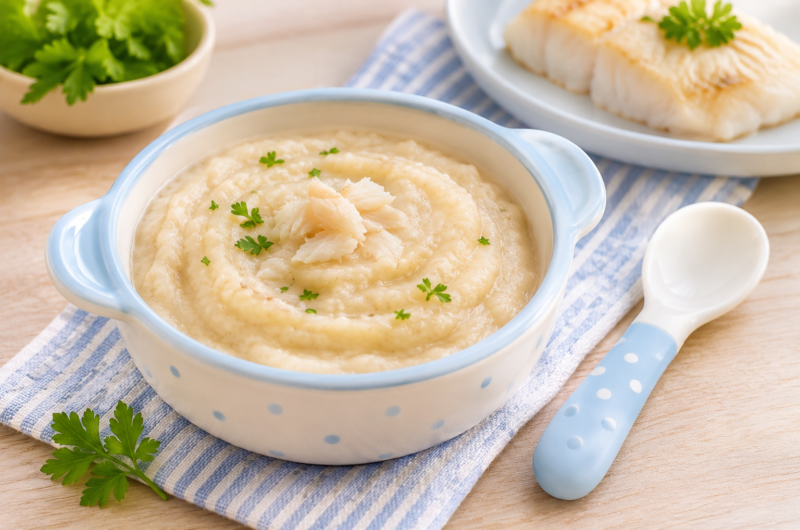
Fish is a valuable food to include in a varied family diet because it provides protein and other important nutrients. Combining it with vegetables and potato creates a meal with different textures and flavors without requiring complicated preparation. This recipe uses boneless, skinless white fish or salmon, making it easier to prepare a soft fish mixture. The carrot contributes natural sweetness, celery adds a mild vegetable flavor, and onion provides an aromatic base. Mashed potato creates a smooth foundation, while the homemade white sauce brings everything together with a creamy consistency. These ingredients work well together and can be prepared in separate stages before serving. For parents who want to prepare homemade meals rather than depend entirely on packaged baby food, this recipe offers a practical alternative. The texture can also be adjusted depending on the child’s age and eating abilities.
Choosing Between White Fish and Salmon
One of the useful features of this easy fish recipe is that it can be prepared with either white boneless, skinless fish or salmon. White fish generally has a mild flavor and a tender texture when cooked, making it a convenient option for children who are beginning to explore different foods. Salmon has a richer taste and naturally contains omega-3 fatty acids, including DHA and EPA. Both choices provide high-quality protein, although their nutritional profiles differ. When selecting fish, always purchase fresh or properly frozen products from a reliable source. Check carefully for any remaining bones, even when the packaging describes the fish as boneless. Fish should be cooked thoroughly and broken into small, soft flakes before serving. Parents can choose whichever variety is appropriate for their family’s preferences while considering potential allergies and the child’s previous experience with fish.
Nutritional Benefits of Fish in Children’s Meals
Fish provides several nutrients that support normal growth and development. It is a source of complete protein, which supplies amino acids needed by the body. Different fish varieties also provide vitamin B12, selenium, iodine, and other nutrients. Salmon is particularly well known for its omega-3 fatty acid content, which includes DHA, a fatty acid important for normal brain and eye development. White fish can also contribute useful protein while generally having a milder flavor. Including a variety of fish in an appropriate diet can help children become familiar with different tastes and food textures. However, fish selection matters because mercury levels vary between species. Choose fish from lower-mercury options and follow local recommendations for fish consumption during childhood. Always introduce fish carefully, particularly when it is a new food, and seek medical advice if there are concerns about food allergies.
The Role of Onion in the Fish and Vegetable Mixture
Onion provides the aromatic foundation for this homemade fish dish. The recipe uses half an onion, which is cooked gently in a small amount of olive oil before the fish and vegetables are added. Cooking onion softens its texture and reduces its sharp raw flavor, allowing it to blend naturally with the other ingredients. When preparing meals for young children, finely chopping the onion helps it cook evenly and makes it easier to incorporate into the finished dish. Onion also contributes natural plant compounds and flavor without requiring a large number of additional seasonings. Its mild sweetness after cooking complements the delicate taste of white fish and the richer flavor of salmon. Allowing the onion to soften before adding the remaining ingredients creates a better foundation for the vegetable mixture and helps the different flavors develop together.
Why Celery Adds Flavor to Baby Fish Recipes
Celery is included in this recipe to provide a mild, fresh vegetable flavor that complements the fish. Half a cup of finely chopped celery is used, allowing it to blend with the onion, carrot, and parsley during cooking. Celery contains a high proportion of water and provides small amounts of vitamins, minerals, and dietary fiber. Its natural flavor works particularly well in creamy fish dishes because it adds freshness without overpowering the other ingredients. Finely chopping the celery is important because larger or firmer pieces may be difficult for younger children to manage. Cooking it until soft helps improve its texture and allows it to blend into the fish mixture. It is also a convenient way to introduce another vegetable into a familiar meal. When prepared properly, celery contributes both flavor and variety to the overall dish.
Adding Carrots for Natural Sweetness and Color
Grated carrot brings natural sweetness and an attractive color to this homemade fish and vegetable recipe. The recipe includes half a cup of grated carrot, which cooks relatively quickly and becomes tender when simmered with the other ingredients. Carrots are commonly included in homemade baby food because they have a mild flavor that works well with both savory and creamy dishes. They also contain beta-carotene, which the body converts into vitamin A. Vitamin A supports normal vision and immune function. Grating the carrot makes it easier to cook evenly and distribute throughout the fish mixture. This preparation method also reduces the need for large vegetable pieces. When combined with celery and onion, carrot helps create a balanced vegetable mixture that pairs naturally with mashed potato and white sauce.
The Importance of Butter in Homemade White Sauce
Butter is an essential ingredient in the white sauce used for this fish dish. The recipe calls for 10g of butter, which is melted in a separate saucepan before the flour is added. This combination creates the starting base for a traditional white sauce. Butter contributes richness and helps develop the smooth consistency associated with creamy sauces. It also allows the flour to combine evenly before milk is introduced. Heating the butter gently is important because it should melt without becoming burnt or overly browned. Once the flour is incorporated, the mixture can be whisked with milk to create a creamy sauce. This simple cooking method produces a smooth coating that complements the delicate fish and soft vegetables. The sauce should be prepared carefully to avoid lumps and achieve a consistency that spreads easily over the mashed potato.
How Flour Helps Create a Smooth White Sauce
Flour helps thicken the white sauce and gives it the consistency needed to accompany the fish and mashed potato. This recipe uses one teaspoon of flour, which is combined with melted butter before the milk is gradually whisked in. This mixture is known as a roux and is commonly used in traditional white sauce preparation. Mixing the flour with butter first helps reduce the chance of lumps forming when the liquid is added. Whisking continuously while introducing the milk allows the sauce to develop a smooth texture. The sauce should be cooked gently until it thickens slightly. It should remain creamy rather than becoming too heavy or stiff. This consistency makes it easier to pour over the fish and mashed potato. A properly prepared white sauce also helps combine the different ingredients into a cohesive meal.
Using Milk to Prepare Creamy Fish Sauce
Milk is the liquid ingredient that transforms the butter and flour mixture into a smooth white sauce. The recipe uses half a cup of milk, which is gradually whisked into the melted butter and flour. Adding the milk slowly while stirring helps create an even consistency and prevents flour from collecting in lumps. As the sauce heats, it gradually thickens and develops a creamy texture. Milk also contributes protein, calcium, and other nutrients, depending on the variety selected. For young children, use milk appropriate for their age and dietary requirements. If your child has a diagnosed milk allergy or other dietary restriction, the original recipe may need professional dietary adaptation. Keep the saucepan over gentle heat and stir regularly so the sauce does not stick to the bottom. The finished white sauce should be smooth enough to pour over the fish and vegetables.
Fresh Parsley for a Mild Herbal Flavor
Fresh parsley is included to provide a light herbal flavor that works well with fish. The recipe uses one teaspoon of fresh parsley, which should be finely chopped before being added to the pan. Parsley complements the mild taste of white fish and balances the richness of the butter-based white sauce. It also adds a little green color to the vegetable mixture, making the finished meal more appealing. Fresh herbs are useful in homemade baby food because they can introduce new flavors without relying heavily on salt. Parsley contains small amounts of vitamin K, vitamin C, and other plant nutrients, although the quantity used here is primarily intended for flavor. Wash the parsley thoroughly and remove any tough stems before chopping. Adding it during cooking allows its flavor to blend with the fish and vegetables.
Preparing Soft Mashed Potato for the Base
Mashed potato provides the soft base for this homemade fish dish. The recipe uses one potato, which is cooked in boiling water and mashed before serving. Potatoes contain carbohydrates that provide energy and also supply potassium and some vitamin C. Cooking the potato in boiling water until completely tender makes it easy to mash into a smooth consistency. For a younger child, the mash should be free from hard lumps and prepared according to their feeding abilities. The mashed potato is placed on the serving plate first, creating a base for the fish and vegetable mixture. The creamy white sauce is then poured over the top. This arrangement allows all the ingredients to be served together in one comforting meal. The potato also helps balance the flavors of the fish and vegetables without requiring additional seasonings.
Understanding the Difference Between Fish Sauce and White Sauce
This recipe uses two separate preparations that serve different purposes. The fish and vegetable mixture is cooked in a frying pan, where the onion, fish, celery, carrot, and parsley develop their flavors together. The white sauce is prepared independently in another saucepan using butter, flour, and milk. Keeping these preparations separate helps control the texture and prevents the delicate fish from being overworked while the sauce thickens. Once both components are ready, the fish mixture is served over mashed potato and finished with the white sauce. The sauce adds moisture and a creamy texture, while the fish and vegetables provide the main savory elements. Preparing each component separately also makes it easier to check that the fish is thoroughly cooked and the potato is soft before combining everything on the plate.
Preparing the Fish Before Cooking
Good preparation is important when cooking fish for babies and toddlers. Start by checking that the fish is boneless and skinless, even if it has already been sold as prepared fillets. Carefully inspect it for any remaining pin bones. If using frozen fish, thaw it safely according to the package instructions before cooking. Pat the fish dry if needed and prepare it in manageable pieces. The original recipe calls for 250g of white fish or salmon, which is added to the pan after the onion has softened. Fish cooks relatively quickly, so it should be handled gently to prevent it from breaking down too much during preparation. Once cooked, it should separate easily into soft flakes. Check the entire portion carefully before serving to ensure that no bones remain.
Cooking the Fish and Vegetables Together
The fish and vegetable mixture is prepared in a frying pan using a straightforward cooking method. Begin by heating half a teaspoon of olive oil and cooking the finely chopped onion until softened. Add the prepared fish and cook it gently, taking care to avoid breaking it into overly small pieces while it is still cooking. Next, add the finely chopped celery, grated carrot, and fresh parsley. Stir the ingredients carefully and allow the mixture to simmer until the vegetables are soft and the fish is thoroughly cooked. The cooking time depends on the thickness and type of fish being used. Avoid leaving the fish on high heat for too long, as this can make it dry. Once everything is tender, remove the pan from the heat and prepare the remaining components for serving.
Preparing the White Sauce Without Lumps
A smooth white sauce adds a creamy finish to this fish and mashed potato meal. Begin by melting the butter gently in a separate saucepan. Add the flour and stir until the two ingredients combine into a smooth mixture. Gradually whisk in the milk, making sure to keep stirring as the liquid is added. This gradual process helps prevent lumps and encourages an even consistency. Continue heating gently while whisking until the sauce begins to thicken. The sauce should be creamy and pourable, not so thick that it becomes difficult to spread. The ingredient instructions also mention adding grated cheese when making the white sauce, although the quantity is not specified. If following that variation, stir in the cheese until melted and incorporated. Keep the heat low to prevent the sauce from sticking or burning.
How to Cook and Mash the Potato
The potato should be prepared separately so it is ready when the fish mixture and white sauce are finished. Peel the potato if desired, cut it into manageable pieces, and place it in a saucepan of boiling water. Cook until it is completely tender when tested with a fork. Drain the water carefully and mash the potato until it reaches a smooth consistency. The recipe does not specify additional butter, milk, or seasoning for the mash, so the original preparation can be followed using the cooked potato alone. If the potato becomes too firm or lumpy, continue mashing until it is suitable for the child’s feeding stage. For younger babies, a smoother consistency may be needed. Preparing the potato while the fish mixture is cooking can help make the overall cooking process more efficient.
Bringing the Fish, Vegetables, and Mash Together
Once the fish mixture, white sauce, and mashed potato are ready, the dish can be assembled. Place a portion of mashed potato on a serving plate or in a suitable bowl. Add the cooked fish and vegetable mixture over the potato, distributing the ingredients evenly. Pour the creamy white sauce over the top so that it covers the fish and vegetables. This serving method allows the sauce to blend with the potato while keeping the fish and vegetable mixture easy to identify. For a younger child, break the fish into small flakes and check the consistency of every component before serving. Make sure the dish has cooled to a safe eating temperature. The finished meal should be soft, moist, and easy to manage according to the child’s developmental abilities.
Adjusting the Texture for Babies and Toddlers
The texture of homemade fish meals should always be adjusted according to the child’s developmental stage. Babies who are beginning complementary foods may require a smoother or mashed consistency, while older toddlers may be able to manage soft flakes of fish and small pieces of cooked vegetables. The potato can be mashed more thoroughly for a smoother base, and the cooked fish can be broken into smaller pieces using a fork. Celery should be particularly soft and finely chopped because it can remain fibrous even after cooking. Always check the fish carefully for bones before serving. Children should sit upright and be supervised throughout the meal. Avoid assuming that a recipe is suitable simply because it uses baby-friendly ingredients; safe texture and appropriate preparation are equally important.
Easy Ways to Adapt This Homemade Fish Recipe
This recipe offers a choice between white fish and salmon, allowing parents to adjust the flavor according to their family’s preferences. White fish provides a mild taste, while salmon has a richer flavor and contains omega-3 fatty acids. The original ingredient list also includes grated cheese as an addition to the white sauce, although it does not provide a specific amount. Parents can follow the basic butter, flour, and milk preparation or include cheese as described in the ingredient note. The vegetables and mashed potato provide a flexible foundation for the fish. If changing ingredients because of allergies or dietary restrictions, make sure any replacement is appropriate for the child’s nutritional needs. Keep in mind that substitutions can affect flavor, cooking time, and nutritional values.
Food Safety When Preparing Fish for Babies
Food safety is especially important when preparing fish for young children. Always use fish from a reliable source and store it at the appropriate temperature before cooking. Raw fish should be kept separate from ready-to-eat foods, and preparation surfaces, knives, and utensils should be washed thoroughly after contact with raw fish. Check carefully for bones before cooking and again before serving. Fish should be cooked completely, with the flesh turning opaque and separating easily into flakes. If using a food thermometer, follow recommended safe internal cooking temperatures for fish. Avoid serving undercooked fish to babies or toddlers. Once the meal is prepared, allow it to cool before feeding. Do not leave cooked fish sitting at room temperature for extended periods, and refrigerate leftovers promptly in a clean, airtight container.
How to Store Leftover Fish and Mashed Potato
If you have prepared more fish than your child needs for one meal, storing leftovers correctly is important. Transfer the cooked fish mixture, mashed potato, and sauce into clean containers and refrigerate promptly after cooking. For baby portions, it is sensible to use refrigerated leftovers within 24 hours and follow local food safety recommendations. If you want to keep the meal for a longer period, freeze suitable portions in airtight, freezer-safe containers. Label each container with the preparation date. When reheating, ensure the food becomes thoroughly hot throughout, then allow it to cool to a safe serving temperature. Stir the sauce and fish mixture carefully to distribute heat evenly. Do not repeatedly reheat the same portion, and discard food that has already been served to a child and left unfinished.
Helpful Tips for Making the Best Creamy Fish Dish
A few simple cooking techniques can improve the final result. Choose boneless, skinless fish and inspect it carefully for any remaining bones before preparation. Finely chop the celery and grate the carrot so that both vegetables soften evenly. Cook the onion gently rather than allowing it to brown too much. Add the fish carefully and avoid stirring aggressively, as delicate fish can break apart. When preparing the white sauce, combine the butter and flour first, then add milk gradually while whisking. This creates a smoother consistency and reduces the likelihood of lumps. Cook the potato until completely tender before mashing. Finally, assemble the dish just before serving and make sure the temperature and texture are suitable for your child. These small details help create a creamy, well-balanced homemade fish meal.
Common Mistakes to Avoid When Preparing Baby Fish Meals
One of the most important mistakes to avoid is overlooking small fish bones. Even fish sold as boneless can occasionally contain pin bones, so careful inspection is essential. Another common issue is overcooking the fish, which can make it dry and harder to combine with the mashed potato. Cooking the vegetables insufficiently can also leave firm pieces that may not be appropriate for younger children. When preparing white sauce, adding all the milk too quickly can cause lumps, so it is better to whisk gradually. Avoid allowing the sauce to become excessively thick because it should be easy to pour over the dish. Finally, do not serve the meal while it is hot. Allow enough time for cooling and check the consistency before offering it to your child.
Frequently Asked Questions About Homemade Fish Dish for Babies
Can babies eat fish?
Fish can be introduced when a baby is developmentally ready for complementary foods. It should be fully cooked, carefully checked for bones, and served in an appropriate texture. Introduce it carefully because fish is a common food allergen.
Which fish is better for this recipe, white fish or salmon?
Both options work well. White fish generally has a milder flavor, while salmon has a richer taste and provides omega-3 fatty acids. Choose a suitable lower-mercury fish variety.
Can I prepare this fish recipe for toddlers?
Yes. The recipe can be served to toddlers when the fish, vegetables, and potato are prepared in manageable pieces and cooked until tender.
Can I make the white sauce without cheese?
Yes. The main white sauce ingredients are butter, flour, and milk. The original ingredient instructions also mention grated cheese as an optional addition, but no quantity is provided.
How do I know when the fish is cooked?
Fully cooked fish should be opaque and separate easily into flakes. Check that the thickest part is cooked and carefully inspect it for bones before serving.
Can I freeze homemade fish and mashed potato?
Yes, suitable portions can be frozen in airtight containers. Cool and freeze them promptly, label them with the preparation date, and reheat thoroughly before serving.
Is salmon suitable for baby food?
Salmon can be included in an age-appropriate diet when properly cooked and served in a suitable texture. It is a source of protein and omega-3 fatty acids. Always introduce fish carefully and follow appropriate feeding guidance.
Easy Fish Dish for Babies – Creamy Fish with Vegetables and Mashed Potato
Description:
A comforting homemade fish recipe made with tender white fish or salmon, finely prepared vegetables, creamy homemade white sauce, and soft mashed potato. This easy fish and vegetable meal is suitable for babies and toddlers who are developmentally ready for its ingredients and can be adapted to their eating abilities.
Preparation Time: 10 minutes
Cooking Time: 25–30 minutes
Total Time: Approximately 35–40 minutes
Serving: Approximately 2–3 portions, depending on portion size and appetite.
Ingredients:
- 250g boneless, skinless white fish or salmon
- ½ onion
- ½ cup finely chopped celery
- ½ cup grated carrot
- 10g butter
- 1 teaspoon flour
- ½ cup milk
- 1 teaspoon fresh parsley
- 1 potato (boiled and mashed)
- ½ teaspoon olive oil (for cooking the onion)
- Grated cheese (optional; quantity not specified in the original recipe)
Step-by-Step Instructions:
- Prepare the Onion: Heat ½ teaspoon of olive oil in a frying pan over medium heat. Add the finely chopped onion and cook until soft.
- Add the Fish: Place the boneless, skinless fish or salmon into the frying pan. Cook gently until the fish is thoroughly cooked, taking care not to break it apart excessively.
- Add the Vegetables: Stir in the finely chopped celery, grated carrot, and fresh parsley. Mix gently to distribute the ingredients evenly.
- Simmer Until Tender: Allow the fish and vegetable mixture to simmer gently until the vegetables are soft and the fish is completely cooked.
- Start the White Sauce: In a separate saucepan, melt 10g of butter over low heat.
- Add the Flour: Stir in one teaspoon of flour and mix until it combines smoothly with the melted butter.
- Whisk in the Milk: Gradually pour in half a cup of milk while whisking continuously. Cook gently until the sauce thickens and becomes smooth. If desired, stir in grated cheese until melted.
- Boil the Potato: Peel the potato if desired, cut it into smaller pieces, and cook in boiling water until completely tender.
- Mash the Potato: Drain the cooked potato and mash thoroughly until it reaches a soft consistency suitable for the child’s developmental stage.
- Assemble the Dish: Place the mashed potato in a serving bowl or on a plate. Add the cooked fish and vegetable mixture over the potato.
- Finish with White Sauce: Pour the prepared white sauce over the fish and vegetables. Allow the meal to cool to a safe temperature before serving.
Nutritional Information (Estimated Per Serving):
Values are approximate and depend on the type of fish, milk, cheese, potato size, and actual serving quantity. The original recipe does not specify the amount of grated cheese.
- Calories: 250–350 kcal
- Protein: 18–25g
- Carbohydrates: 25–35g
- Total Fat: 9–16g
- Saturated Fat: 4–8g
- Fiber: 3–5g
- Sugars: 4–7g
- Sodium: Varies according to the ingredients selected
Storage Notes:
- Refrigerate cooked leftovers promptly in a clean, airtight container.
- For baby portions, use refrigerated leftovers within 24 hours.
- Freeze individual portions in suitable freezer-safe containers.
- Reheat thoroughly until piping hot throughout, then cool before serving.
- Do not repeatedly reheat the same portion.
Recipe Notes:
- White fish and salmon are both suitable options for this recipe.
- Carefully check the fish for bones before and after cooking.
- Cook the fish thoroughly and break it into soft, manageable flakes.
- Finely chop the celery to achieve a softer texture.
- Whisk the milk gradually into the butter and flour to prevent lumps.
- Grated cheese is mentioned as an optional addition to the white sauce; its quantity is not specified.
- Adjust the consistency of the fish, vegetables, and mashed potato according to the child’s developmental stage.
- Always supervise babies and toddlers while eating.