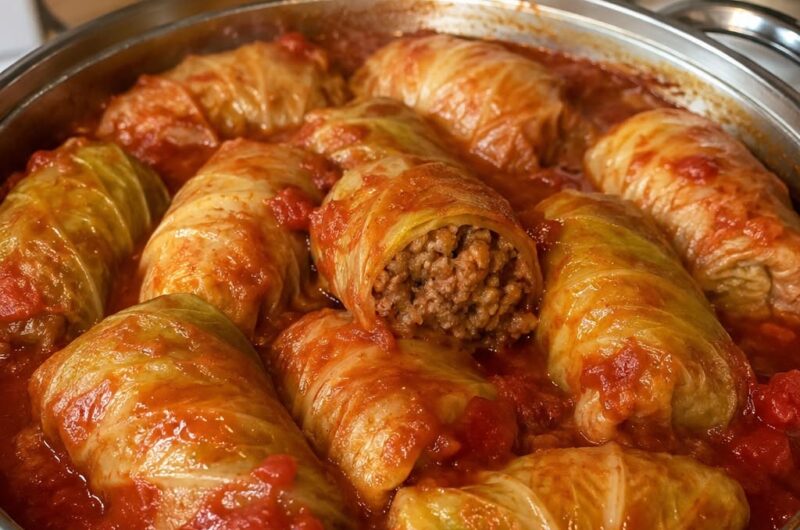
There are some recipes that instantly bring the feeling of a warm family dinner to the table, and homemade stuffed cabbage rolls are one of them. Tender cabbage leaves wrapped around a hearty mixture of seasoned ground beef and rice, covered in a rich tomato sauce, and slowly baked until everything becomes beautifully tender makes this classic comfort food difficult to resist.
These stuffed cabbage rolls are hearty enough to serve as a complete dinner, yet simple enough to prepare with familiar ingredients. The combination of ground beef, white rice, onion, garlic, and spices creates a savory filling, while the tomato-based sauce adds sweetness, acidity, and plenty of moisture as the rolls cook.
If you have never made homemade cabbage rolls before, don’t let the rolling process intimidate you. Once the cabbage leaves are softened, they become flexible and surprisingly easy to fill and fold. The most important part is simply making sure the leaves are tender enough to roll without tearing.
This recipe is also ideal for make-ahead meals. In fact, many people find that cabbage rolls taste even better the following day because the filling and sauce have more time to develop their flavors.
Whether you’re looking for an old-fashioned family dinner, a cozy weekend meal, or a freezer-friendly comfort food recipe, these beef stuffed cabbage rolls are a delicious option.
Why These Classic Cabbage Rolls Are Such a Comfort Food Favorite
Stuffed cabbage has been prepared in many forms across different cuisines and cultures. Versions of cabbage rolls can be found throughout Eastern Europe, the Balkans, the Middle East, and other regions, with fillings and sauces changing according to local traditions.
What makes this particular version so appealing is its straightforward combination of ingredients.
You don’t need a long shopping list or complicated cooking techniques. A head of cabbage, ground beef, rice, onion, garlic, a few seasonings, and a tomato sauce come together to create a satisfying meal.
The cabbage becomes soft and tender during the long cooking time, while the beef and rice filling absorbs the tomato sauce around it.
The finished rolls are:
- Tender and comforting
- Savory and satisfying
- Packed with ground beef
- Filled with fluffy rice
- Covered in rich tomato sauce
- Easy to prepare ahead
- Suitable for family dinners
- Excellent for leftovers
- Ideal for colder weather
- Great for Sunday dinners
- Delicious served with mashed potatoes or bread
The slow baking time is especially important because it allows the cabbage to become tender while giving the rice enough time to cook inside the rolls.
What Makes This Stuffed Cabbage Recipe So Delicious?
The secret isn’t one complicated ingredient. Instead, the flavor comes from the way several simple ingredients work together.
The cabbage provides a mild sweetness and tender texture. Ground beef contributes richness and savory flavor. Rice gives the filling body and makes the rolls more substantial.
Onion and garlic build the aromatic foundation, while paprika, salt, and black pepper add seasoning.
Then comes the tomato sauce.
The combination of tomato sauce and diced tomatoes creates a rich base that surrounds every cabbage roll. Brown sugar balances the natural acidity of the tomatoes, while Worcestershire sauce introduces a deeper savory note. Italian seasoning adds a blend of dried herbs that complements the tomato base.
As everything cooks together, the sauce works its way around the cabbage leaves and into the filling.
This is why the final dish tastes much more complex than the ingredient list might suggest.
Choosing the Right Cabbage for Rolling
The cabbage is more important than it might initially appear.
Choose a large head of cabbage with firm leaves and no major bruising or damaged sections. A larger head generally gives you more usable leaves, which makes the rolling process easier.
The outer leaves are often the largest and easiest to work with. As you move toward the center, the leaves become smaller and more difficult to use for full-size rolls.
Don’t worry if some leaves tear.
You can place smaller pieces of cabbage between the rolls or use them underneath the rolls as a protective layer. Slight imperfections won’t affect the flavor of the finished dish.
The key is softening the leaves before you attempt to fill them.
How to Soften Cabbage Leaves Without Making Them Mushy
Raw cabbage leaves are stiff and brittle, which makes them difficult to fold around a filling.
Boiling changes that.
Bring a large pot of water to a boil and carefully remove the cabbage leaves. Cook them for approximately two to three minutes, just long enough for them to soften and become flexible.
You don’t want to completely cook the cabbage at this stage.
The leaves will continue cooking later in the tomato sauce, so the goal is simply to make them pliable enough to roll.
Once softened, drain the leaves and allow them to cool enough to handle comfortably.
If a leaf has a particularly thick central rib, you can be gentle when folding it. The softened leaf should be flexible enough to wrap around the filling without immediately splitting.
Building a Flavorful Beef and Rice Filling
The filling is the heart of these cabbage rolls.
Ground beef provides the main savory element, while uncooked white rice gives the mixture structure and substance.
The recipe uses:
- 2 pounds ground beef
- 1 cup uncooked white rice
- 1 medium finely chopped onion
- 2 minced garlic cloves
- 1 large egg
- Salt
- Black pepper
- Paprika
Everything is combined in one large bowl.
Because the rice is added uncooked, it absorbs moisture as the cabbage rolls bake. The tomato sauce and natural moisture from the meat and vegetables help the rice cook during the long baking process.
The egg serves as a binder, helping the filling stay together once the rolls are cooked.
The onion contributes moisture and sweetness, while garlic adds a stronger savory aroma.
Paprika gives the filling a gentle warmth and attractive color.
Why Uncooked Rice Works in This Recipe
Some cabbage roll recipes use cooked rice, while others start with uncooked rice.
This version uses uncooked white rice.
That means you don’t need to prepare the rice separately before assembling the rolls, which keeps the recipe simpler.
However, the rolls need sufficient cooking time and moisture for the rice to become tender.
This is one reason the tomato sauce is so important.
The covered baking environment traps steam, while the tomato sauce surrounds the cabbage rolls and provides moisture during cooking.
Avoid dramatically shortening the baking time, because the rice needs enough time to cook properly.
The Easiest Way to Roll Cabbage Leaves
Once the leaves have cooled enough to handle, place one leaf flat on your work surface.
Add approximately 1/4 cup of the beef and rice mixture near the lower portion of the leaf.
Don’t overfill it.
The rice expands as it cooks, so leaving some room is important.
Fold the sides inward over the filling.
Then roll the leaf upward, keeping the filling enclosed.
Think of the process similarly to folding a burrito: secure the sides first, then roll forward.
Place each completed roll seam-side down.
This simple arrangement helps prevent the cabbage leaves from opening during baking.
Don’t worry if your first few rolls aren’t perfectly shaped. Homemade cabbage rolls are meant to look rustic.
The Tomato Sauce Is More Than a Topping
The sauce does much more than provide flavor.
It creates the moist cooking environment necessary for the rice and filling to cook properly.
For this recipe, the sauce combines tomato sauce, diced tomatoes, brown sugar, Worcestershire sauce, and Italian seasoning.
The two tomato products create both smoothness and texture.
Tomato sauce forms the main liquid base, while diced tomatoes add small pieces of tomato throughout the dish.
Brown sugar provides a slight sweetness that balances the acidity of the tomatoes.
Worcestershire sauce adds savory depth.
Italian seasoning brings dried herbs into the mixture, giving the sauce a comforting homemade character.
When the sauce simmers around the cabbage rolls during baking, the flavors blend together.
Why You Should Put Sauce Under the Rolls
Before arranging the cabbage rolls, spread a small amount of tomato sauce across the bottom of the baking dish or Dutch oven.
This creates a flavorful base and helps prevent the rolls from sticking directly to the bottom.
Arrange the rolls seam-side down in a single layer whenever possible.
Then pour the remaining sauce over the top.
This ensures that the cabbage is surrounded by moisture while it bakes.
It also means you get plenty of sauce with every serving.
Slow Baking Creates Tender Cabbage Rolls
The oven temperature for this recipe is 350°F (175°C).
Cover the baking dish with foil or a lid and bake for approximately 1 1/2 to 2 hours.
The long cooking time is what transforms the firm cabbage leaves into tender, easy-to-cut rolls.
It also gives the filling enough time to cook completely.
Because ovens, baking dishes, cabbage size, and individual rolls can vary, begin checking toward the end of the suggested cooking window.
The cabbage should be tender, and the rice should be fully cooked.
If the cabbage is still firm or the rice isn’t tender, it needs more cooking time.
Why Covering the Baking Dish Matters
Keeping the dish covered during most of the cooking process helps retain moisture.
Without a cover, too much liquid can evaporate from the sauce before the rice has finished cooking.
The trapped steam also helps soften the cabbage leaves.
A tight-fitting lid is ideal, but aluminum foil works well too.
Make sure the foil is secured around the edges of the baking dish so the steam stays inside as much as possible.
Let the Cabbage Rolls Rest Before Serving
Once the cabbage rolls are finished baking, don’t rush directly to the table.
Let them rest for about 10 minutes.
This brief resting period allows the filling and sauce to settle slightly.
It also makes the rolls easier to transfer without breaking apart.
The tomato sauce will be extremely hot when the dish comes out of the oven, so a short rest is useful for both texture and serving.
Best Side Dishes for Stuffed Cabbage Rolls
Because these cabbage rolls are already hearty, you don’t need complicated side dishes.
Mashed potatoes are one of the most comforting choices.
The creamy potatoes are perfect for soaking up the tomato sauce.
Crusty bread is another excellent option. A slice of rustic bread can be used to scoop up the remaining sauce from the plate.
For a lighter accompaniment, consider a simple green salad or steamed vegetables.
A spoonful of sour cream adds coolness and creaminess against the warm tomato sauce.
You can also serve the rolls with:
- Roasted potatoes
- Steamed green beans
- Cucumber salad
- Simple coleslaw
- Fresh garden salad
- Crusty dinner rolls
Tips for Better Homemade Cabbage Rolls
A few small details can make the preparation easier.
Don’t overfill the leaves. Rice expands as it cooks, so too much filling can cause the cabbage to split.
Keep the rolls seam-side down. This helps them maintain their shape.
Soften the cabbage properly. Leaves that are too firm can crack when folded.
Use enough sauce. The rice needs moisture while cooking.
Keep the baking dish covered. This helps prevent excessive moisture loss.
Allow the rolls to rest. Ten minutes makes serving easier.
Don’t worry about perfection. Rustic cabbage rolls can have different shapes and sizes while still tasting delicious.
Make-Ahead Ideas for Busy Families
Stuffed cabbage rolls are particularly convenient for meal planning.
You can prepare the dish in advance and refrigerate it before baking, provided the ingredients are kept properly chilled and handled safely.
Another option is to prepare the filling ahead of time and refrigerate it until you’re ready to assemble.
The finished dish also reheats well, which makes it useful for weekday lunches and dinners.
For the best results, store leftovers in an airtight container in the refrigerator and reheat them thoroughly before serving.
Why Cabbage Rolls Often Taste Better the Next Day
Many tomato-based comfort foods improve after resting overnight.
As the cabbage rolls sit in the sauce, the flavors have additional time to mingle.
The beef, rice, cabbage, herbs, and tomato sauce become even more integrated.
This makes leftovers especially enjoyable.
A serving of reheated cabbage rolls can taste just as satisfying as the original dinner, making this a practical recipe for families who enjoy cooking once and eating more than once.
Simple Ways to Customize the Flavor
The ingredient list for this recipe should remain exactly as written for the classic version, but there are many ways to serve it differently.
If you enjoy a creamier presentation, add sour cream at the table.
For extra sauce, spoon more of the tomato mixture over each serving.
If you’re serving the cabbage rolls at a family gathering, place them in a large Dutch oven or attractive serving dish so everyone can help themselves.
The beauty of a traditional recipe like this is that it doesn’t need complicated garnishes.
The cabbage, beef, rice, and tomato sauce already provide plenty of flavor.
Common Problems and How to Avoid Them
Why did my cabbage leaves tear?
The leaves may not have been softened enough before rolling. Boiling them for the recommended two to three minutes helps make them flexible.
Why is my rice still hard?
The rolls may need more cooking time or sufficient moisture. Keep the baking dish covered and allow the cabbage rolls to continue cooking until the rice is tender.
Why did my filling come out?
Overfilling is one common reason. Rice expands during cooking, so use approximately 1/4 cup of filling per cabbage leaf and roll firmly without squeezing excessively.
Why are my cabbage rolls dry?
The dish may have lost too much moisture during baking. Keeping it covered helps retain steam and sauce.
Can I use a Dutch oven?
Yes. A Dutch oven works very well because its heavy construction retains heat and its lid helps keep moisture inside.
Frequently Asked Questions
What type of meat is best for cabbage rolls?
This recipe specifically uses ground beef. It provides a rich, savory filling that pairs naturally with the tomato sauce and cabbage.
Do I need to cook the rice first?
No. This recipe uses uncooked white rice. The rice cooks inside the cabbage rolls as they bake in the covered tomato sauce.
How long should stuffed cabbage rolls bake?
Bake them covered at 350°F (175°C) for approximately 1 1/2 to 2 hours, or until the cabbage is tender and the rice is fully cooked.
Can I serve cabbage rolls for a holiday meal?
Absolutely. Their hearty presentation makes them suitable for family celebrations, Sunday dinners, potlucks, and special gatherings.
What goes well with cabbage rolls?
Mashed potatoes, crusty bread, sour cream, salads, and simple vegetables are all excellent choices.
A Cozy Dinner Worth Repeating
Homemade stuffed cabbage rolls are proof that you don’t need expensive ingredients or complicated cooking techniques to make a memorable meal.
A simple head of cabbage becomes a tender wrapper for seasoned beef and rice. A handful of pantry ingredients transforms into a rich tomato sauce. Then the oven brings everything together slowly until the cabbage is soft, the rice is cooked, and the filling is infused with savory tomato flavor.
The recipe takes some time, but much of that time is hands-off baking.
That makes these cabbage rolls especially appealing for weekends, family dinners, and occasions when you want something warm and substantial waiting in the oven.
Serve them with creamy mashed potatoes, crusty bread, or a spoonful of sour cream, and you have a comforting meal that feels both traditional and homemade.
Whether this is your first attempt at making stuffed cabbage rolls or a recipe you’ve enjoyed for years, this version is simple, hearty, and dependable.
Final Recipe Thoughts
These beef stuffed cabbage rolls with tomato sauce combine tender cabbage, savory ground beef, hearty white rice, aromatic onion and garlic, and a flavorful tomato sauce in one satisfying dish.
The slow baking method allows the ingredients to cook together gradually, creating the tender texture and comforting flavor that makes cabbage rolls such a beloved classic.
Make them for a family dinner, prepare a batch for leftovers, or serve them at a cozy weekend gathering. Once you’ve learned the simple rolling technique, you’ll have a reliable homemade comfort-food recipe you can return to again and again.
PART 2
Classic Stuffed Cabbage Rolls
Tender cabbage leaves filled with seasoned ground beef and white rice, then baked slowly in a rich tomato sauce until everything is soft, savory, and comforting. Serve these homemade cabbage rolls with mashed potatoes, crusty bread, or sour cream for a hearty family meal.
Recipe Details
Course: Dinner, Main Course
Cuisine: Comfort Food
Difficulty: Easy
Prep Time: About 30 minutes
Cook Time: 1½–2 hours
Resting Time: 10 minutes
Total Time: About 2 hours 40 minutes
Servings: Approximately 8
Ingredients
For the Beef and Rice Filling
- 1 large head of cabbage
- 2 lb ground beef
- 1 cup uncooked white rice
- 1 medium onion, finely chopped
- 2 cloves garlic, minced
- 1 large egg
- 1 tsp salt
- 1/2 tsp black pepper
- 1 tsp paprika
For the Tomato Sauce
- 2 cans (15 oz each) tomato sauce
- 1 can (14.5 oz) diced tomatoes
- 2 tbsp brown sugar
- 1 tbsp Worcestershire sauce
- 1 tsp Italian seasoning
How to Make Homemade Cabbage Rolls
1. Soften the Cabbage
Bring a large pot of water to a full boil.
Carefully remove the cabbage leaves and place them in the boiling water. Cook for 2–3 minutes, or until the leaves become soft and flexible.
Drain the leaves and allow them to cool enough to handle.
2. Mix the Savory Filling
In a large bowl, combine the ground beef, uncooked white rice, chopped onion, minced garlic, egg, salt, black pepper, and paprika.
Mix until the ingredients are evenly distributed.
3. Fill and Fold the Leaves
Place a cabbage leaf flat on your work surface.
Add approximately 1/4 cup of filling to the leaf.
Fold the sides toward the center, then roll the cabbage firmly around the filling.
Continue until all the filling and suitable cabbage leaves have been used.
4. Prepare the Baking Dish
Spread a small amount of tomato sauce over the bottom of a large baking dish or Dutch oven.
Arrange the cabbage rolls seam-side down in a single layer.
5. Make the Tomato Sauce
In a bowl, combine the tomato sauce, diced tomatoes, brown sugar, Worcestershire sauce, and Italian seasoning.
Stir until evenly mixed.
6. Cover the Cabbage Rolls
Pour the tomato sauce mixture evenly over the cabbage rolls.
Make sure the rolls are well covered with sauce so they remain moist during the long baking time.
7. Bake Until Tender
Cover the dish tightly with aluminum foil or place the lid on the Dutch oven.
Bake at 350°F (175°C) for 1½–2 hours.
The cabbage should be tender, and the rice inside the rolls should be completely cooked.
8. Rest Before Serving
Remove the dish from the oven and let the cabbage rolls rest for approximately 10 minutes.
This gives the filling time to settle and makes the rolls easier to serve.
What to Serve Alongside
These cabbage rolls are delicious with:
- Creamy mashed potatoes
- Crusty bread
- Sour cream
- Simple green salad
- Roasted vegetables
- Steamed vegetables
- Potato wedges
Helpful Recipe Tips
- Choose a large cabbage with healthy, flexible leaves.
- Don’t overfill the cabbage because the rice expands during cooking.
- Keep the rolls seam-side down.
- Make sure the baking dish stays covered during cooking.
- Give the cabbage rolls enough time for the rice to become tender.
- Let the finished dish rest for 10 minutes before serving.
- Spoon extra tomato sauce over each serving for even more flavor.
Storage
Allow leftovers to cool appropriately, then place them in an airtight container and refrigerate.
Cabbage rolls make excellent leftovers and can be reheated until thoroughly hot.
The flavors often become even more developed after resting overnight in the tomato sauce.
Serving Note
For the ultimate comfort-food dinner, serve two or three cabbage rolls with a generous spoonful of tomato sauce, creamy mashed potatoes, and a dollop of sour cream.