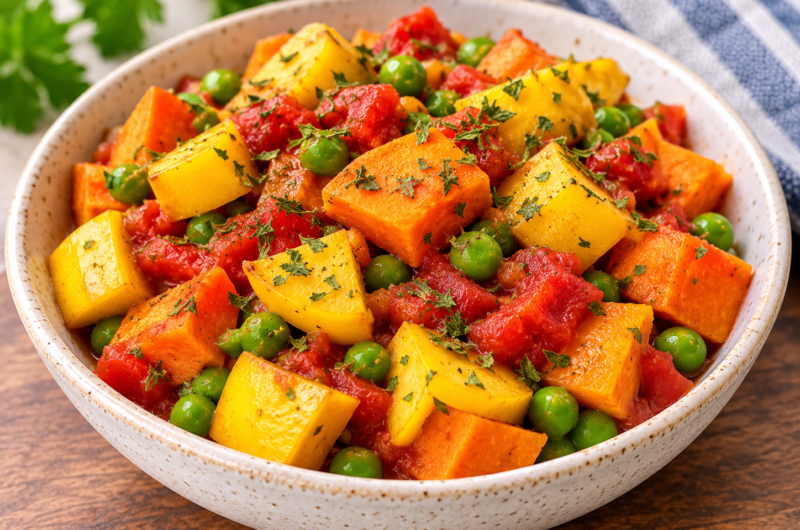
Veggie Surprise is a simple homemade vegetable mash made with yellow squash, peas, tomatoes, sweet potato, and dried parsley. This colorful combination brings together several vegetables to create a soft, flavorful dish that is easy to prepare using everyday kitchen ingredients. The recipe is especially useful for parents looking for homemade vegetable food ideas, as the ingredients can be cooked until tender and mashed into a soft consistency. Yellow squash provides a mild vegetable flavor, peas contribute natural sweetness, tomatoes add moisture, and sweet potato gives the mixture a naturally creamy texture. A small sprinkle of dried parsley finishes the dish with a gentle herbal note. Unlike complicated vegetable recipes that require several cooking stages, this preparation involves steaming, simmering, and mashing. It is a convenient option for everyday meal preparation and can be adjusted to achieve a texture suitable for individual feeding needs.
Why You Will Love This Homemade Veggie Surprise Recipe
One of the best things about Veggie Surprise is how easily it brings different vegetables together in one homemade dish. The ingredient list is short, the cooking process is straightforward, and there is no need for complicated equipment or advanced cooking skills. Yellow squash and sweet potato create a naturally soft base, while peas add small bursts of vegetable texture. Tomatoes help keep the mixture moist during cooking, making the final mash easier to prepare. Dried parsley introduces a mild herbal flavor without requiring additional seasoning. This recipe is also a useful way to include different vegetables in a meal rather than relying on just one ingredient. For families preparing homemade food, having a few simple vegetable combinations available can make meal planning easier. The ingredients are cooked until tender and then mashed with a fork, allowing you to control how smooth or textured the finished preparation becomes.
What Makes Veggie Surprise a Good Vegetable Combination
Combining several vegetables in one recipe creates a variety of flavors, colors, and nutritional components. Yellow squash has a delicate taste that works well with the sweetness of peas and sweet potato. Tomatoes bring a slightly tangy flavor that balances the other vegetables, while dried parsley adds a light herbal touch. The different ingredients also contribute different nutrients. Yellow squash contains water, fiber, and vitamin C. Peas provide plant-based protein, fiber, and carbohydrates. Sweet potatoes are known for their beta-carotene content, which the body can convert into vitamin A. Tomatoes contribute vitamin C and naturally occurring plant compounds. When these ingredients are cooked together, their flavors blend into a balanced vegetable mixture. The final dish does not need a heavy sauce or additional seasoning because the vegetables provide plenty of natural flavor. This makes Veggie Surprise a practical recipe for anyone interested in simple homemade vegetable meals.
Ingredients Needed for Easy Veggie Surprise
This easy vegetable mash requires five main ingredients: half a cup of chopped yellow squash, one tablespoon of cooked peas or beans, two tablespoons of tinned tomatoes, a sprinkle of dried parsley, and half a peeled and cooked sweet potato. Each ingredient plays a role in the final preparation. Yellow squash provides a mild vegetable base, while peas or beans add variety and a slightly firmer texture. Tinned tomatoes supply moisture and a gentle tang, helping the ingredients combine during simmering. Sweet potato contributes natural sweetness and a thick, soft consistency. Dried parsley completes the dish with a subtle herbal flavor. Preparing the ingredients before cooking makes the recipe easier to follow. Wash the fresh vegetables thoroughly, chop the squash into small pieces, and make sure the sweet potato is already cooked and peeled. Using ingredients in the specified quantities helps maintain the intended balance of flavors and texture.
Choosing Yellow Squash for a Soft Vegetable Mash
Yellow squash is the main fresh vegetable in this recipe and provides a mild flavor that blends easily with the other ingredients. Its naturally tender flesh becomes soft when steamed, making it suitable for a mashed vegetable preparation. The recipe calls for half a cup of chopped yellow squash, which should be cut into small, evenly sized pieces before cooking. Smaller pieces generally steam more consistently and become tender in less time than large chunks. Yellow squash also contains water, fiber, vitamin C, and other naturally occurring nutrients. Its light flavor makes it a useful ingredient when combining several vegetables because it does not overpower the peas, tomatoes, or sweet potato. Choose fresh squash with firm skin and no visible signs of spoilage. Wash it thoroughly before chopping, then steam until fully cooked. Once softened, it can be combined with the other ingredients and mashed into the desired consistency.
The Benefits of Adding Peas or Beans
Peas or beans provide an additional vegetable component that gives Veggie Surprise more variety in both flavor and texture. The original recipe uses one tablespoon of cooked peas, although beans are also listed as an alternative. Peas have a naturally sweet flavor that pairs well with yellow squash and sweet potato. They also contain plant-based protein, dietary fiber, carbohydrates, and several vitamins and minerals. Beans can provide a different texture and nutritional profile, depending on the variety selected. Because the recipe is intended to be mashed, the peas or beans should be fully cooked and soft enough to break down easily. If using whole peas or beans, check that no firm pieces remain after mashing, especially when preparing the dish for a young child. Adding this ingredient increases the variety of vegetables in the meal while keeping the preparation simple and maintaining the recipe’s original ingredient combination.
Why Tinned Tomatoes Work Well in Veggie Surprise
Tinned tomatoes are a convenient ingredient that helps bring the vegetable mixture together. The recipe uses two tablespoons, providing moisture and a mild tangy flavor that balances the natural sweetness of the sweet potato and peas. As the tomatoes simmer with the cooked vegetables, they soften further and create a moist mixture that is easier to mash. Tomatoes also contain vitamin C, potassium, and naturally occurring compounds such as lycopene. Using tinned tomatoes saves preparation time because they are already peeled or processed, depending on the product. Choose plain tinned tomatoes rather than heavily seasoned varieties to maintain the original recipe’s simple flavor profile. Check the product label for unnecessary added salt or other seasonings, particularly if preparing the dish for a young child. The specified quantity is enough to contribute flavor and moisture without turning the vegetable mash into a tomato-based sauce.
Sweet Potato: The Secret to a Naturally Creamy Texture
Sweet potato is an important ingredient because it gives Veggie Surprise its natural sweetness and helps create a soft, thick consistency. The recipe calls for half a peeled and cooked sweet potato, which is added to the vegetable mixture during preparation. Sweet potato contains carbohydrates, dietary fiber, potassium, and beta-carotene, a plant pigment that the body can convert into vitamin A. Its naturally sweet flavor complements the mild squash, peas, and tomatoes. Since the sweet potato is already cooked, it can be finely chopped before being combined with the other ingredients. This makes it easier to distribute evenly throughout the mash. When pressed with a fork, properly cooked sweet potato should break down without much effort. It also helps bind the vegetables together, reducing the need for additional liquid or thickening ingredients. Its soft texture makes it particularly useful in homemade vegetable mash recipes.
The Role of Dried Parsley in Vegetable Recipes
Dried parsley is a simple seasoning that adds a light herbal flavor to Veggie Surprise. Although the recipe requires only a sprinkle, this small addition gives the vegetable combination a slightly more developed taste. Parsley is commonly used in soups, vegetable dishes, sauces, and homemade savory meals because it has a mild flavor that works with many ingredients. In this recipe, it complements the sweetness of peas and sweet potato while balancing the tanginess of tomatoes. The original method recommends adding dried parsley after the vegetables have softened. This allows the herb to mix into the warm ingredients without requiring a separate cooking stage. A small amount is sufficient because the recipe is designed around the natural flavors of the vegetables. Make sure the parsley is suitable for consumption and has been stored in a dry, clean container to preserve its quality.
Preparing the Vegetables Before Cooking
Good preparation helps make this vegetable mash easier to cook and gives the ingredients a more consistent texture. Begin by washing the yellow squash thoroughly under clean running water. Remove any damaged areas and chop the squash into small pieces. Check that the peas or beans are cooked and ready to use. Measure the tinned tomatoes and keep the dried parsley nearby. The sweet potato should already be peeled and cooked, as specified in the original ingredient list. Finely chop it into small pieces so it can be mixed easily with the other vegetables. Preparing everything before turning on the heat makes it easier to follow the cooking instructions without interruptions. It also helps ensure that the ingredients are added at the appropriate stages. Clean preparation equipment and fresh ingredients are important for maintaining food quality, especially when preparing homemade meals for babies or young children.
How to Steam Vegetables for the Best Results
Steaming is the first cooking stage in this recipe and helps soften the vegetables while retaining much of their natural flavor. Place the prepared yellow squash into a suitable steamer and cook until fully tender. Steaming allows the vegetables to soften without being submerged in a large amount of water. This can help prevent the final mixture from becoming unnecessarily watery. The squash should be soft enough to mash easily with a fork once cooking is complete. Avoid leaving it so long that it becomes excessively broken down before the remaining ingredients are added. Check the vegetables during cooking and adjust the time according to the size of the pieces. Since the recipe includes cooked peas or beans and cooked sweet potato, these ingredients do not need the same initial steaming stage. Following the specified preparation order helps maintain the intended consistency and makes the final simmering process easier.
Combining the Peas, Tomatoes, and Sweet Potato
Once the vegetables have been steamed, the next stage is to bring the remaining ingredients together. Add the cooked peas or beans and two tablespoons of tinned tomatoes to the vegetable mixture. The finely chopped sweet potato is also incorporated at this stage. Stir gently so that the tomatoes coat the vegetables and the ingredients are evenly distributed. The sweet potato begins to soften further as it combines with the warm mixture, while the peas or beans add another layer of texture. Make sure the ingredients are not left in large pieces, particularly if the final dish is intended to have a soft consistency. Combining the vegetables before simmering allows their flavors to develop together. The tomatoes provide moisture, while the sweet potato helps thicken the mixture naturally. This stage prepares the ingredients for the final cooking process, during which everything becomes tender enough to mash.
Simmering the Vegetables Until Soft
After combining the ingredients, allow the mixture to simmer gently until everything is soft. This stage helps the vegetables come together and gives the tomatoes time to blend with the squash, peas, beans, and sweet potato. Stir occasionally to prevent sticking and to distribute the moisture evenly. The heat should be moderate rather than excessively high, as strong heat can cause the mixture to stick to the bottom of the pan before the vegetables have softened properly. Check the squash and peas or beans with a fork to make sure they are tender. The sweet potato should also be easy to break apart. The aim is to create a moist vegetable mixture that can be mashed without much effort. Once the vegetables have reached the desired softness, remove the pan from the heat and prepare to add the dried parsley. This gentle cooking process brings the ingredients together without requiring additional seasonings or complicated techniques.
Adding Dried Parsley for Extra Flavor
Dried parsley is added near the end of the cooking process to finish the vegetable mixture. Sprinkle a small amount over the warm vegetables and stir until it is evenly distributed. This final seasoning stage gives the dish a gentle herbal aroma while keeping the natural taste of the main ingredients noticeable. Because parsley has a mild flavor, it works well with the sweetness of sweet potato and peas. It also complements the slightly tangy taste of the tomatoes. There is no need to cook the parsley separately or prepare an additional seasoning mixture. Simply mixing it through the warm vegetables is enough to incorporate its flavor. If preparing the dish for someone who prefers very mild foods, the quantity can remain minimal, as the original recipe specifies only a sprinkle. The parsley completes the cooking stage before the vegetables are mashed.
How to Mash Veggie Surprise to the Right Consistency
Mashing is the final preparation stage and gives Veggie Surprise its characteristic soft texture. Transfer the cooked vegetables into a suitable bowl if needed, then use a clean fork or masher to break them down. Press the ingredients gently until the squash, peas or beans, tomatoes, and sweet potato are combined. The sweet potato helps create a thicker consistency, while the tomatoes keep the mixture moist. Continue mashing until there are no unsuitable firm pieces remaining. The final texture can be adjusted according to the person eating the meal. A smoother mash requires more pressing, while a slightly textured version can retain some small, soft vegetable pieces. When preparing food for babies, texture should always match their developmental feeding abilities. Check the mixture carefully for firm pieces, especially peas or beans. The aim is to create a soft and evenly combined vegetable dish without changing the original ingredients.
Nutritional Benefits of This Homemade Vegetable Mash
Veggie Surprise includes several vegetables that contribute different nutrients to the overall meal. Yellow squash provides vitamin C, fiber, and water. Peas contribute plant-based protein, fiber, and carbohydrates. Sweet potato is a source of beta-carotene, potassium, and dietary fiber, while tomatoes provide vitamin C and other plant compounds. Dried parsley adds flavor and contains small amounts of naturally occurring vitamins and minerals. Together, these ingredients create a vegetable-based dish with carbohydrates, fiber, and a variety of micronutrients. The exact nutritional content depends on the size of the sweet potato, the type of peas or beans used, and the tinned tomato product. This recipe can be included as part of a varied eating pattern, but it should not be treated as a complete meal for every age group without considering individual nutritional requirements. A varied diet remains important for obtaining a broad range of nutrients.
Veggie Surprise as a Homemade Baby Food Recipe
Vegetable mash is a popular homemade food option for babies who are developmentally ready to explore soft foods. Veggie Surprise combines several cooked vegetables in a single preparation, allowing parents to introduce different flavors and textures. Yellow squash and sweet potato become soft when cooked, while peas or beans add another vegetable component. Tomatoes contribute moisture and dried parsley adds a mild herbal flavor. When preparing this recipe for a, it is important to consider which ingredients the child has already tried and whether there are any known food allergies or dietary restrictions. Cook all ingredients until completely tender and mash them to a consistency appropriate for the feeding stage. Peas and beans should be broken down thoroughly to avoid firm whole pieces. Always supervise feeding, follow age-appropriate feeding guidance, and avoid adding unnecessary salt. Babies develop at different rates, so the appropriate texture should be based on individual readiness rather than age alone.
Serving Suggestions for Veggie Surprise
Veggie Surprise can be served as a small homemade vegetable meal or as part of a larger meal, depending on individual appetite and nutritional needs. Once the vegetables have been mashed, transfer the mixture into a clean serving bowl and allow it to cool to an appropriate temperature. Stir before serving to ensure that the tomatoes, sweet potato, squash, and peas or beans are evenly distributed. For babies, the consistency should match their current feeding abilities, with no hard or large pieces remaining. For older children or adults who enjoy vegetable-based dishes, a slightly chunkier texture may be preferred. The recipe has a mild flavor, so it can also work as a simple vegetable side dish. Since the ingredient quantities are relatively small, the recipe is best prepared as a small batch. This helps maintain freshness and makes it easier to serve the dish shortly after cooking.
Common Mistakes to Avoid When Making Veggie Surprise
Although Veggie Surprise is easy to prepare, a few simple mistakes can affect its final texture and quality. One common issue is cutting the yellow squash into uneven pieces, which can cause some portions to soften faster than others. Keeping the pieces similar in size helps the vegetables cook more consistently. Another mistake is failing to cook the peas or beans thoroughly before adding them to the mixture. They should be soft enough to mash easily. Adding too much liquid can also make the finished dish thinner than intended, so follow the original method and allow the tomatoes to provide moisture during simmering. It is equally important to cook the vegetables until fully tender before mashing. If they are still firm, the finished mixture may contain pieces that are difficult to eat. Finally, avoid adding excessive parsley or unnecessary seasoning. The recipe is designed around a simple combination of vegetables and mild flavor.
Storage and Food Safety for Homemade Vegetable Mash
Homemade vegetable mash should be handled carefully to maintain freshness and reduce the risk of foodborne illness. After cooking, allow the mixture to cool appropriately and transfer any portions that will not be served immediately into clean, covered containers. Refrigerate promptly rather than leaving the food at room temperature for an extended period. For longer storage, suitable portions may be frozen in food-safe containers, although freezing can slightly change the texture of some cooked vegetables. Label containers with preparation dates so that stored portions can be managed safely. When reheating, heat the food thoroughly, stir well to distribute the heat, and allow it to cool to a safe serving temperature. Avoid repeatedly reheating the same portion. If the mash has been served directly from a bowl, discard any leftovers that may have come into contact with saliva rather than returning them to the storage container. Preparing small batches is often the simplest way to maintain quality.
Frequently Asked Questions About Veggie Surprise
Can I make Veggie Surprise without a blender?
Yes. The original recipe uses a fork to mash the cooked ingredients. A blender is not necessary because the vegetables become soft during steaming and simmering.
Can I use beans instead of peas?
Yes. The original ingredient list specifically allows cooked beans as an alternative to peas. Make sure they are thoroughly cooked and soft enough to mash.
Why is sweet potato included in the recipe?
Sweet potato contributes natural sweetness and helps create a thick, creamy texture. It also provides carbohydrates, fiber, potassium, and beta-carotene.
Do I need to cook the tinned tomatoes separately?
No. The tomatoes are added to the vegetable mixture and simmered together with the other ingredients until soft.
How do I know when the vegetables are ready?
The squash, peas or beans, and sweet potato should be tender enough to break apart easily with a fork. There should be no hard pieces in the finished mash.
Can I prepare this recipe in advance?
Yes. It can be prepared ahead and stored in suitable covered containers in the refrigerator or freezer, following safe food storage practices.
Is Veggie Surprise suitable for babies?
It may be suitable for babies who are developmentally ready for these foods and textures. Prepare the vegetables thoroughly, mash them appropriately, and consider individual feeding needs and allergies.
Final Thoughts on Easy Veggie Surprise
Veggie Surprise is a convenient homemade vegetable mash that combines yellow squash, cooked peas or beans, tinned tomatoes, sweet potato, and dried parsley. Its simple preparation makes it suitable for everyday cooking, particularly when you want to prepare a small vegetable-based meal without spending too much time in the kitchen. Steaming softens the vegetables, simmering allows the flavors to combine, and mashing brings everything together into a soft and manageable consistency. Sweet potato adds natural sweetness, tomatoes contribute moisture, and parsley provides a gentle herbal finish. The recipe also offers flexibility through the option of using peas or beans, while keeping the original ingredient combination intact. Whether you are preparing homemade vegetable food or looking for a simple mashed vegetable dish, this recipe provides an easy way to combine several familiar ingredients in one preparation.
Part 2: Structured Recipe Card
Veggie Surprise – Homemade Vegetable Mash
Description
A simple homemade vegetable mash featuring yellow squash, cooked peas or beans, tinned tomatoes, sweet potato, and dried parsley. The vegetables are steamed, gently simmered, and mashed together to create a soft, colorful dish with naturally sweet and mild savory flavors.
Preparation & Cooking Duration
- Preparation Time: 5–10 minutes
- Cooking Time: 15–20 minutes
- Mashing Time: 2–3 minutes
- Total Time: Approximately 22–33 minutes
Cooking time may vary depending on the size of the vegetable pieces and their initial cooking state.
Serving
- Recipe Yield: Approximately 1–2 small portions.
- Serving Size: Adjust according to individual appetite and feeding requirements.
Ingredients
- ½ cup yellow squash, chopped
- 1 tablespoon cooked peas (or beans)
- 2 tablespoons tinned tomatoes
- A sprinkle of dried parsley
- ½ sweet potato, peeled and cooked
Step-by-Step Instructions
- Wash the Vegetables: Thoroughly wash all fresh vegetables under clean running water before preparing them.
- Prepare the Yellow Squash: Chop the yellow squash into small, evenly sized pieces to help it cook consistently.
- Steam the Vegetables: Place the prepared vegetables in a suitable steamer and cook until fully tender.
- Prepare the Remaining Ingredients: Make sure the peas or beans are cooked, measure the tinned tomatoes, and finely chop the peeled and cooked sweet potato.
- Combine the Ingredients: Add the cooked peas or beans, tinned tomatoes, and finely chopped sweet potato to the steamed vegetables.
- Simmer Until Soft: Allow the mixture to simmer gently until all the vegetables are completely soft. Stir occasionally to prevent sticking.
- Add the Parsley: Sprinkle dried parsley over the cooked vegetable mixture and stir to distribute it evenly.
- Mash the Vegetables: Use a clean fork to mash all the ingredients together until the desired soft consistency is achieved.
- Check the Texture: Make sure the vegetables are thoroughly mashed and that no hard pieces remain.
- Cool and Serve: Allow the Veggie Surprise to cool to an appropriate serving temperature before serving.
Nutritional Information
Approximate nutritional estimates for the complete recipe. Values depend on the size of the sweet potato, the type of peas or beans, and the tinned tomato product.
| Nutrient | Estimated Amount |
|---|---|
| Calories | 110–145 kcal |
| Protein | 4–6 g |
| Carbohydrates | 22–28 g |
| Fat | 0.5–1.5 g |
| Fiber | 5–7 g |
| Sugar | 7–10 g |
| Potassium | 450–600 mg |
| Vitamin C | 15–25 mg |
| Vitamin A | 500–800 mcg RAE |
Recipe Notes
- Cut the yellow squash into small, even pieces for consistent cooking.
- Ensure the peas or beans are fully cooked before adding them.
- Use the specified quantity of tinned tomatoes to maintain the intended consistency.
- Cook the vegetables until completely tender before mashing.
- Add dried parsley near the end of cooking for a gentle herbal flavor.
- Mash with a fork rather than blending if you want to follow the original preparation method.
- Adjust the final texture according to individual feeding abilities.
- Store leftovers promptly in clean, covered containers and follow safe food storage practices.